At some point, many people who practice mindfulness start thinking about teaching it. That’s usually when the questions begin. Which training is actually respected? How much experience do you need? And what really separates one certification from another?
Choosing among the best mindfulness certification programs isn’t always that simple because standards, mentorship requirements, and teaching hours can be very different when presenting an accredited mindfulness certification.
In this guide, I list the best mindfulness certification programs available today. Each program was manually reviewed and compared based on accreditation, required teaching hours, mentorship structure, curriculum depth, instructor experience, and overall reputation.
Top Mindfulness Certification Programs, at a Glance
Here’s a summary of the best mindfulness certification programs based on all of our research. Further down, you’ll find important details regarding each one.
| Program | Provider | Accreditation / Recognition | Training Hours | Format | Mentorship Included | Price Range |
|---|---|---|---|---|---|---|
| Mindfulness Meditation Teacher Certification Program | Mindfulness Exercises | CPD Certification Service and IMMA | 80 hours | Online | Yes | $1,547 |
| Mindfulness-Based Stress Reduction Teaching Certificate | Brown University | University-issued certificate; recognized MBSR pathway | 398 hours | Hybrid | Yes | $14,225 |
| Mindfulness Meditation Teacher Certification Program | Sounds True (with UC Berkeley Greater Good Science Center & Awareness Training Institute) | Meets most IMTA requirements (additional hours needed for full IMTA certification) | 2 year | Online | Yes | $6,700–$8,700 |
| MBSR Teacher Certification Pathway | UC San Diego Center for Mindfulness (MBPTI) | University-based MBSR qualification & certification pathway | 1 to 3 years | Hybrid | Yes | $11,295 |
| MBSR Teacher Training: Foundations | Mindful Leader | IACET-accredited CE provider (Certificate of Completion) | 10 weeks | Live online | Yes | $2,097 |
| Mindfulness Based Stress Reduction Program | UMass Chan Medical School | Original MBSR lineage associated with UMass | 8 weeks | Online or in person | Yes | $650 |
| MBCT Teacher Training | Oxford Mindfulness Centre | Oxford Mindfulness trained teacher pathway | 29.5 days over 12 months | Online | Yes | £4,960 ($6696.6) |
| Breathworks Mindfulness Teacher Training Pathway | Breathworks | Breathworks teacher accreditation pathway | Minimum 12 months | Online or in person | Yes | £1,100 ($1485) to £2,950 ($3983) |
| Mindfulness in Schools Project Teacher Training | MiSP (Mindfulness in Schools Project) | Recognized school based training pathway (MiSP) | 3 to 4 days | Live online | Yes | £565-£620 ($762.8-$837) |
| Teacher Training Program | Insight Meditation Society (IMS) | Well known meditation institution | 4 years | Retreat based | Yes | Varies |
How I Chose These Top Mindfulness Certification Programs
This guide was written by Sean Fargo, a mindfulness teacher and trainer with extensive experience in mindfulness education, teacher training, and program development. I carefully reviewed and compared each program using the same evaluation standards.
I focused on the following factors:
Mindfulness Meditation Teacher Certification Program - Mindfulness Exercises
Founded by Sean Fargo in 2014, Mindfulness Exercises is an online mindfulness education platform that has reached over 20 million people. The company offers free and premium resources, including guided meditation scripts, mindfulness worksheets, and certification courses.
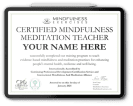
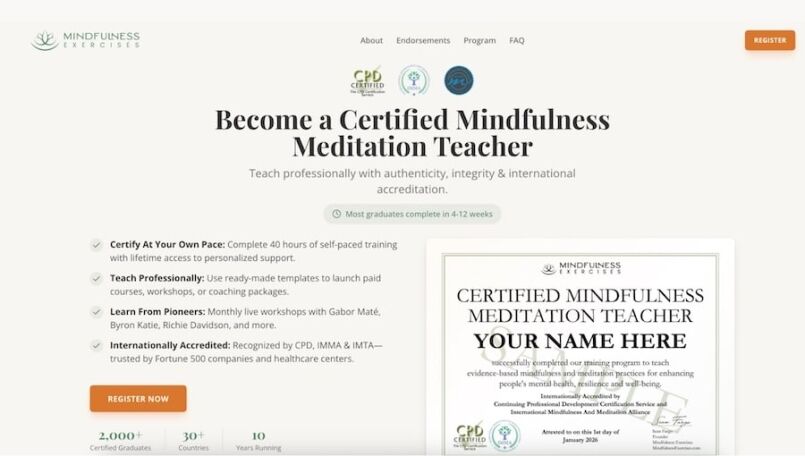
Graduates earn a Mindfulness Meditation Teacher Certification upon completing required coursework and teaching components. The program is accredited by CPD and IMMA, which allows participants to receive recognized continuing professional development (CPD) hours.
The graduates commonly use it to teach mindfulness in community, corporate, and private settings.
What Reviewers Are Saying
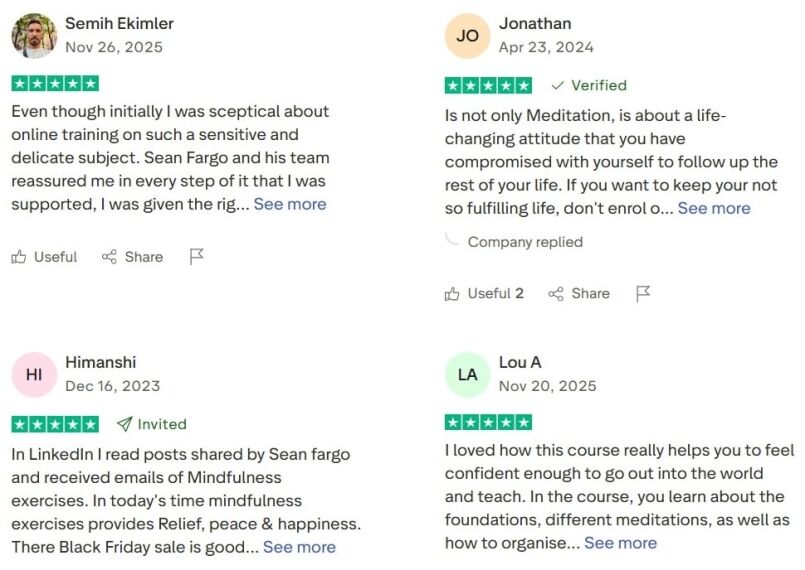
Online reviews say they chose this program because it was affordable, accredited, and flexible enough to fit into their busy lives. They also really appreciate having direct access to Sean Fargo and the supportive team, who are described as responsive and helpful.
The reviews also mention that the platform itself is easy to use, and the resources feel generous and practical. Even teachers who already had experience say the program helped them grow, feel more confident, and improve the way they guide mindfulness sessions.
Program Overview
The program is a self-paced, online program that features monthly guest workshops led by world-renowned mindfulness teachers.
All the materials required for certification are available on-demand, and participants may attend optional live sessions.
Program Structure
The program includes:
For instance, the curriculum includes a Mindfulness Teaching Fundamentals Course and a course on How to Guide Mindfulness Meditations for Well-Being and Resilience.
Mindfulness-Based Stress Reduction Teaching Certificate - Brown University
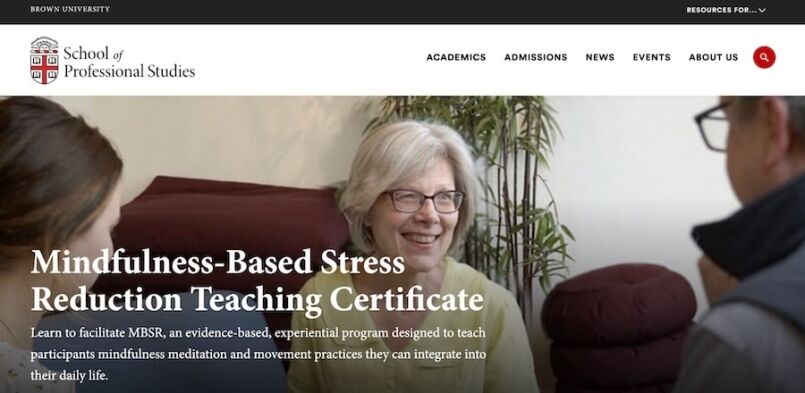
The Mindfulness Center at Brown University was founded in 2017. Leaders and academics in the world of mindfulness research all played a role in establishing the center, addressing the need for more rigorous research into this practice we call mindfulness.
In partnership with the School of Professional Studies, they offer a pathway to becoming a certified MBSR teacher through their Mindfulness-Based Stress Reduction Teaching (MBSR) Certification Program.
Qualification to teach can be attained within 1 year, though the full program requires 2+ years of study and practice to reach completion. It includes 398 hours of instruction with additional time dedicated to personal practice. Four silent retreats must also be undergone prior to completing the program.
Graduates will be able to teach MBSR in community, healthcare, corporate, or wellness settings.
Program Structure
The program is a three-step pathway:
Participants complete six mindfulness courses and a final review. The courses are:
- MBSR Foundations
- MBSR Teacher Advancement Intensive
- MBSR Curriculum Study Group and Skill-Building Workshop
- MBSR Individual Mentoring
- Ethos of Mindfulness-Based Programs
- Dialogue and Inquiry for Mindfulness-Based Programs.
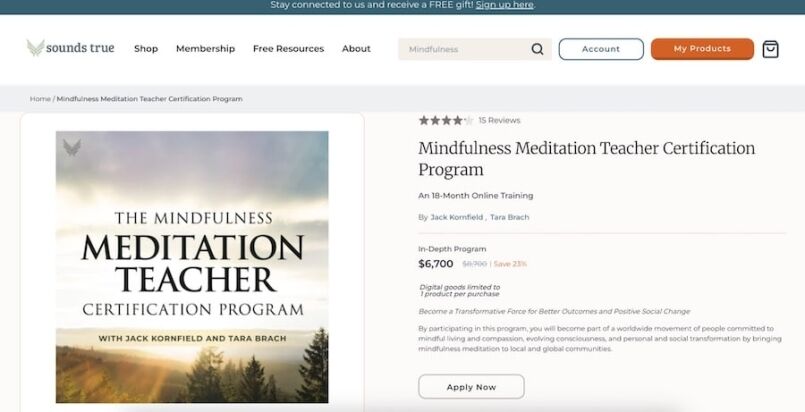
Offered through Sounds True, in collaboration with UC Berkeley’s Greater Good Science Center and the Awareness Training Institute, the Mindfulness Meditation Teacher Certification Program is a two-year online training program with Tara Brach, PhD, and Jack Kornfield, PhD.
The program is certified by the International Mindfulness Teachers Association (IMTA) and meets most of its requirements. This credential prepares graduates to teach mindfulness and compassion meditation in community, corporate, educational, therapeutic, and wellness settings.
Program Structure
The program, delivered over the course of two years, includes:
- Two live virtual weekend events
- Pre-recorded online video and audio learning
- Individual and group mentorship practice sessions
- Cultural sensitivity training
- Additional live sessions
- A practicum in your second year
- Business-building resources
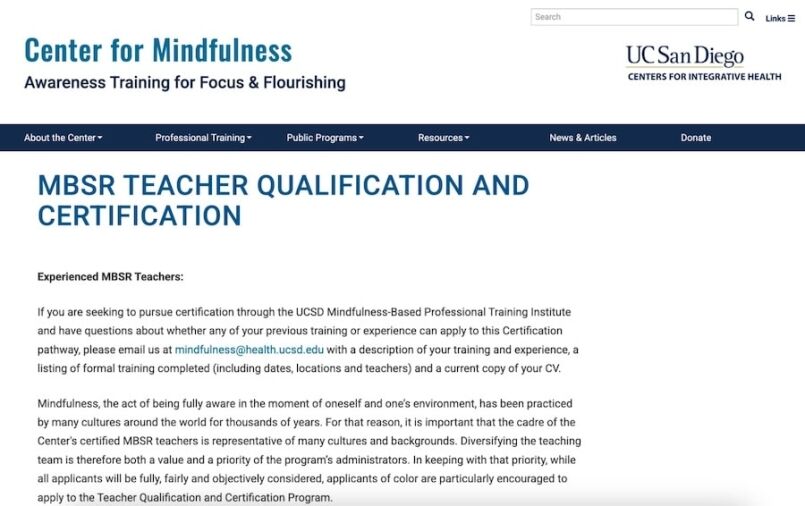
The UC San Diego Center for Mindfulness offers a step-by-step pathway to become a certified MBSR teacher through its Mindfulness-Based Professional Training Institute (MBPTI). The certification process is structured as a multi-stage pathway based on demonstrated skills and teaching experience rather than a single certification course.
This certification can help you teach MBSR in hospitals, community centers, universities, or workplace wellness programs, depending on where you want to focus your work.
Program Structure
Participants can complete the certification in two primary phases:
Phase 1: Teacher Qualification
- 6-day MBSR Teacher Training Intensive
- 10-week Teacher Training Practicum.
- Teaching at least two live 8-week MBSR courses
- Work with an approved mentor
Phase 2: Full Teacher Certification
- Gain an additional 8-week teaching experience
- Complete more mentorship hours
- Attend an Advanced Training Intensive
- Submit teaching materials for review
Certification is granted only after a full review to ensure you meet established MBSR teaching standards.
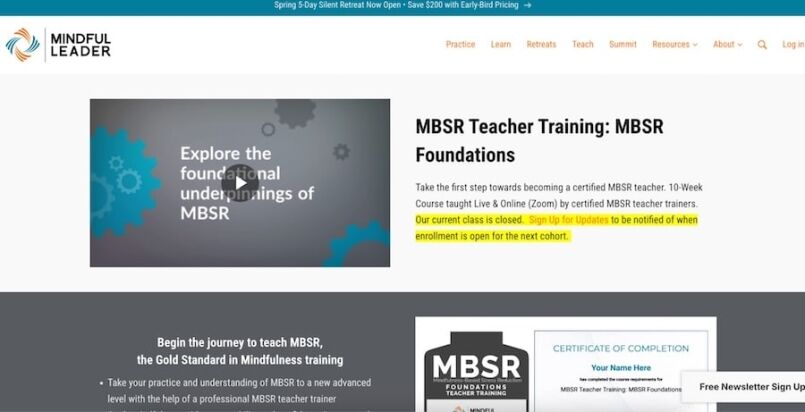
Mindful Leader, based in the Washington DC Metro Area, offers events, training, certification programs, and more to help people create mindful and compassionate work environments. Their aim is to redefine what good leadership is and what a healthy workplace culture looks like.
Amongst their offerings, they provide a Mindfulness-Based Stress Reduction Teaching (MBSR) Teacher Training Program, which offers a certificate of completion. This is a foundations course, a first step towards becoming a certified MBSR teacher.
This training can help you build credibility and use mindfulness in your work in coaching, education, corporate wellness, or leading programs in your local community.
Program Structure
The program includes:
- 10 weeks of Foundations teacher training sessions in small cohorts of trainees
- Enrollment in the MBSR 8-Week Course, one all-day retreat
- Two individual sessions with a facilitator or mentor
The curriculum explores the foundational underpinnings of MBSR and teaches the MBSR pedagogy and approach. It provides interactive and experiential learning.
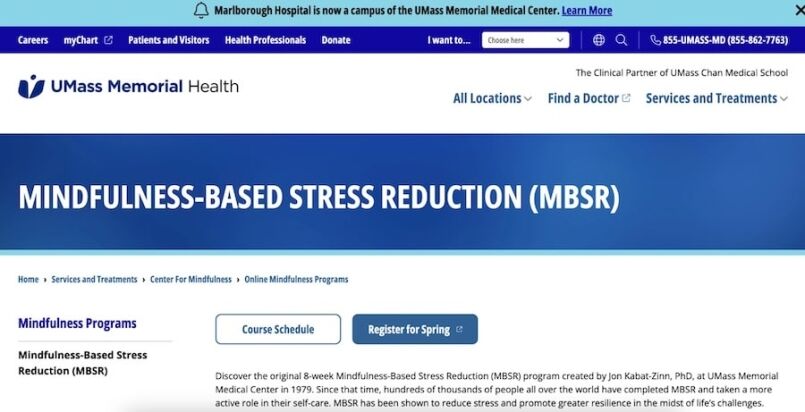
The Center for Mindfulness at UMass Chan is closely connected to the original MBSR program created by Jon Kabat Zinn. This is an 8-week MBSR course for participants who want a structured, evidence-based way to build a mindfulness practice for stress, pain, and everyday life challenges.
Program structure
- Required orientation session (about 2 to 2.5 hours) before the course starts
- 8 weekly classes (about 2.5 hours each), delivered online via Zoom
- One all-day session on a weekend, usually between weeks 6 and 7
- Daily home practice (often 45 to 60 minutes per day) with guided audio support
- Instructor check-in support, including an initial one-on-one meeting
The program follows the standard MBSR curriculum that has been studied in clinical and academic settings for decades.
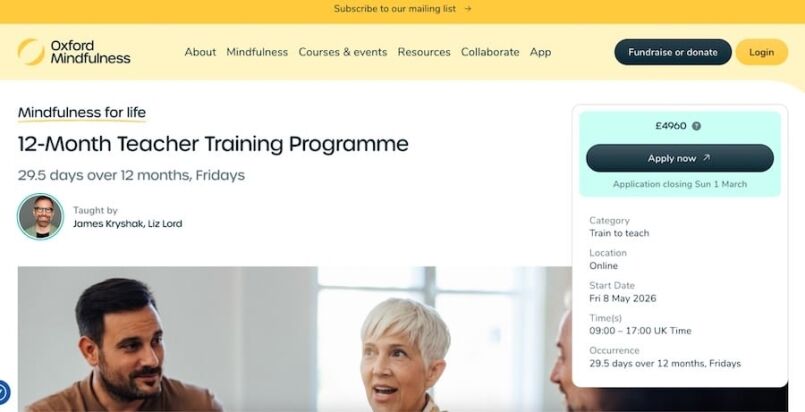
Oxford Mindfulness offers a 12-month teacher training pathway that is widely recognized in the mindfulness teaching space. The program is delivered as 29.5 training days over 12 months, run on Fridays, and is taught online for the listed cohort.
Program structure
- A 12-month schedule totaling 29.5 days of training
- Delivered in a training-day format (Fridays, 09:00 to 17:00 UK time for the listed offering)
- Led by named teachers for the cohort, like James Kryshak and Liz Lord
The pathway is designed for professionals like therapists, psychologists, and other healthcare professionals who want to teach Mindfulness-Based Cognitive Therapy with clinical integrity.
Breathworks offers a modular teacher training pathway designed to help trainees build skills over time. The pathway is split into two stages with six modules, which can be taken online or in person, and takes a minimum of one year to complete.
Program structure
After Stage 1, trainees may deliver shorter mindfulness sessions and workshops using official Breathworks materials, but are not yet accredited to teach the full core programs.
Stage 1: Mindfulness Facilitator
- Facilitator Module A
- Facilitator Module B
- Supervised practice and reflection work
- Minimum 6-month integration gap between key modules
Stage 2: Accredited Breathworks Teacher
- Advanced teacher development modules
- Training to teach Mindfulness for Health and/or Mindfulness for Stress
- Ongoing mentorship and supervision
- Submission of teaching materials for assessment
- Demonstration of competency in delivering full 8-week courses
Because it is modular, participants can pace their training while building practical skills and receiving mentor support along the way.
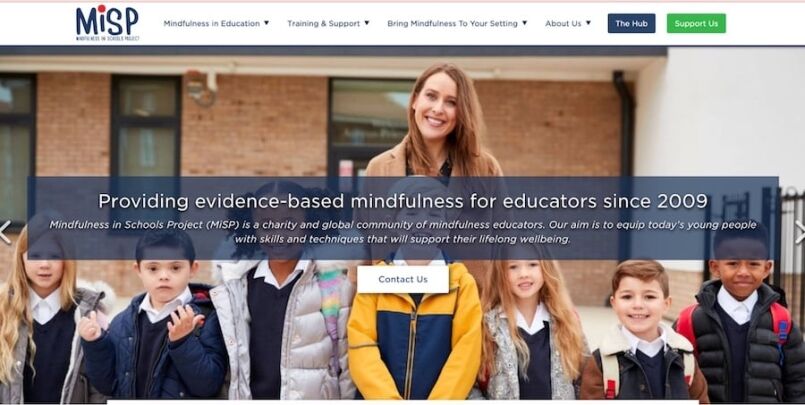
The Mindfulness in Schools Project (MiSP) is a UK-based charity established to bring evidence-informed mindfulness into educational settings. It develops structured curricula designed specifically for children and young people, including .b (ages 11–18), Paws b (ages 7–11), and dots (ages 3–6).
MiSP offers a teacher training pathway that prepares educators and school professionals to deliver these programs within classroom environments, as it is specialized for school-based implementation.
Participants must complete an approved 8-week secular mindfulness course and maintain an ongoing personal mindfulness practice before enrolling.
Graduates are certified to teach the corresponding MiSP curriculum within schools and youth settings.
Program Structure
Training is delivered as focused live online modules, depending on the curriculum selected:
- Teach .b (secondary school program)
- Teach Paws b (primary school program)
- Teach dots (early years program)
- Teach .b Foundations (adult school staff program)
Each training typically includes:
- 3 to 4 days of live online instruction (or equivalent session format)
- Practical training in classroom delivery and inquiry skills
- Access to curriculum materials and implementation guidance
- Six months of access to MiSP’s Trained Teacher Hub for ongoing support
This program is particularly practical for educators who want to integrate mindfulness into an existing school timetable.
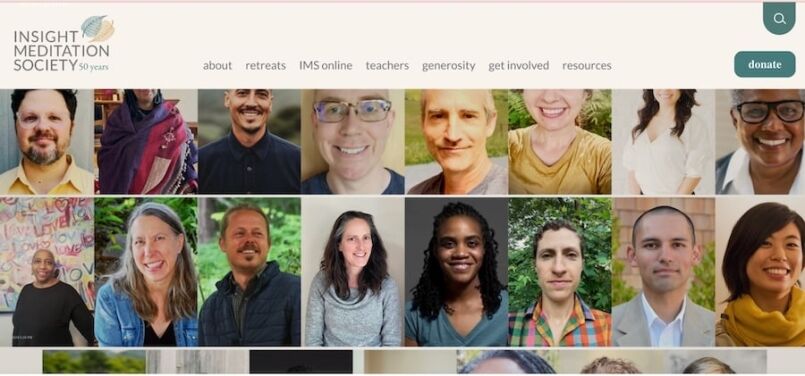
This is a long-term, retreat-based teacher development pathway run by Insight Meditation Society and Spirit Rock. It is four years and is described as a primary route for lay teachers to become qualified to teach retreats within insight meditation communities. Entry is typically through nomination rather than open enrollment.
Program structure
- Four-year training
- Three weeklong retreats each year, including retreats at Spirit Rock and IMS, plus an online retreat
- Selection is nomination-based rather than standard applications
- Led by a team of senior teachers that changes by cohort
The training emphasizes deep personal practice alongside gradual teaching development.
DISCLAIMER: The information presented above is based on what was known at the time of writing this article. Any and all program details, including costs, are subject to change. It is important to verify all program information with the company or school providing the training.
Exploring the Role of a Mindfulness Teacher
If you’re ready to follow the path of becoming a certified mindfulness teacher, it’s important to understand the role you’re taking on.
Core Responsibilities
Choosing this path prompts reflection on the role you’ll be playing in the world and the associated responsibilities you’ll have.
On a practical level, a mindfulness meditation teacher is someone who:
- Guides others to practice mindfulness through formal meditation practices
- Teach foundational principles of mindfulness, how to overcome challenges with mindfulness practice
- How mindfulness is applied in daily life
You will also be responsible for facilitating group discussions, creating a safe space for open dialogue and reflection.
During these discussions, you’ll need to navigate group dynamics, address the needs, challenges, and experiences of your students, and embody the principles of mindfulness yourself.
You’ll also be fostering a sense of community, which is part of navigating and holding group dynamics.
Professional Scope
Mindfulness teachers are educators and facilitators of contemplative practice. Unless separately licensed, they do not provide psychotherapy, diagnose mental health conditions, or deliver clinical treatment. Responsible teaching includes:
- Recognizing the scope of your expertise and the boundaries of your responsibilities and capabilities
- Referring your students to seek professional, licensed providers when necessary
- Staying within the limits of your training and certification
How to Choose a Credible Program
Not all mindfulness certification programs are created equally. In fact, there is a wide range of quality amongst the offerings available. Some programs are more credible than others, and it’s important to carefully review each program before jumping into anything. Consider the following factors for choosing a credible certification course.
Accreditation and Institutional Recognition
When assessing the credibility of a mindfulness certification program, one of the first factors to look at is accreditation or recognition within the field. Accreditation helps to ensure that the program meets certain standards of quality and adheres to best practices.
So, make sure to check if the program is university-affiliated, recognized by established mindfulness organizations, and aligned with professional bodies such as the International Mindfulness Teachers Association (IMTA).
Practicum and Supervised Teaching Requirements
Strong programs expect more than just finishing lessons. You’ll usually need to track your personal practice hours, teach live courses, work with an approved mentor, and have your teaching formally reviewed.
If a program skips supervised teaching and mentorship, it may not be recognized in the same way. Real-time feedback and guidance are a big part of becoming a qualified teacher.
Faculty experience and Lineage
Take a close look at who is teaching the program. Check their training background, how long they have been teaching, and which institutions they are affiliated with.
In mindfulness training, it can also help to understand their lineage and whether they follow recognized teaching standards. This gives you a clearer picture of the quality and credibility of the program.
Curriculum Depth
A strong program should include core mindfulness practices, training in inquiry and dialogue methods, guidance on ethics and scope of practice, and attention to cultural competency.
It is also worth checking whether there are opportunities to take part in retreats, since deeper practice time can be an important part of teacher development.
Cost in Relation to Structure
When comparing tuition, look at what you are actually getting. Consider the program length, how many mentorship hours are included, and whether supervised teaching is required.
Lower priced programs may offer fewer supervised components, while higher priced ones often reflect longer training pathways with more hands on support.
Personal Fit
Finally, think about whether the training format fits your professional goals and the type of setting where you plan to teach.
FAQ | Best Mindfulness Certification Program
Why Should I Consider Getting Certified as a Mindfulness Teacher?
Even if you’ve been practicing or teaching for some time, becoming a certified mindfulness teacher can deepen your knowledge and ability to serve others. Certification programs provide a comprehensive, structured understanding of the principles, techniques, and applications of mindfulness. Certification can also enhance your credibility, strengthen your personal practice, and equip you with the skills and confidence to lead others.
Can I Pursue Mindfulness Teacher Certification Online?
Absolutely. There are many options to become a certified mindfulness meditation teacher through online training. However, before registering for any program, make sure you’re clear on how it’s delivered. Some trainings are largely based online but still require in-person attendance for retreats and/or other components.
What Can I Do with Mindfulness Certification?
Mindfulness certification can open many professional doors for you. What you can do with it depends largely upon the specific certification in question. For instance, some certifications are in ‘mindfulness coaching’ while others are in ‘mindfulness teaching’. Some certifications allow you to teach MBSR more specifically.
Either way, you can use your certification to build a more credible resume when applying for jobs or when seeking clients if you’re working for yourself. Display your certification on your website, social media accounts, and anywhere else your prospective clients may connect with you.
What Will I Learn in a Mindfulness Teacher Certification Program?
You’ll learn effective ways to guide others in developing mindfulness skills. Additionally, you’ll likely acquire practical insight on class facilitation and adapting mindfulness to various settings. Note, however, that what you’ll learn will vary from program to program.
How Do I Verify the Credibility of a Mindfulness Teacher Certification Program?
You can verify the credibility of a mindfulness teacher certification program by assessing the curriculum, accreditation or reputation, and experience level of the program's teachers. Endorsements from established mindfulness teachers or institutions, as well as student reviews, can also help you determine if the program is credible.
What Support is Provided After Completing a Mindfulness Teacher Certification Program?
The support you’ll receive after completing a mindfulness teacher certification program varies widely. Some programs provide ongoing support whereas for others, the support ends when the program ends. Check with each program provider to find out what opportunities there are for getting teaching support after course completion.
How Often Do Mindfulness Teacher Certification Programs Require Renewal?
Some certification programs require renewal whereas others do not. This is completely course dependent, so make sure to verify whether renewal is required (and if so, how often) with each program provider you’re interested in learning with.
Summing up
Certification enhances your skills, confidence, and credibility in teaching mindfulness to others—and it can open the door to new opportunities along the way.
If you’re curious about what it takes to embark on this fulfilling journey, be sure to check out our detailed guide on How to Become a Meditation Teacher. It walks you through everything you need to know