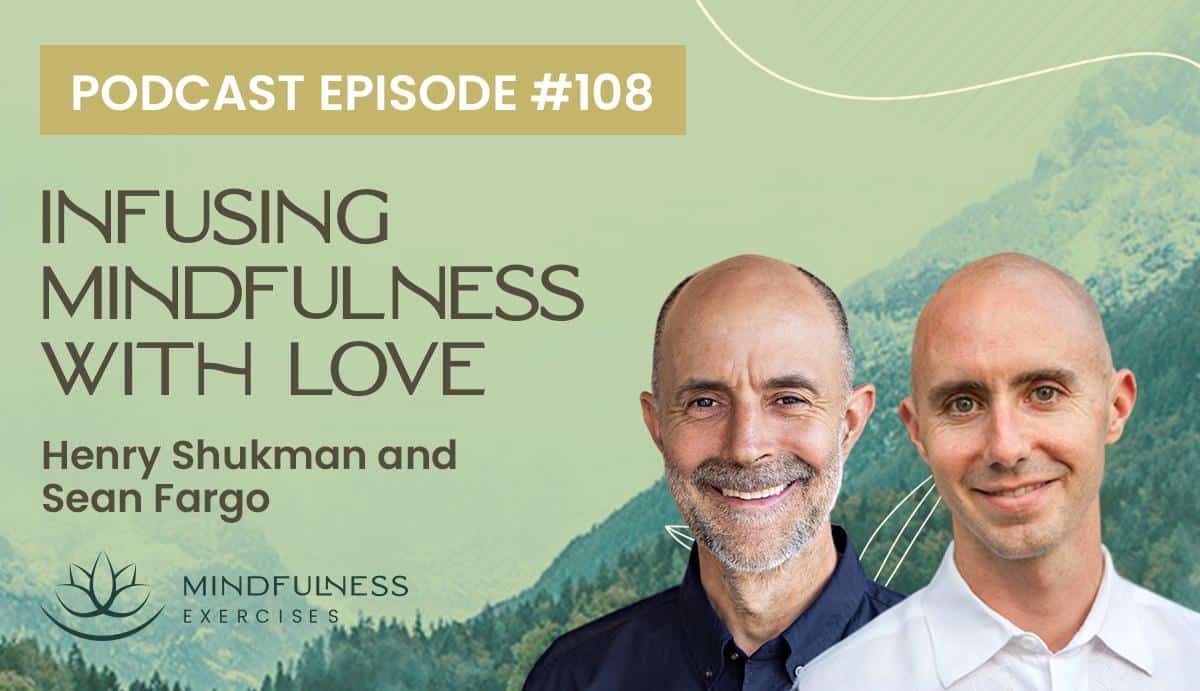
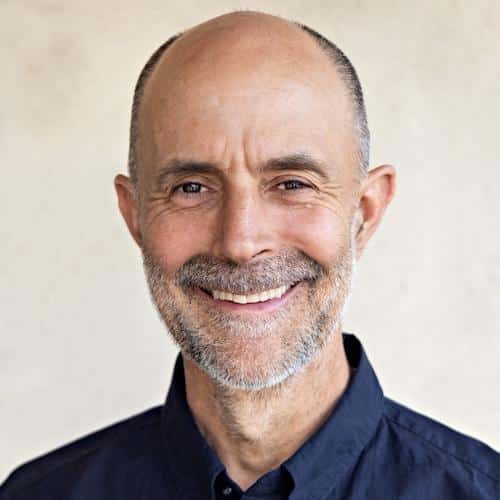
Speaker 1 · 0:00Yeah, so today I have the honor of speaking with Henry Schuckman. Uh he's an authorized Zen master in the Sanbo Zen lineage.
Speaker 2 · 0:13Yes.
Speaker 1 · 0:15Sanbo. And is a spiritual director, Emeritus Mountain Cloud Zen Center in Santa Fe, New Mexico. He's the co-founder and lead meditation teacher for The Way, a great meditation app that I recommend to a lot of people, that provides a modern update to the ancient path of meditation training. He also leads meditation courses and retreats throughout the world. Henry is an award-winning poet, author, whose memoir, One Blade of Grass, recounts his own journey through meditation practice. His new book is called Original Love: The Four Inns on the Path of Awakening, which is a manual, a map, a manifesto, if you will, describing the four key zones of meditation practice. His struggles and traumatic experiences as a youth, combined with a spontaneous awakening experience at the age of 19, and many years of training under several teachers, paved the way for his developing a well-rounded approach to healing and awakening through meditation. Henry, um, it was a pleasure getting to know you a couple months ago. Um, we spent a few days on an adventure, and um, you know, they say to you know, never meet your heroes because you'll probably be let down. And I I don't know that you're necessarily a hero going into it, but I had heard about you and learned about you prior to um the time that we spent together, and and I was very impressed. And and I have to say that you know, after the week of um you know um hiking and adventuring with you, I got to know you and and I was not let down, I was not disappointed. In fact, I was even more inspired and more struck at the depth of your practice, and um the one thing that really stood out to me is your heart and uh just how you met each moment with heart and wonder and care. And um, and then going through your book, Original Love, um I uh felt like that really was a wonderful mirror into who you are as a person in the sense that it really uh dove into um the facets of say your psyche and and your being and how um to meet each moment with love. And and so it's wonderful to feel it embodied in you and then to learn more about it through your book. And um one of the reasons why I invited you to have a conversation here today um is to thank you, um, because in reading the book um and seeing the book modeled in you, um I've experienced a shift uh in my own life. Um in how um I see sort of my own potential for opening my heart in every moment, whether it's unpleasant or pleasant, uh, whether it's at home home or at work. And um, and there's something in the poetic way that you describe the practice that sunk in. And so uh first and foremost, thank you for your work and for inspiring that um that heart opening and that heart shift in me. Thank you.
Speaker 2 · 4:44Sure, that's awfully nice of you to to share all that and the way you do. Um, thank you. I mean, I I I want to say I feel like I've just heard a description of what I aspire to. Perfectly put. And what I'm aware of how pitifully I fall short of, you know. And but actually, I honestly to I really these days I try to meet my shortfalls with my shortcomings with the same open-heartedness. So I kind of I know that I I do fall short of what you've just been describing, and I would like ideally not to, but I'm actually very open-hearted toward my own deficiencies, if if you see what I mean, as well as all other deficiencies that are in the world. And I feel, I do think that I don't know whether it's a combination of long training that you and I share. I've I always I immediately felt resonance with you when we met, actually, on the level of training, like somebody who's been through a deep training, I can feel it and recognize it, even when it's a very different kind of training. And and and there's a there's a sort of I notice a difference between those who've actually submitted to a significant training where which is you know place certain sort of demands on them, you know, and of course that can be monastic, but there are also trainings that aren't monastic that are demanding as well, and you really that involve a certain kind of submission or a kind of you know yielding and surrendering oneself to a process that we have, you know, less autonomy over for a while, you know, and I think there's I just kind of really respect that when I sense it in others, you know, and and and I'm and I'm really sort of lit up by it actually. Something in me rejoices that yeah, there's there's things that can happen to us when we undergo a training rather than have practice be a sort of mix and match that suits us, if you know what I mean, other we're trying to make suit us. I mean, there's an important place for that as well, somehow. There's a discernment here, but at the same time to have undergone something that we decided we'd yield a certain level of autonomous autonomy, at least in the particular area of this training, I think that's that there can be something really beautiful that that emerges from that. And um I just I feel sort of excited and some sort of heart melting gratitude and and a kind of little inner rejoicing or something when I recognize that in somebody else, you know. And then actually, with I'm sorry, I'm gonna just just rip repay the compliments you paid me actually because I felt not only that, but I also felt this real God, you had this joie de vivre and sort of freedom of you know, generosity that really impressed me. Like you think of doing something and you've done it already, you know, and and you don't mind about outlay of energy, time, resources, you just do it. And that is really, I love seeing that in others and wish I had more of it myself. I tend to be more cautious than I want to be, you know. And so it's really like just the room you're in. I I was in that room probably what just over a month ago, and it was bare, and you were considering renting it, and it wasn't a hundred percent done deal, and boom, you've done it and you've filled it with beautiful things and made it a sanctuary. It feels I liked it when I walked in because the proportions are so good, but now I like God, I'd love to be in there with you, really.
Speaker 1 · 8:48Yeah, I think you were the first person uh to come in this room and to check it out, and uh it was wonderful to uh hear how you responded to the room, and it gave me more um confidence that uh what I was feeling uh you know was not unique, but rather like you could feel that energy as well. So it's uh yeah, kind of a nice full circle moment to be sharing the space with you. Um yeah, thank you for all your words. Um and you know, I think when I read your book, Original Love, um I was really I I felt sort of a a breath of fresh air, um, in the sense that it's not sort of a typical mindfulness book or a typical book Buddhism or say the path to awakening. And you know, you could feel the dedication of your practice and your dedication to the quote unquote dharma, but you could also feel sort of a surrender to um more than what's say traditionally talked about in Buddhism, and you crafted um some reflections and some invitations um that I think are quite um colorful and maybe I don't know if holistic is the right word, but certainly considerations that you don't normally hear from a teacher of your stature in this world of say dharma or Buddhism. Would you be open to just sharing what the four ends of practice are in meaning like INNS, like abodes or zones, and how you crafted them in the way that you did or sequence them in the way that you did? Um, was I find that it's it's um yeah, unique and an inspiring uh sequence of practices.
Speaker 2 · 11:13Well, thank you. Yeah, I'd love to. I mean, I'll just as a little preface, I'll just say that in the Zen tradition, there have been different formulations of what they call you know different kinds of Zen. Zen meaning meditation slash practice in in that context. So there's an old one from the sixth century that says there's four kinds of zen. There's a later one that says there's five kinds of zen. There's a really early one from you know early Chinese Buddhism that says there's basically two kinds. And um so I've I what I that inspired me in a way that I I hadn't been anticipating actually, but I I realized at a certain point that I was recognizing four main sort of areas of practice or even of you could say of spiritual life. And I wanted to lay out this map, which I've done in this book, um partly as, like you said, a manifesto, because I want, I want to, I want, I want to, I hope to inspire people to realize that they're not all exactly the same, you know, and that there really are different purposes and aims and developments that we can go through, and they're not all exactly the same. And it's I think it's healthy to respect differences among, you know, these different territories of practice, because there's a real temptation that people want to it. See, I can understand it. I felt it myself to make it all, well, it all falls under this one that I mostly do. It all falls under it. But I see it probably doesn't, you know. And so, I mean, if we take it back to that, the earliest statement like this in in Chinese Buddhism from the fifth century, it's that there's there's two, it's a car track with two wheel ruts, you know, a rut for either wheel and left and right. And the first rut is developing mindfulness, and all that comes with that in the Satipatthana Sutra, basically the four foundations of mindfulness kind of practice, which is a gradual development, and it's you know, development in emotional well-being and psychological well-being, in in clarity and insight, and and it arguably stops short of the full-blown experience of awakening, you know, ends in in the in the oldest, uh, well, the the I'm sure there's different versions of it, but the one that I think is most commonly known, it ends with the seven factors of awakening as the one of the four, one in the fourth mind foundation of of the of uh mindfulness of dharmas, of teachings, you know. And and actually those four factors of awakening, uh sorry, the seven factors of awakening are a kind of incremental approach to awakening, but it stops there on the brink. And on the other hand, this second wheel rut in early Chinese Buddhism is called realization or principle or reality, it's a hard term to translate, or reality, meaning the reality of the awakened state. That there's a condition whereby we've basically dropped our sense of self as a separate thing from the world around us. It's somehow seen through, or it's been practiced to the point of being eroded to nothing, or it's like a a veil that appeared to be there, and all of a sudden we've realized that the veil was never there, and we've realized that the self we've felt, you know, deep inside us for as long as we can remember, somehow just hasn't been the real thing we felt it was. Instead, it's been nothing but a cluster of thoughts and stories, perhaps of subtle body sensations or muscular contractions, as some people say. But whatever it was, it wasn't a fixed solid lump of something called me that has endured through time. And it's a radical distinction between having that sense of self be just seen through, or having it implode, or having it evaporate or disappear, versus the many beneficial kinds of practice where that hasn't happened. You know, and so the first three inns in my formulation are basically all the extremely good, wonderful things that can happen in practice that do not involve the eradication of self and are nevertheless deeply valuable. But it's still an important distinction, I think, to recognize that you can go very, very far in flow states and in absorption states, and there's still the sense that this is kind of my life, and I'm doing this thing called meditation, and it may be very, very quiet, but there hasn't been a radical set experience that I've never been me. This has never been something called my life. The idea of my life was an invention, actually, which I totally bought into. And I not only that, but the idea of me has been an invention that I myself created, I generated, I created my sense of self, and then I bought into it, and actually it's only been an invention, and that genie that I I rubbed out of the lamp, you know, can I see it was only ever a genie. I can come to discover that, and myself is then gone, but it's but it's not like a horrible nihilism, not at all. It's like I find that I've never not been part of everything. I've never not been part of everything, and all of that is a really different world from the world of gradually cultivating ourselves through the first three ins, which which which I I can go into in a moment, but maybe best just to get your reflections on what I've been saying at this point.
Speaker 1 · 18:19Yeah, I um it's well put. I'm just reminded by the um your poetic nature and how it lends itself to um this practice that's so difficult to put into words. Um yeah, I think one of the things I find so refreshing about this approach of um both sort of seeing through the sense of self and seeing that implode, or you know, lifting the veil to see its um illusory nature. A lot of people get caught up in that part and kind of veer into, say, this nihilistic approach or this depression or a head-based sort of analytical way of relating to practice and um relating to say me as nothing and everything is nothing. Um and I've seen so many mindfulness practitioners and Buddhist practitioners and even senior, quote unquote, senior mindfulness and Buddhist teachers, um veer into yeah, uh depressive states, um uh committing suicide, uh disconnecting from loved ones and sort of uh removing themselves from society um in a way that's in my view a little sad, and um whereas when we dissolve the self or we we see the self as illusory or um you know um this thing that we had mistakenly bought into, and we realize that we've always been connected, that we've never not been a part of this wonderful reality, and that we are in fact supported um by so many um people and um by nature and by soul and spirit, and all the things that you highlight in the second inn of awakening of support that um that our hearts fill up and we become more connected with loved ones, more connected with who we really are in a full uh soul-enlivening, enriching, joyous way. Um, you know, the Buddha talks about the wings of awakening. There's wisdom and there's you know compassion or heart, and so many people go really fullborn to the wisdom part and think that that's all there is, and that it's all kind of nothing, and they forget love, yes, yes, and the connection, and you need both, and yeah, you know, the four ends talks about um you know the support and connection and love is laced throughout the book, but you also have practices of um of wisdom, uh, you know, you have the meditation on the four elements and absorption practice or like samadhi concentration practice, which often yields um wisdom and insight. Um you know, you have practices in there for that, but you so you have both, you have both waves of awakening together explicitly, and you remind us that you know, don't forget this love piece. And I think that that this is what a lot of practitioners need right now, especially since the pandemic, especially um in this, you know, epidemic of loneliness as well. That it's you know, this practice is about love and connection. Um, I just I think it's beautiful.
Speaker 2 · 23:28Oh, thank you. Thank you. Yeah, let me may I just speak to the love part because um it's threaded through all four of these inns as I understand it. I think, you know, even in mindfulness when we're you know, in our first years of practice, just learning to truly let things be as they are, you know, to be aware of present moment experience with an attitude of full acceptance. That takes a kind of love, I believe. You know, I had one of my Zen teachers used to say the three most important things in practice are allowing, allowing, allowing. And that's been a watchword for me throughout my practice to check, you know, whatever's going on, any kind of snag or difficulty or tightening, or maybe I'm just sort of muddled or not clear headed. And am I allowing? Because the moment I do allow, you know, and it might be I've got to allow that I'm feeling overwhelmed, I've got to allow that I'm currently muddle-headed, and I've got to allow that right now. I'm just kind of confused, not sure what's happening in this practice, body, mind, heart right here, you know, and just the moment there's some allowing, there's a softening, there's a tenderness that comes in with genuine allowing, you know. I mean, I I I don't know whether that's quite right to call it genuine, but when we really make that tiny little shift into truly allowing, a tenderness comes, a softness and a softening. And and I find if I look at well, what is the nature of that real sort of if it's surrender or sort of yielding or letting things truly be as they are, I find somewhere in there there's a grain or two of something like love. There's just something that is compassionate in there, you know, and it can be towards myself sometimes if I'm having a harder time. And of course, it can be towards whatever I may see in that others are going through that's hard for them, or or it could be all manner of things, but somehow that little crumb or grain of compassion is in there, is in the shift from being caught up in stuff to not being caught up in it, and then but giving it space, not trying to banish it, but giving it space and allowing it, allowing it to be as it is. So I'm always, you know, when in my teaching, I'm always trying to tell people, you know, like don't try to get rid of stuff, try to allow it. You know, be working towards allowing it. And for me, that's one of the key methodologies that I I like to work with, really, is sort of the path of non-resisting, finding where there's resisting, either it's grasping or it's pushing away, you know, and and instead the first thing to do is to let that resisting be there. So allow the resisting that's going on, allow the grasping that's going on, or the clinging that's going on, or the tightening, or the tension, or the contraction. Don't try to get rid of it, allow it. And and I find that's a loving way of approaching mindfulness, you know. And then in the second in, I'll I'll I'll be briefer here, that it's like, you know, for me, it's all about connecting, that practice is not a solitary undertaking. Yeah, it has its, it has for sure, it has its kind of self-discipline. And there's times we do just sit, we sit alone and we just do it. But even in that, we can make all these discoveries of our connectedness, the very fact of our being is so dependent on so many factors that are nothing to do with us, you know. And so to be able to recognize in some small measure that I am kind of being given this moment right here and now, which I call my life, you know, but I'm being given it by 10 trillion trillion things, and and that is a balm for those the solitary, the soul that feels alone. You know, it's always like David Bowie said, Oh no, love, you're not alone. It's just always true. And and and there's and there's yeah, there's multiple levels we can explore that, which I touch on in the second in, including, yeah, traditionally non-Buddhist things like just psychotherapy, and then shamanism and animism and dream work, and and and and the ways that literature and art can inveigle our psyches and what they can do by way of opening us up to more connectedness and things. And then in the third in absorption, slash flow, slash samadhi, you know, in the Buddhist sense, samadhi, uh, because the Hindu Vedic sense is rather different. Um in it it's it's it's again, it's like we get so clear, so present, so absorbed in the experience of right now that we just need nothing else. You know, we're fully fulfilled in our absorption in experience here and now. And that may be I've done jhana training and sure, you know, it's in the jhanas if that's what you're doing, but you don't have to be doing jhana training to get in those kinds of meditative flow states. But they they kind of uh they allow sort of in a sense, all all else can kind of go quiet because there's just this here. And it's like falling in love with it. We need nor want nothing else, you know.
Speaker 1 · 30:05Yeah, some of the happiest moments of my life. Quite delicious moments. Yeah, I it's uh there's so much that you've touched on there. Um and you know, I think allowing, allowing, allowing, you know, could you know really have that as its own meditation and just allow, allow, allow for hours on end. And um yeah, I think so many people are afraid of so many things in life, but also just afraid of um just being and um and so to take that practice to heart, you know, a lot of people may not consider just allowing the fear to be there and allowing ourselves to feel it and to open to it and sense it into it in the body and emotions and um just bring awareness to the fear itself. Oh, that's beautiful with gentle care, you know, and really allow that that fear to be felt fully. Um I agree. I think um you said there's like um you know a couple kernels of of love in allowance, and you know, um you know there's a yeah, a very strong case to be made that it's one of the most loving things you can do. Um and um I think it would be a wonderful exploration to explore allowance within, say loving kindness, compassion, joy, and also equanimity. Um equanimity being um near the end of the um seven factors of awakening that you mentioned.
Speaker 2 · 32:36Yes.
Speaker 1 · 32:36A lot of people think of that as maybe being a detached or um dry practice, but rather it's a very loving practice of um you know remembering that we're all on our own path, and you know, we can't control people's um actions or their karma, and that um one of the most loving things we can do is allow people to live their own life, um, which is really hard for family in particular as parents. Um but um allowing, you know, a lot of we we just did a lot of research um in our community at mindfulness exercises, you know, a lot of our community are mindfulness meditation teachers, and um the number one challenge that came up was not feeling like they were allowed to share mindfulness with others or to help others be present. There's a lot of people looking for um permission, but the challenge that people kind of felt in that was fear of being judged and fear of not being you know perfect enough to help others be present, and you know, while teaching mindfulness, um, there are some important things to consider and to note and what you know, knowing what mindfulness is and what it's not. Um, we don't want to strape people into thinking that people or that into thinking mindfulness is something different than it is, but but if we feel called to help people, you know, I think there's a there's a practice in allowing our selves to act on the compassion that we feel. Um, and if we feel called to help others notice their momentum experience with general awareness, then by all means you know it can be helpful to act on that and to allow ourselves to to move with that that heart. Um, and it's okay to feel what we feel to allow ourselves to feel what we feel um in the spirit of of helping others. Um so just kind of exploring this how allowance is a part of compassion itself and how it may be a part of our joy, allowing ourselves to open to that that joy, and also how allowance is a part of equanimity. So kind of round out these four Brahmaviharas as they're classically referred to, these practices of the heart.
Speaker 2 · 35:42Yes, that's that's beautifully put, um Sean. Thank you. And I I don't know that I've got a lot to add because you said it all so beautifully. Um I might just add that you know, around the question of of of of being a you know, coming forward as a teacher or a guide for others, I would also say, you know, allow whatever comes up around that. You know, let don't don't um force it. Just, you know, be just allow whatever things may come up around that, you know. I've had situations when when I honestly in my my little world, I didn't start teaching until my teachers told me to. But that was because I was in a Zen lineage and it was a it was rather, it was rather, I don't think it would be fair to say it was tightly controlled, but there was there were there were kind of right, there were sort of I guess there were experiences and shifts in meditation that they wanted to see had happened before they would then put someone forward to be entering the training process for becoming a teacher. And how long that would take was who knows, you know, could this this is in a fairly well, uh rather a it's traditional in some ways and not so traditional in others, but a traditional lineage where you know um it's just not up to you when if and when you become a teacher, you know, not at all. And then it's a very gradual process of receiving more responsibility and always accountability. Um, but but anyway, uh and you know, we're the the lineage that actually, I mean, is unusual in a lot of ways, in the way, even the way it handles that is much more careful than in most lineages of Zen, and where it's it's actually yeah, you have to go to this training process to do it that's not led by your own individual teacher, but a kind of group of the teachers of the lineage. So, so uh just that's a whole other matter, really. And that's and in the Zen, in the particular form of Zen training that I've been through, which is Koan training, you kind of need that, I think, because the Koans are a tricky practice that's really can be used in lots of different ways, but in in one way, one core traditional way, you know, that they actually are catalysts for awakening experiences. And then they can take us deeper and deeper and sort of uh in in the integration of awakening into our daily life. That's meaning awakening in the sense of not any ideas about emptiness, but a radical experience of it. Because I I found I I used to be quite nihilistic, you know, I was quite depressive and nihilistic. And actually the thing that really cured it was a powerful experience of emptiness. That was a thing that of emptiness. Emptiness. Yeah, where it was no longer an idea, it was just an absolute everything fell away, and and even consciousness fell away, um, and and and then reformed. And it was after that moment, I was kind of something changed that never really came back. And and that was because of that, my nihilistic tendencies that you know I'd I'd been tending quite well over the years anyway, through therapy and relationships and all kinds of other things and creative practice. But you know, still they were sort of there a bit, but after that they were gone. And somehow the encounter, the direct encounter with a true sort of nothing that is also infinitely generative, infinitely giving, infinitely generous, and is making this very moment in some way, or sort of it's the source of this very moment, perhaps we might say. Um encountering that directly in personal experience, it just eradicated my nihilistic tendencies. Because thereafter everything was a bounty, a great offering, you know, and and it's I don't it it it's it sort of stayed with me, you know, 16 years later. Um not with anything like that vividness, but but the the the what it taught me somehow has stayed. And so I uh maybe I veered off track a bit. Let me just let me just wind it back because we were talking.
Speaker 1 · 40:38Oh, I was curious. Um, yeah, well, I've had similar experiences, and I I feel like that's say the reality of our reality. Yes, of what's actually happening, uh everything you just described. Can you talk about what that experience was, whether it was in Samadhi or happenstance? And can you and I'd love to talk a little bit about say what you recommend for deepening people's practice? Like what what um uh what would you recommend to people who are really looking to say 5x the depth of their practice, whether it's retreats or certain practices, love to get your take on deepening practice as well.
Speaker 2 · 41:34Yeah, thanks. Okay, I'm Sean, what I I've just I've just realized when I wanted to talk about that, and then I'm gonna answer a question. So it was because that's the ultimate kind of love. That's what I wanted to say. For me, when I when that falling of falling away of everything happened, that was when boom, I really met what I call original love, you know, which in in Zen and other forms of Buddhism, there's talk about you know original nature, uh, which is the you know sometimes called the ground of being or the source of all, or the and you know, of course, it's you know, Shunyata would be in some traditions that would be the heart of what that is. Uh, and like Chogyan Trumpa Rinpoche said, um it's like falling out of an aeroplane. The bad news is that you've got no parachute, the good news is that there's no ground. And anyway, and and he said it's so he said one glimpse of emptiness is so horrifying that compassion naturally arises. And then he added, and also one glimpse of emptiness is so marvelous that compassion naturally arises. And and that's the side of it for me, is like when it really was this, whatever whatever it was, this real falling away, that was when I felt I could have said, ah, now I've really somehow I've hit the the un the fundamental fact of all you can go no further, because there's nothing. There's nothing. And in but instead of that being again sort of depressing and nihilistic, it was the exact opposite. Because because of that, everything seems to be like just one mind-blowing force or act of love. Just the fact that it's all here like this just now. Yes, with all the troubles and tumors and and misery and persecution and oppression and suffering and brutality of our world, but actually still the bare fact that it existence experience is happening is just nothing but love. And so I slipped I flipped original nature into original love. That's that's the real idea or experience behind the nature. Well, there's that too, yeah. That original sin thing, that awful original sin thing, you know, which is that's pretty bleak. But anyway, I think it's very I think it's uh it's it it needs a a redo, I suspect, you know. Yeah, but anyway, I could, yeah, I'm happy to talk about that experience and the circumstances, but I think more important really is like what can someone do if they're wanting to, like you said, 5x the depth of their practice. I mean, I would say the the one thing that springs to mind immediately for me is like, um, and this would be true of you, Sean. You would be an example of this. You want to have contact with guides who have clearly been through it. I think that's the probably number one. Because otherwise, it's when you meet somebody who's actually been through this, you realize, oh, this is human. It's not an idea, it's a human thing. And that makes all the difference. Otherwise, it's like it's kind of just abstract, you know, and and it's the opposite of abstract, you know. It's but you know what I mean? I think, I think, so so I think, and I, you know, I'm I'm clear with it of to me, it's clear that not all meditation teachers have been through it. There's incredibly valuable practice you can do that that doesn't touch on it, you know, and and again, like this is partly why I've got these four ins, because all four of them are good, but they're not all the same. So somebody who's a really skin, skillful, you know, mindfulness-based stress reduction teacher or you know, cognitive, mindfulness-based cognitive therapy teacher or something, fantastic. And I've I've needed those practices myself, but they are not awakening, or they're not in that territory in the awakening in the sense that uh we we've been talking about it, you know, and the same thing with the kind of soul work that you can do, which I adore, you know, through poetry, through shamanistic type practices. I think, in a way, I might almost put IFS in that category, internal family systems, because it's quite visualization-based and it's got it, it can have shamanic style journeyings kind of in it in the work. And um, you know, and all of that, I love all that, but it's not the same as this radical dropping away of self and world, you know, and it and it doesn't need to be. And personally, I feel I need both, you know. I've and I continued it. My path is that I straddle, I try to straddle that cart track so that I don't forget the reality of the boundless source of everything that is basically probably in the end, it's not really love, it's beyond that, but it's activity can seem like love, you know. And and then and then, you know, yeah, yeah. So I'll I'll I'll pause there because I yeah, uh what do you think?
Speaker 1 · 47:45Yeah, I love your recommendation of being connected with a trusted teacher, a revered teacher who's clearly been through it, who models um or exemplifies these traits and characteristics of love and allowance and wisdom? And so for those of you listening, you know, do you have a teacher like that in your life? Whether you've met them or not. Um, do you have um someone who whose way of being is the way that feels true um to your heart? Um, someone who's inspiring and uplifting, who can show you the potential of what humans can be like. Um yeah. You know, Henry Schuckman's app is called The Way. I recommend that you check it out. Um can practice daily with Henry as your guide. Um, the Way Meditation app is Henry's single long-term path of deep meditation training. So you can be guided by a Zen master on on your journey. So I do recommend people check out the way to check out the um to check out original love, the four ends on the path of awakening. Um there's beautiful endorsements from uh Rick Hansen, Tara Brock, you know, revered elders on this path. And I can't Henry is as one of those elders. And so I I recommend people check out the book. Yeah, and if you don't find a teacher, if if um if you're looking for a teacher, I recommend checking out uh Henry's app, uh his website, henryshickman.com. He's on the socials. If you want recommendations on other teachers, feel free to email us anytime. Um, people like Jack Fernfield, Joan Halifax, Tara Brock, Rick Hansen, Sharon Salzburg. There's no shortage of great teachers out there uh who exemplify these these practices of mindfulness, support, concentration, and awakening. Henry, do you have any um anything that you'd like to share before we wrap up? I mean, we can do take two some time, but any other words that you'd like to share for the people listening?
Speaker 2 · 50:45I mean, I mostly Sean, I would just like to thank you for um for your own uh offerings to the world in this terrain, you know, which is so important to us. But I think I'm sure you'd I imagine you'd agree. We I feel it's very important to the world at this time, you know, that really we're kind of desperately needing to ramp up our wisdom collectively, and in so doing to ramp up our compassion collectively, to understand these, you know, evolutionarily inherited wirings that we have that can make us aggressive and violent and thoughtless and heedless and and um harmful to one another and of course to our beloved mother, this planet. And having having you in the in the in the in the in the mandala of of uh of of of growing teachers who are helping us all is a really great thing. Because you got this, you just got this great combination of deep origins in your practice and your training, you know, with a vital, lively, contemporary life as a family man. You know, it's it's the best. Yeah.
Speaker 1 · 52:08Um, thank you for your words, Henry. It reminds me of uh the first paragraph in your prologue, uh, The Universe's Garden, um, kind of talks about the stakes of what happens if we don't do this work. Um, you know, the world really needs this. Just to quote from your prologue this is a work of unabashed advocacy. It seeks to persuade you that a radical reversal in our ordinary understanding of self and world is available and that it matters because it not only brings us closer to reality, but also has far-reaching benefits, both for an individual and for society at large. And we need this unabashed advocacy. I think your book is um again life-changing. It's really helped open my heart and shown me uh what's possible in terms of meeting each moment with this original love. So again, um, deep bows to you, Henry. Um I uh if I was in your presence, I would literally be bowing. Um, but I really appreciate you and your work. Um, it's an honor to to know you. Thank you for everything that you're doing.
Speaker 2 · 53:39Thank you likewise, Sean. I'm so looking forward to being able to give you a hug once again next time we meet up.