🎉 $1,000 off Mindfulness Teacher Certification — annual sale ending soon

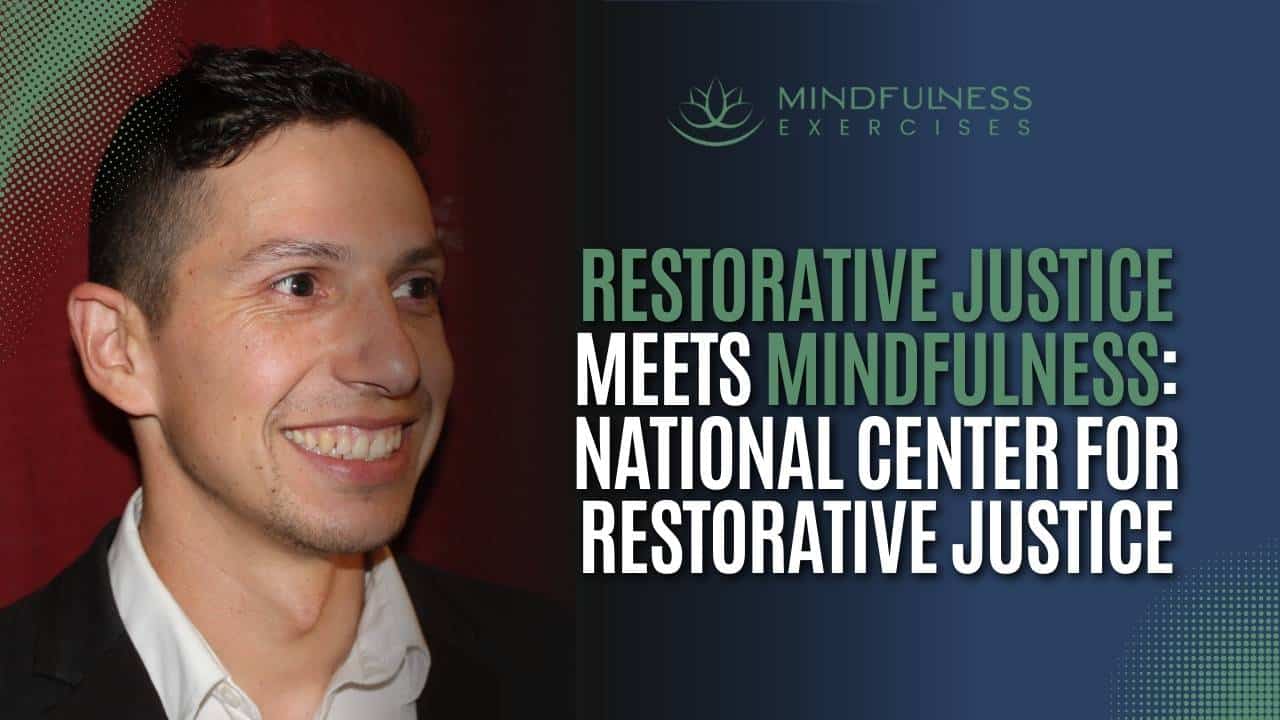
    Restorative Justice Meets Mindfulness: National Center for Restorative Justice

    SF
    Sean FargoPublished January 29, 2026 · 5 min read
    Restorative Justice Meets Mindfulness: National Center for Restorative Justice

    Listen to this episode

    Mindfulness Exercises Podcast

    Enjoying the episode?

    Follow the show in your podcast app. If this conversation supports your practice, a rating or review helps more listeners find it.

    Restorative Justice Meets Mindfulness: National Center for Restorative Justice — Tunein Logo

    TuneIn

    What if discipline wasn’t something we do to students—but a skill we help them build?

    For many educators, school leaders, and caregivers, discipline has long lived in the space between two unsatisfying extremes: punishment that creates fear and compliance without growth, or permissiveness that avoids harm but abandons boundaries. In this episode of the Mindfulness Exercises Podcast, we explore a third path—one that is grounded, relational, and deeply human.

    In a thoughtful conversation with Nicholas Bradford, founder of the National Center for Restorative Justice, we look at how mindfulness and restorative practices work together to turn everyday conflict into opportunities for accountability, dignity, and repair. From pre-K name-calling to incidents that shake an entire school community, Nicholas offers clear language and practical sequences that help adults respond wisely under pressure—without shaming kids or lowering expectations.

    This approach doesn’t ask us to ignore harm. It asks us to meet it differently.

    Sponsored by our Mindfulness Meditation Teacher Certification Program MindfulnessExercises.com/Certify

    Episode Overview:

    In This Episode, You’ll Learn:

    • Why conflict is the gap between expectation and reality
    • How mindfulness supports accountability under pressure
    • The restorative sequence that avoids shame while maintaining boundaries
    • Why “what were you trying to accomplish?” changes everything
    • How meaningful repair helps students rebuild trust and dignity
    • What reentry circles look like—and why they transform communities
    • Why adults must go first when implementing restorative practices
    • Training pathways that support sustainable school-wide change

    Show Notes:

    Reframing Conflict: The Gap Between Expectation and Reality

    One of the most useful reframes Nicholas offers is deceptively simple:

    Conflict is the gap between expectation and reality.

    We expect safety, respect, and cooperation. Reality often delivers frustration, fear, impulsivity, and unmet needs. When we see conflict through this lens, it becomes easier to invite mindfulness into the heat of the moment—not as a calming technique alone, but as a way of seeing clearly.

    Mindfulness helps both adults and students pause long enough to notice:

    • What actually happened (without exaggeration or defensiveness)
    • What expectations were present
    • Where reality diverged from those expectations

    This pause creates space for responsibility to emerge—rather than forcing it through punishment.

    Staying Longer With “What Happened?”

    In restorative justice, the first question isn’t “Why did you do it?” or “What’s your excuse?” Instead, it’s a grounded, present-moment inquiry:

    What happened?

    Nicholas explains why staying longer with this question matters. When students are invited to tell the story of what happened—without interruption, judgment, or immediate consequence—they begin to recognize impact. Not because they were told to feel bad, but because they were truly heard.

    This mirrors mindfulness practice itself: staying with experience as it is, rather than rushing to fix, blame, or escape.

    “What Were You Trying to Accomplish?”

    Perhaps one of the most transformative questions in restorative practice is:

    What were you trying to accomplish?

    This question acknowledges a truth that traditional discipline often misses: behavior—even harmful behavior—usually points to a legitimate underlying need. Safety. Belonging. Respect. Power. Autonomy.

    By naming the intention without excusing the harm, adults can:

    • Validate the need
    • Set clear boundaries around behavior
    • Teach more skillful ways to meet that need in the future

    This is accountability without humiliation—and it builds capacity instead of fear.

    Building Empathy Through Impact: “Who Was Affected and How?”

    Restorative justice places strong emphasis on understanding impact:

    Who was impacted, and how?

    This step shifts the focus away from rule-breaking and toward relationship repair. Students begin to see how their actions affected others—not as a lecture, but as a shared human reality.

    Nicholas notes that this process often restores something deeper than compliance: status and dignity. Students move from being labeled as “the problem” to being recognized as someone capable of repair, contribution, and growth.

    Repair That Actually Means Something

    For significant harm, restorative justice doesn’t stop at apologies.

    Repair must be active, meaningful, and proportional. This might include:

    • Community work
    • Mentorship or service
    • Concrete contributions that rebuild trust

    These actions allow students to rewrite their self-story—from “I’m a problem” to “I am a participant in this community.” Repair becomes a way back into belonging, rather than a sentence to endure.

    Reentry Circles: Justice as Public Love

    For students returning from suspension or expulsion, Nicholas describes reentry circles as one of the most powerful practices in restorative justice.

    In these circles, students:

    • Name what they did
    • Share how they’re thinking differently now
    • Articulate what they’re committed to repairing

    Parents, teachers, and peers often witness something rare: accountability held in public, with compassion and clear boundaries. Nicholas describes this as justice as public love—truth, structure, and care working together.

    And time and again, he emphasizes a key point for skeptics:

    Experience changes minds faster than data.

    Implementation Matters: Adults Go First

    Restorative justice is not a script—it’s a culture.

    Nicholas is clear that implementation works best when adults go first. Leaders model circles with staff. Teachers experience restorative processes themselves before facilitating them with students. This builds trust, skill, and shared language across the system.

    The National Center for Restorative Justice offers multiple training pathways, including:

    • Three-day intensives
    • Facilitation add-ons
    • Graduate-credit courses for educators and administrators

    These structures help schools move beyond one-off practices toward durable, sustainable systems.

    👉 Learn more at the National Center for Restorative Justice.

    Why Mindfulness and Restorative Justice Belong Together

    Mindfulness gives us the inner capacity to pause, notice, and respond rather than react. Restorative justice gives us the relational structure to turn that awareness into repair.

    Together, they offer a practical, compassionate response to conflict—one that supports:

    • School culture
    • Educator wellbeing
    • Youth agency
    • Accountability without shame

    This work matters not because it’s idealistic, but because it works—especially when things are hard.

    A Question to Sit With

    Where do expectations get in your way—and what kind of repair would move your community forward?

    If this conversation resonated with you, consider sharing it with a colleague, subscribing to the podcast, or leaving a review. These are the conversations that quietly change culture—one pause, one repair, one human moment at a time.

    Additional Resources:

    Transcript

    Show transcript· 26 min read

    Introducing Nicholas Bradford And NC4RJ

    Speaker 1 · 0:00Welcome everyone to the Mindfulness Exercises Podcast. My name is Sean Fargo. Today I have the honor of speaking with Nicholas Bradford, who is the founder of the National Center for Restorative Justice. Nicholas is a lifelong educator with extensive experience in challenging students inside and outside the classroom. In 2009, Nicholas started his restorative justice education in Vermont, working in therapeutic settings, schools, after school programs, and justice settings has shaped a skill set that delivers a comprehensive restorative justice framework. Having worked with hundreds of schools and districts, he's built a robust program that gives schools and educators and students the skills and structures they need to create a culture of belonging and success in spite of conflict. Nicholas received his master's in ed policy from the University of Washington in 2012. He founded the National Center for Restorative Justice in 2016, about a year after Mindfulness Exercises was born. He published a real world guide to restorative justice in schools in 2021. And you can find that book on his website at nc4rj.com, which is short for the National Center for Restorative Justice.com. We'll post a link in the show notes and description. And in addition, it's a fun fact that Nicholas retired from the U.S. Coast Guard just a couple years ago after 24 years of honorable service. And for nearly a decade now, the National Center for Restorative Justice has challenged the conventional retributive justice system, which is a system that excludes and isolates and punishes youth in schools. Furthermore, he and the center seeks to expand on the theory and language and practice of the greater restorative justice community. They believe that relationships are key to living a joyous life. And conflict is the difference between what was expected and what actually happened. And while we all experience that kind of conflict between what we expected and what actually happened, sometimes that feels like we're disconnected from others when it happens. Feel untrusted or maybe unvalued. And to overcome the negative effects of this friction, we need to look at it as an opportunity to strengthen

    Restorative Justice Starts With Self-Discipline

    Speaker 1 · 2:56our relationships and move toward it instead of away. Maximizing our five restorative priorities. We can implement and maintain restorative justice cultures. When we face conflict with strong skills and systems, we build a stronger community. And the five restorative justice priorities are conflict awareness, engage all stakeholders, empower author and victim, value empathy, and increase agency. And I think there's a lot of overlap here between restorative justice and mindfulness. We're going to be talking about the intersection of empathy and accountability, something that I struggle with sometimes just as a dad of a six-year-old who doesn't want to drink her medicine sometimes. And we're going to talk about how we can all incorporate restorative justice principles, whether you're an educator or someone in an organization or someone just living at home with a family. I think there's going to be a lot of great takeaways here. So, Nicholas Bradford, welcome to the podcast. It's an honor to have you here with us today.

    Speaker 2 · 4:17Yeah. Thanks, John. Appreciate it.

    Speaker 1 · 4:19I'm curious from your lived experience, from the work that you kind of do or that you do, what kind of inner capacities do people need most? Moments of conflict. And how do your restorative justice practices help us to cultivate those inner capacities over time?

    Speaker 2 · 4:43It's so interesting to think about like this work teaching and education. We often think about sort of like being up in front of a classroom and presenting information. And then you can sort of get into the space of restorative justice and conflict and discipline, behavior management. And we can sort of like have that same outward, like, I'm going to do the thing to you. I'm going to help you get discipline. And I think both restorative justice, equity work, mindfulness, these are all things that we do. And there's this funny like little trick with language, especially around discipline, that we get confused on because we often use that term the teacher or the principal needs to teach this kid some discipline. But I really feel there isn't really any external discipline. All discipline is self-discipline. And it's a funny way that we use the word discipline. It's like it should always have self in front of it. It should be like a single word, which is self-discipline. That's how we sort of operate through the world. If you want to achieve something, if you want to do the writing assignment or the meditation work or the being in good relationship with other people, you have to do the work. And so I think when it comes to a sort of justice, almost from the jump, we have to consider how do I be better with conflict? That's an inner work. And far too often in education and school spaces, even in relationship spaces like partner relationships, we think about like if the other person would just stop being a jerk, then this kid would just sit still. If my principal would just discipline this kid in the right way, and I wouldn't have problems. So if you think about like mindfulness in this work, the internal capacity is the idea that I need to do things differently. And this work of conflict is my work way before it is the instruction of or taking an opportunity of real harm between two kids and turning that into a learning opportunity for those kids about conflict. Because if I am not doing that work, then how can I like walk a kid through that space? Oftentimes we sit in circles in classrooms or in community spaces. We're building connection and we're connecting, asking questions, listening, taking turns. And there are lots of educators who struggle with that because we don't do that work as adults first. And so it's so foreign that it becomes really challenging. And young people can smell out the inauthenticity. Doesn't really like get it. And so I recommend to principals and to school building leaders and to district leaders, you've got to do this work. You got to sit in circle with your staff if you're expecting your staff to sit in circle with kiss. If we don't have a space to practice as adults, then we're just going in and saying, let me do this work. I mean, I imagine most of your community, the vast majority of your community, has a mindfulness practice if they are teaching it to other people, right? And if we don't have a really good grounding on like what empathy is, how to do that in a way or share in a way that's like

    Mindfulness, Expectation, And Conflict

    Speaker 2 · 7:36really both professional and kind, and then we expect adults to go into classrooms and like be empathetic, we're setting it up for failure and the kids up for failure too, unfortunately.

    Speaker 1 · 7:46Yeah. That's such a great point. For a lot of people in our community, when we're practicing mindfulness, we may not always incorporate conflict as something to be mindful of and being present with it in our internal experience. When you talk about conflict as being the difference between what was expected and what actually happened. So for all of us, just internally, I know we all know what that feels like to some degree, but as a mindfulness practice, we can sense into what are the sensations in our body when we're experiencing that kind of conflict? Where in our body? And really getting into the nuance of the physical sensations and kind of digging deeper as to like what was I expecting? What actually happened? Moving towards an era of acceptance rather than resisting it. So yeah, I think that inner quality is so helpful. Just out of curiosity, like, are you seeing mindfulness grow for the teachers and for the school systems? Or are you mostly seeing it taught to the kids? Because in my world, I hear a lot of it being taught to the kids, but I'm curious if you're seeing the teachers practicing it themselves too.

    Speaker 2 · 9:10I was nodding when you were saying, I mean, seeing it more, and I certainly have, but you're right. It is mostly to kids. Like I'm going to teach these kids how to read mind as well as opposed to us doing it. And I think I want to kind of back up though, too, because I say this thing in almost all of my workshops, which is if conflict is this having your expectations not being met, part of the initial work is having less expectations. And I always say this tongue in cheekly. I'm not a Buddhist, but has some degree of understanding of the principles and the belief. And it is this idea that the Buddhist would say, like, well, don't have any expectations. And I always say that. I don't know if that's accurate or not. I'm very curious. And uh but there is a lot of expectation that we have of young people that's really like just bizarre outside, way out in the field. Why do we have this expectation that this seven-year-old or this 14-year-old is gonna be able to do this thing? And I hear this in high school often, which is like, well, if you don't know now, I'm not gonna tell you. But I'll let you respond to the question about the Bruce perspective on expectations, but I want to offer this as well in addition, because there's three pieces here too, because I think this is really important. The conflict is the expectation almost to a person we think about the expectations we have of other people. In addition to that, I want to expand our ideas of conflict that I have expectations of myself and I have expectations of the way the world should work. And whatever I think about like the shooting on, and I recommend we don't shoot on each other or ourselves for that matter. That's a kind of a good indicator of like where the cons is. If I'm shooting on somebody or myself or the world, or they should have it in this way, that's a real nice indicator for me to understand. And so yeah, those expectations we can really just get in the way of us living a full life full of joy. And at the same time, I recognize that we're human and that's a part of human condition.

    Speaker 1 · 10:57Absolutely. Yeah, I would say, like from a quote unquote Buddhist perspective, I don't think the Buddha ever used a word like expect per se in the old Pali language, but the teaching, as I understand it, is that ideally for say an enlightened person, there would be no expectation. Yeah. Because everything is changing. We can have some degree of say anticipation or intuition about what may or may not happen. Can even be like a hope and working towards a goal. Holding it lightly. We shall see what happens. We can take these steps, we can have an aspiration based on our values. No one knows what's going to happen. And so for us to expect something, it's almost like we're holding on to an outcome. There's this sense of grasping a future. And anytime we kind of feel like that grabbing is getting a little bit tight, that can be an indication that we're living in

    Accountability Without Shame: Small To Big Harms

    Speaker 1 · 12:06a should, that there will be some conflict if it doesn't happen. So we can just feel that grasping physically, internally, you know, in our belly, in our head, maybe around our chest. Just one point of curiosity for us, if we feel like we're grasping onto an expectation or having any expectation, we can think, well, where is the should coming from? And oftentimes it's a mirror into ourselves, often from our childhood, that we felt should on or should have done from a parent or a teacher. We can start to unpack that through compassionate inquiry and think, well, why is there this expectation and where is this really coming from if I really am honest with myself? So that would be one sample Buddhist take on it. Again, I preface that by saying that might be an enlightened answer. But even the best practiced of us do succumb to having even subconscious expectations. There's degrees here, like can we soften the expectation into aspiration? Can I hold it a little bit more lightly? Can I understand where this is coming from? Can I have hope, but also know that anything could happen? What really matters more than the outcome is how I meet it in this moment with an open heart and healthy boundaries. Thank you for that question, by the way. When someone has caused harm, let's say a student has caused harm by saying something disrespectful or breaking some important boundary or rule? I'm curious how like restorative justice may approach that kid in helping them stay with accountability without them collapsing into shame or defensiveness. I know you can't prevent their internal feelings from happening. How do you approach someone to help them still have some sense of dignity through that kind of reparation?

    Speaker 2 · 14:22Yeah, I think that there's kind of a graduated level of approach or a graduated involvement that we have when it comes to small stuff, middle stuff, and big stuff. The little stuff, kids being mean to each other, which is very common at all grade levels, siblings, even like siblings are kids to parents, is that being mean thing kids do. I think the very first thing we need to sort of slow down on is just letting them reflect on like what happened. What was the thing that they did that was hurtful? A lot of adults are really good at problem solving and strategizing about what could we do differently next time and yada yada yada. And we see this with kids who are not engaged in school very well, right? Whether they're skipping or just not turning in work, not raising their hand, not doing the reading. So those kind of things absolutely have impact. We need to stick in that space of what happened for a very long time. Even with things like marijuana smoke, like fafing in the bathrooms and stuff like that, what happens for sometimes like weeks or multiple interventions, because what we do is we short circuit that thinking that that thing is actually a problem. And we go to the problem solving, and then we are forcing or arm twisting kids to say, This is what I'm gonna do differently in the future, when they don't even believe that what they're doing is a problem. They have not sat in the mess that they've made long enough to figure out that this is the problem. And it might be just making a mess in your bedroom where you're like, okay, let's clean up, let's do this thing. And the kids don't care yet. And we're getting escalated, we're getting excited, and we have all this energy as parents, but in fact, the young people actually don't care. They do it because we care, but not because they care. Same thing with language, potty talking and like pre-K and early elementary, swearing when you get into fifth grade and you discover the F word and you're like, well, you know, sometimes third grade. They get like, this is amazing. What can I do? Look how much power this word has. They don't recognize that it's a problem yet. And so we're putting all this downward pressure on it when they don't care yet. So that's the stuff for the small things. As a kids get older, we stop just sitting in that space of what happened, and then we get to what do we do now? There's some questions that we ask, what happened? What was the thinking? And who's been impacted? And what was the thinking is really important for that middle level and even the upper level harm. That what was the thinking is not the why did you do this? Because oftentimes kids will say, Well, I did this because my teacher's a bitch. That doesn't really get us to where we need to go. And so it offers actually, when we ask that question, it offers young people an excuse-making opportunity. My friend did this first, this other kid did that thing first, the teacher doesn't like me, whatever it is. Instead of asking why'd you do that? We ask, okay, what were you trying to accomplish? What were you hoping to get out of this? You were hoping your teacher would leave you alone because you got your head down, you're tired, you were up late last night, maybe playing video games or something like that. But like you wanted your teacher to leave you alone. Totally makes sense. This enables me to really empathize and like validate this kid's desire. That totally makes sense. And this experience right after it sort of hurt us as a very similar story. I've got a five-year-old and a three-year-old. And we're like lights are off, we're about ready to go to bed. We're in the rocking chair. I love this rocking chair that I used to have. And my son is three, maybe two and a half, two years, eight months at the time. And he says to me, it's like 7:30 at night. It's dark in his room. We could literally finish reading books or go into bed. I want to go to the park. I'm like, yeah, dude. And you're like, what do you do with that? You say, no, we're not going to the park, we're going to bed. No, he's like, yes, totally. Awesome. It totally makes sense that you want to go to the park. And so it's the same skill, it's the same approach to, I get it. You wanted your teacher to leave you alone. You wanted to have more time with your friends. That's why you're skipping class. That totally makes sense. You didn't skip class because biology is stupid. You didn't skip class because you think the teacher's an idiot. No, you skip class because you wanted to spend more time with your friends. Absolutely. And that enables us to get in that space of connecting and validating and saying, all right, cool. Yeah. And now we go to who's been impacted. And some kids will sometimes say, I don't care who's been impacted. So just say, I don't care. I don't care. I don't care that I hurt my teacher's feelings. I don't care that I hurt that other kid's feelings. I don't care that I hurt my mom's feelings. Yeah. I'm not asking you if you care or not. I'm asking who was impacted. Because what it does, it allows us, well, it allows young people to save base and respect and status. And there was some research about young people and motivation, especially in that sort of teenage years. That is such an important motivator. Whether we like it or not, it is what it is.

    Speaker 1 · 18:53So saving space, validation, getting why they would want something.

    Speaker 2 · 18:59Yeah. And then we go to this who's been impacted. Not just telling me that you care about that, but like who other? Just name the people. How are they impacted? And then the last piece, this is where when it comes to bigger stuff, really significantly impacted stuff, this is where we're sort of justice implementation. If it's going to go poorly, there's two spots. This is one of them. Is we get kids who have these two boys who got into a fight in class and they go down and have this conversation with the assistant principal. They're like, hey, I didn't want to fight you. My friends told me that I had to fight you before you fought me. The other kid says, My friends told me that you wanted to fight me, I had to fight you before you fought me. You know, middle school boy logic. Don't get me started. But they hug it out and they say, like, yeah, this is all about peer pressure. We didn't want to do this. And they go back to class the next time. And it's not been shared with anybody. This is where it's so important. The last step in the more significantly harmful actions is really about repair. Like, what do we do to make things better? How do we really engage in amends making? Like it's the active nature of it. And there's both the community building part of that, which is really important, but it's also So when young people struggle with their self-narration about like their bad kid, I need to give them opportunities so that they can say that I am the good kid. I can do good things. These other kids are doing the right thing and I could be like them. We're going to participate in the same things, whether it's drama class or a tutoring

    From Resistance To Buy-In Through Circles

    Speaker 2 · 20:15program or mentorship or cleaning up the property of the school, whatever it is. It can't be drudgery. It has to be really meaningful, connected work. That's where we go. There's different systems in different schools that we use, but yeah, that's primarily it.

    Speaker 1 · 20:29That's awesome. Thank you. A lot of mindfulness teachers ask how they can bring these practices into schools and school districts, especially the ones that are more reactive, punitive, burned out. I'm wondering about some of the ways that you say enter school systems or talk to systems that may not adopt restorative justice principles. What have you learned about introducing these approaches in these resisting punitive environments?

    Speaker 2 · 21:06We're lucky as an organization that lots of people come to us. We have these three-day trainings that happen throughout the year in Seattle and Portland. We also have other opportunities throughout the country where people can join our three-day training. And so from there, we get a lot of folks who are interested in our work. Those three-day trainings really set the foundation for what people want. We're having realistic expectations about what we can offer and what we do offer. Sometimes we have teachers who self-fund and they do their own work and they want to bring this work back to our schools, and that's awesome. Sometimes we have schools that send a group of three, four, five, six people to our trainings. And those schools are much more likely to have a long-term positive impact on their discipline, a long-term positive impact on their school bondedness. It's just even like attendance, kids showing up because they care about each other and they want to be there and they're finding opportunities to be connected. So that's where we start. I think implementation-wise, schools or school districts that are struggling or more putative, what do we do in those cases? I mean, it's really hard for teachers who are working in those types of school districts. The thing about restorative justice that changes people's minds is the experience of a conference. Rural Eastern Washington school kid made a gun violence threat to their school, kids expelled. But like many areas in the country, that kid's coming back to that school. It's not now, but it's in a year. And so he spent half of the last year out. But he's going to be in ninth grade at the end of this year. So 2026. He's coming back to school. And so if you can develop an approach, and we'd be happy to work with anybody who's struggling with this, because who've been voluntarily suspended, and we're trying to welcome them back. Those kids, I did one with a felony bomb threats, this one with gun threats. And if you can get young people or community, kids who are at the school, who will be at the new school, especially parents and teachers, sit and circle and hear this young person say, This is what I did. This is how it's scary. This is what I was thinking. This is why now I'm doing stuff differently. This is how I'm thinking about this differently. These are the projects that I'm working on in order to make amends to show you that I care about this community that I'm going to be in. If we can help young people and the community sort of walk through that process, the experience of it is so impactful. And I see this with police officers, I see it with schools and school principals, and I see it with actual adult parents. Parents can be a resisting factor in school implementation because schools shouldn't be responsive to their community. And if parents are loud and vocal about not wanting restorative justice in their schools, great, let's change their minds. Let's give them the experience that really changes their minds. I think just talking about it isn't gonna get you anywhere. Sharing them the data isn't gonna get you anywhere. It is really the experience, and so find the opportunity.

    Speaker 1 · 23:46Beautiful. On your website, you have a quote from Dr.

    Justice As Public Love

    Speaker 1 · 23:51Cornell West. Justice is what love looks like in public. I'm curious how that love was born in you to be public about it. And how are you encourage others to feel that love and show it in public?

    Speaker 2 · 24:13There's three points of experience in my childhood, you know, my adolescence, that really galvanized this work for me, obviously unbeknownst to me at the time. I think, largely speaking, my family unit, my dad's great, and he really struggles being in conflict. He's a real conflict of verse running away from conflict in a really he's six foot six. He's a big dude. He would put a lot of downward pressure on that. And my brother and I were both pretty chill kids.

    Speaker 1 · 24:41Did you say downward pressure?

    Speaker 2 · 24:43Yeah.

    Speaker 1 · 24:43Because he's tall and he's kind of pressuring.

    Speaker 2 · 24:45No, I mean just like a lot of us the downward pressure on the conflict to make it go away.

    Speaker 1 · 24:50Okay, like suppressing.

    Speaker 2 · 24:51Yeah, just suppressing that and suppressing it in other people too, right? Just like really trying to like smash it. My brother got in trouble one time, and I saw something that my dad did that was actually really, really like profound and did not realize at the moment that it was such a big deal. And then some kids, when I was in high school, smashed our mailbox and did our whole street. We're pretty rural town. And then on Sunday, these two boys pull up. There's a man in the truck, and these two boys walk up. And my dad and I and my brother are all out there like gardening or doing what we're doing on the property. And these two boys who are in high school, I was in ninth grade at that time, says, Hey, sorry, we were the ones that smashed your mailbox. We're here to replace it. This is 1990 or something. I'm sure dad was pretty stern, like, you're gonna have to do this. But I mean, the bravery of the accountability of these two boys coming up to a man they didn't know on his own property and having to do this repeatedly down the street and then going to repair it, like fix it. Well, I was like blown away. That's where my conflict comes from. But I think the love, I don't know, like part of it must be my mom. I had this question. This is a really I feel it. All my emotions are so close to the surface all the time. Yeah. But yeah, I love my mom. And I imagine some of my care and compassion for people comes from her and her care and compassion for me.

    Speaker 1 · 26:08Thank you for sharing that. You know, I think it would be easy for a lot of us to kind of enter this work of teaching mindfulness and restorative justice from sort of a head-based place of fighting for what's right. And my experience is that the transformation that happens in this type of work really is stemmed from the heart. That when we do this out of a love for those who are struggling, you know, when we have a sense of compassion, that's when we can find

    Trainings, Graduate Credit, And How To Get Involved

    Speaker 1 · 26:44the bridge and the wisdom to really connect with people and see the most transformation. Your vision as part of your National Center for Restorative Justice program is that you work towards a world in which justice is equitable and compassionate. So many of us feel isolated from screens and addiction and a whole number of reasons, but we need to show our love in public and what that looks like in public and remember those who are struggling. And if your heart goes out to the kids who don't see what harm they're causing or know the extent of the harm that's happening, or these kids who need validation, then I encourage you to check out the National Center for Restorative Justice to get involved. Can you talk about some of your trainings and certifications where people can learn how to implement restorative justice in schools?

    Speaker 2 · 27:44Yeah. So most of our work is grounded in this three-day training. We have an additional two days that folks are up for that. So we typically do that two days additional time, sort of extra facilitation training in August in Seattle or here in Portland where I'm at. I mean, honestly, just really excited about. We have a graduate credit course through the Southern Oregon University here in Portland, the very end of June, the 22nd to the 26th. And that's for educators who are trying to go up a pay scale. You know, if you need a little graduate credit to get you up in the next category, this can be a really great opportunity. It's not associated with any sort of um degree, but it's definitely a way to scratch that restorative justice itch, do some real implementation, and then also get the three credits, whether it's for uh pay advancing or a future master's degree. So if folks are interested in that, that's certainly kind of one of our best options. And then we do have some occasional one and a half hour workshops that we offer. Those are remote. So if you're not in the West Coast, that's a little harder to get to. Jump on one of the virtual trainings. That's a real introduction. I'm not gonna sugarcoat it. It is an hour and a half and not three days, but it's a good way to learn about what we do and see if we're speaking your same language. I think that that's a really helpful way for us to connect. I think that's a big thing. And then we've got those courses throughout the year. We've got one coming up in Portland in March, another one in Seattle in April. And yeah, hope to see folks out here.

    Speaker 1 · 29:07For everyone listening and watching, please check out Nicholas Bradford's website, nc4rj.com. It's the National Center for Restorative

    Closing Gratitude And Resources

    Speaker 1 · 29:18Justice.com. And I encourage you to show the world what your love looks like. Nicholas Bradford, thank you so much for chatting about your great work in the world. Please count us as an ally. And thank you for sharing everything you shared today.

    Speaker 2 · 29:36Thanks, Sean. Appreciate it. Thank you.

    Share

    Continue reading

    • Grounding Through Anxiety With Senses

      Grounding Through Anxiety With Senses

      Read
    • Shamatha Vipassana Explained For Modern Minds

      Shamatha Vipassana Explained For Modern Minds

      Read
    • How To Stop Believing You Are Not Enough

      How To Stop Believing You Are Not Enough

      Read

    Professional training

    Accredited mindfulness teacher certification

    Trusted by teachers in 100+ countries

    Structured training, CE credits for eligible pay-in-full registrants, and support for teaching without self-doubt — after you have explored this episode.