🎉 $1,000 off Mindfulness Teacher Certification — annual sale ending soon

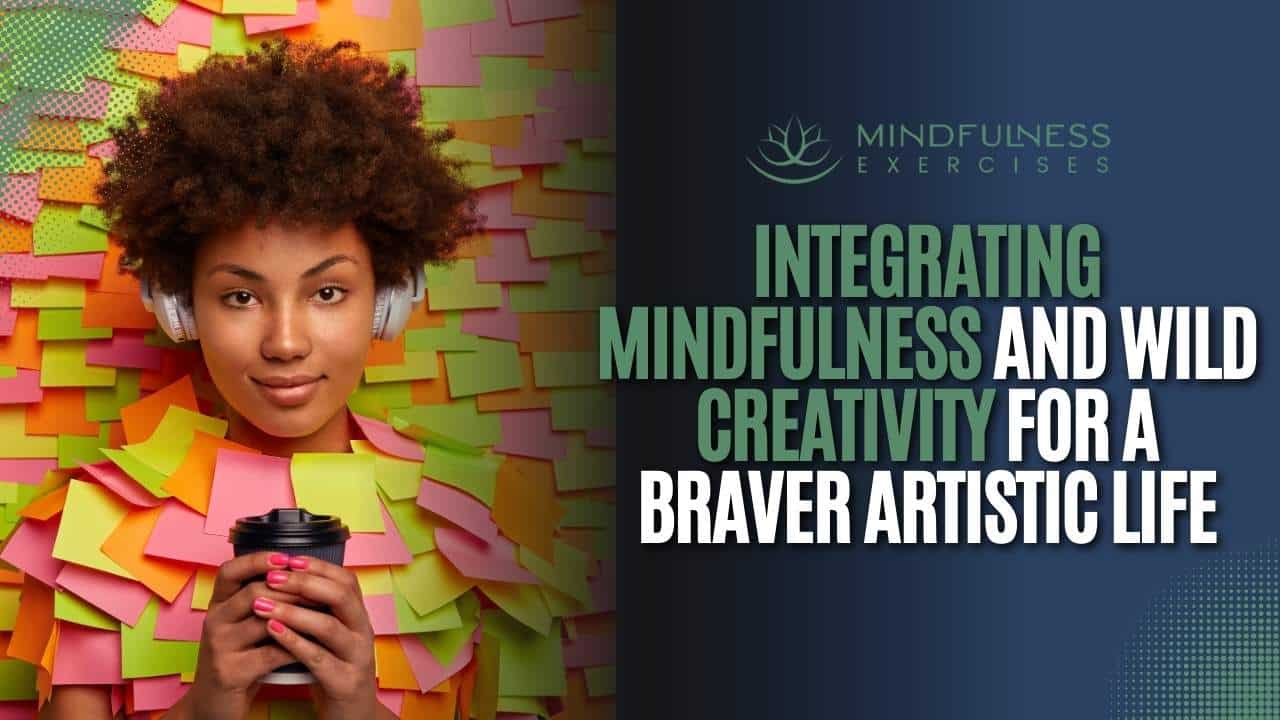
    Integrating Mindfulness And Wild Creativity For A Braver Artistic Life

    SF
    Sean FargoPublished February 6, 2026 · 6 min read
    Integrating Mindfulness And Wild Creativity For A Braver Artistic Life

    Listen to this episode

    Mindfulness Exercises Podcast

    Enjoying the episode?

    Follow the show in your podcast app. If this conversation supports your practice, a rating or review helps more listeners find it.

    Creativity is often framed as something you either have or don’t. Mindfulness, on the other hand, is frequently associated with quiet stillness, restraint, and discipline. At first glance, these two worlds can seem at odds—one wild and expressive, the other calm and contained.

    But when mindfulness and creativity are allowed to meet, something powerful happens.

    In this conversation on Integrating Mindfulness and Wild Creativity for a Braver Artistic Life, we explore how contemplative practice and bold artistic expression don’t compete—they strengthen each other. Using teacher and artist Anne Cushman’s lived experience as a guide, we trace a path from silence to color, from structure to play, and back again. What emerges is not a formula for better art, but a way of being that supports deeper presence, resilience, and courage—both on and off the cushion.

    This article is for anyone who has ever felt blocked, intimidated by creativity, or unsure how mindfulness fits into a full-bodied, expressive life. You don’t need to identify as an artist. You only need curiosity.

    Sponsored by our Mindfulness Meditation Teacher Certification Program MindfulnessExercises.com/Certify

    Episode Overview:

    Key Topics Covered:

    • The roller skating dream as a symbol of inner conflict between sage and trickster
    • How Spirit Rock integrated silence with painting, writing, and movement
    • Creativity as reclamation rather than talent
    • Process-focused training over outcome-based art
    • Mindfulness as a booster for focus, resilience, and divergent thinking
    • Six shared principles: space, body, emotions, sacred time, golden thread, letting go
    • Simple practices for tiny sacred windows and playful creativity
    • Approaching difficult material with protection and gentle bravery
    • Presence as the common ground between art and awakening

    Show Notes:

    From Silence to Color: A Story of Integration

    Anne Cushman’s journey began in deep silence. Years of intensive meditation practice shaped her inner life, training attention and cultivating steadiness. Yet alongside this devotion to quiet awareness, another energy kept knocking at the door—one that wanted movement, color, words, and play.

    A recurring roller-skating dream became a symbol of this inner tension. On one side was the sage: disciplined, contemplative, inward-facing. On the other was the trickster: playful, embodied, and unafraid of risk. Rather than choosing one over the other, Anne eventually recognized the invitation—to integrate them.

    At Spirit Rock Meditation Center, this integration became embodied. Silence was not abandoned, but expanded. Painting, writing, and movement were woven into retreat life, allowing creativity to arise from presence rather than performance. Art was no longer something done after practice—it became practice itself.

    Creativity Is Reclamation, Not Talent

    One of the most liberating reframes offered in this conversation is the idea that creativity is not about talent—it’s about reclamation.

    Many of us learned early on that creativity belonged to a select few. We were graded, compared, or subtly discouraged. Over time, creative impulses were set aside in favor of productivity, approval, or safety.

    Mindfulness invites us to notice what was lost without judgment. Creativity then becomes the act of reclaiming those disowned parts—not to become impressive, but to become whole.

    This is why process-focused training matters. When the emphasis is on showing up, experimenting, and staying present with what arises, fear loosens its grip. The outcome becomes secondary. What matters is the relationship we are building with our inner experience.

    How Mindfulness Supports Creative Flow

    Modern research increasingly supports what contemplative artists have long known: mindfulness enhances creativity in practical, measurable ways.

    Mindfulness practice has been shown to:

    • Increase divergent thinking (the ability to generate multiple ideas)
    • Improve focus and sustained attention
    • Build emotional resilience when encountering difficulty or self-doubt
    • Reduce reactivity to inner criticism

    When we are less hijacked by fear or perfectionism, the creative process becomes more fluid. We are better able to stay with uncertainty, follow curiosity, and recover when things don’t go as planned.

    Presence, it turns out, is the common thread that unites art and awakening.

    The Six Principles of Mindful Creativity

    Anne Cushman outlines six shared principles that bridge contemplative practice and creative expression. These are not rigid rules, but living orientations—ways of making space for both depth and play.

    1. Space

    Creativity needs room to breathe. Mindfulness teaches us how to pause, step back, and create inner spaciousness. This might mean releasing the need to fill every moment or resisting the urge to immediately judge what we make.

    2. The Body

    Creativity is not just a mental act—it’s embodied. Sensations, movement, and physical presence ground expression in lived experience. Whether through walking meditation, stretching, or expressive movement, the body becomes a doorway into fresh insight.

    3. Emotions

    Rather than obstacles, emotions become raw material. Mindfulness allows us to feel without drowning, to approach intensity with curiosity. Creativity gives those feelings shape, color, and voice.

    4. Sacred Time

    Art and practice both benefit from protected time. Even small, consistent rituals signal to the nervous system that this space matters. Sacred time doesn’t need to be long—it needs to be intentional.

    5. The Golden Thread

    This is the underlying intention that runs through both mindfulness and creativity: presence. Staying connected to what is most alive in the moment, even when the content changes, keeps the process honest and nourishing.

    6. Letting Go

    Perhaps the most challenging principle. Letting go of outcomes, identities, and expectations allows creativity to remain dynamic. Mindfulness trains this muscle daily, reminding us that nothing needs to be fixed or finalized to be valuable.

    Tiny Sacred Windows and Playful Practice

    One of the most practical takeaways from this conversation is the idea of tiny sacred windows.

    You don’t need hours of uninterrupted time or a perfectly curated studio. Five minutes of free writing. A single sketch. One mindful breath before beginning. These small acts build trust and momentum.

    Playfulness is equally important. When creativity is approached with lightness, fear softens. Curiosity replaces evaluation. Over time, consistency matters far more than intensity.

    Approaching Scary Material with Gentle Bravery

    Creative work often leads us toward material we’d rather avoid—grief, anger, vulnerability, or unresolved memories. Mindfulness offers tools for approaching this terrain with care.

    Gentle bravery means:

    • Working in manageable doses
    • Establishing clear boundaries and rituals for opening and closing
    • Returning to the body when emotions intensify
    • Choosing protection over pressure

    This approach honors both truth and safety, allowing expression without retraumatization.

    Presence: The Bridge Between Art and Awakening

    Whether we are meditating or making art, the invitation is the same: to be here.

    Presence unites silence and sound, stillness and movement, insight and expression. It allows creativity to become a path of awakening rather than another arena for self-judgment.

    When mindfulness and wild creativity walk together, life itself becomes more textured, honest, and alive.

    Next Steps: Practicing with Guidance

    If this conversation has sparked something in you and you’re looking for practical next steps, Anne Cushman teaches online. She offers half-day and day-long events that combine meditation, writing, and movement—designed to support creativity rooted in presence rather than pressure.

    You don’t need to become an artist to benefit. You only need a willingness to show up and explore.

    Creativity, like mindfulness, is not about becoming someone else. It’s about coming home to what’s already here.

    Additional Resources:

    Transcript

    Show transcript· 15 min read

    Where Spirituality Meets Creativity

    Speaker 1 · 0:00Okay, welcome to the deep dive. So today we're going to get into something that maybe feels a bit contradictory at first glance. This really powerful, sometimes surprising connection between deep spiritual practice and, well, wild creative expression.

    Speaker 2 · 0:16Aaron Powell Yeah, it's kind of like where the monastery meets the mosh pit, right?

    Speaker 1 · 0:20Yeah.

    Speaker 2 · 0:20And our main source today, well, it really dives into this through Anne Cushman's work. I mean, she's a really foundational figure in Western spiritual teaching, known for weaving together Buddhism and yoga, teaching at big centers like Spirit Rock, Krapalu, and she wrote books like The Mama Sutra.

    Speaker 1 · 0:36Aaron Powell Right. And what's so interesting, I think, is that she really embodies how these two worlds don't just, you know, sit side by side. They actually feed each other. But it wasn't exactly a smooth ride for

    The Roller Skating Dream Conflict

    Speaker 1 · 0:46her. The sources talk about this great image of this central conflict she felt, this identity crisis, just as she was launching a big teaching program in her first novel.

    Speaker 2 · 0:54Aaron Powell Oh, yeah, the famous roller skating dream. It's brilliant. She dreamt she was just gliding around this ice rink having an amazing time, but she's wearing this completely playful and irreverent outfit.

    Speaker 1 · 1:05Okay, like what?

    Speaker 2 · 1:06Like a black velvet bikini and white fur-trimmed rollerblades.

    Speaker 1 · 1:09Wow. Okay. That's quite the image.

    Speaker 2 · 1:11Exactly. But then the fun kind of grinds to a halt because this thought flashes through her mind. Oh no, what if I run into Jack Cornfield?

    Speaker 1 · 1:19Ah. And for anyone who doesn't know, Jack Cornfield is, well, a giant in meditation, one of the key teachers who brought Vipassana to the West. He represents that really serious, disciplined side of spiritual life.

    Speaker 2 · 1:32Aaron Powell Precisely. So in the dream, she feels totally exposed. Like she's caught between these two archetypes. On one hand, the solemn, serious spiritual sage, the meditation teacher. And on the other, this wild, playful, irreverent trickster or artist, you know, the one in the fur trimmed rollerblades.

    Speaker 1 · 1:49Yeah, that makes sense. Aaron Powell Why do you think that fear of being caught is so common for people trying to balance creativity in a spiritual path?

    Speaker 2 · 1:55Aaron Powell Well, I think we build up these really rigid ideas about what holiness or seriousness is supposed to look like. We get this idea that if we're truly serious about awakening, we have to somehow leave behind the messy parts, the playful parts, the vulnerability that art often requires. The fear is basically that the artist isn't welcome in the meditation hall. And the sources really show that for her to move forward, she had to stop trying to pick one. She had to integrate them.

    Speaker 1 · 2:22Okay, so let's unpack how she actually did that. How do you merge something that often requires deep silence with something that, you know, often demands loud, messy expression?

    Integrating Practice At Spirit Rock

    Speaker 2 · 2:33Well, she first made the merger visible in her work, her novel Enlightenment for Idiots, which is this funny story about a wannabe yoga teacher messing up in India. That was kind of the first proof. It showed that, yeah, irreverent, playful art could coexist with a dedicated spiritual practice. But then institutionally, the integration happened in places like Spirit Rock.

    Speaker 1 · 2:51Aaron Powell That sounds like a fascinating setup. Spirit Rock, as you said, it's known for these deep, often silent retreats. So how do you bring creativity into that kind of structure without, I don't know, breaking the silence?

    Speaker 2 · 3:05Aaron Powell They came up with something called the spirit of creativity retreat. It was actually held within the structure of a silent meditation retreat, but they adjusted the schedule. So there were dedicated workshops for things like painting, writing, and even improvisational movement mixed in with the sitting.

    Speaker 1 · 3:20Wow. That is powerful. I love the description in the sources of the actual space there, how the upstairs rooms were for the quiet, seated meditation focused inward. But then the downstairs painting studio became this literal

    Reclaiming A Silenced Creative Voice

    Speaker 1 · 3:33visible expression of what was happening internally.

    Speaker 2 · 3:36Oh, it was apparently quite a sight. The walls would just get covered in this explosion of color, you know, demons, snakes, flowers, abstract stuff, babies, basically everything bubbling up in the quiet mind when you stop pushing it down. It looked, as she put it, like the meditating minds from upstairs had just exploded all over the walls downstairs. So the structure itself gave the inner child, the trickster, full permission to join the sage.

    Speaker 1 · 4:01What's really encouraging about this part of her story is that it wasn't just about, you know, having some innate talent. She really had to actively reclaim her creative voice. She talks about being told pretty bluntly early on that she did not have any talent and couldn't sing, and how those words just knock the voice out of her. That resonates, I think, with so many people.

    Speaker 2 · 4:20Absolutely. It points to a really fundamental idea here. Creativity is often a practice of reclamation, not just displaying some natural gift. And the way she did it was by seeking out classes that focused entirely on the process, not the end result. Things like the painting experience with Michelle Cassous, which is all about the act of painting itself, or drumming, five rhythms dance, writing workshops with people like Natalie Goldberg. The goal was always about liberating something inside, not about performance or publication.

    Speaker 1 · 4:50So it sounds like the real key is shifting your whole relationship with the activity itself.

    Speaker 2 · 4:55Totally. And this is where the research kind of backs up this integration. Mindfulness practice itself is like the engine here. When you practice being present without judging yourself, you're actually calming down the prefrontal cortex that's your inner critic. And doing that directly helps switch on divergent thinking.

    Mindfulness And Divergent Thinking

    Speaker 2 · 5:12Which is what exactly Divergent thinking is basically the ability to generate lots of different unusual ideas or solutions for a problem. It's the brainstorming part of the brain. So by calming the judge, you let the idea factory run more freely.

    Speaker 1 · 5:26Okay, got it.

    Speaker 2 · 5:27And beyond that, mindfulness obviously improves focus, which you definitely need for the long haul of complex creative work. And maybe most importantly, it builds resilience. I mean, the creative path is full of setbacks, rejection, drafts that don't work. Mindfulness gives you the tools to meet that stuff without just giving up entirely.

    Speaker 1 · 5:47Right. Okay, this brings us to something really practical for you, the listener. The sources boil all this down into six core principles that are common to both mindfulness practice and creative practice. Let's maybe dive into these. The focus shifts here, doesn't it? Away from

    Principle 1: Make Space

    Speaker 1 · 6:03the output, the finished product, and more towards the qualities of being that allow creativity to happen.

    Speaker 2 · 6:08Exactly. And the very first principle is maybe the most fundamental. Open up space. Creativity just needs air. Our modern lives, they're so packed, they tend to suffocate it. You can't really force flow into a schedule that's jam solid.

    Speaker 1 · 6:20So if creativity needs space, how do we actually make room for it without, you know, quitting our jobs and heading for the hills?

    Speaker 2 · 6:26Well, it often starts with just an internal shift. The source mentions this self-guided practice, almost like a mantra, to counter that time anxiety we all feel. There's plenty of time, there's plenty of space. You're reminding yourself that the feeling of scarcity is often just a perception. And practically, making space can be as simple as leaving 15 minutes totally unscheduled after lunch, or just deciding not to fill every single gap.

    Speaker 1 · 6:51That feels manageable. And it leads nicely into principle two, which is about shifting into the body, be present in your body. We often think creativity is all in the head, but the sources

    Principle 2: Sense The Body

    Speaker 1 · 7:01really emphasize it's a deeply sensory thing.

    Speaker 2 · 7:03Oh, absolutely. Creativity is built from the ground up, and the ground is pure sensation. What we hear, what we taste, see, smell, feel, those are the raw materials. They're the specific concrete building blocks for any art that really connects. If your senses are kind of dulled or numbed out, your art is likely to feel abstract, maybe a bit vague.

    Speaker 1 · 7:22I love that example from the source about seeing something totally ordinary, made extraordinary, just through intense perception, like going to a museum and seeing a sculpture that's just a massive apple core, like six feet tall. And suddenly this mundane thing, a half-eaten piece of fruit, becomes monumental, meaningful, just because an artist really saw it, really perceived it.

    Speaker 2 · 7:41Yes. And the practical tool she suggests for tuning your senses is super simple. Just quickly jot down sense data. Like right now, you could pause and just note down one thing you see, one thing you smell, one thing you hear. Doing that regularly forces you to actually be in the moment, inhabiting your senses. It creates a doorway into deeper observation, which fuels richer art.

    Speaker 1 · 8:03Okay, that flows really well into principle three, which deals with what happens when you are present and sensitive. Be present to your emotions.

    Principle 3: Feel Your Emotions

    Speaker 2 · 8:11Right. Because once you're paying attention, feelings come up. And the key here is that emotions, even the difficult ones, the painful ones, they aren't obstacles you need to get rid of. They're actually fuel. They're like compost for both awakening and creativity. Creative expression is one of the best ways we have to kind of dislodge intense emotions, to give them somewhere physical to go, whether that's into a song, a poem, a painting, whatever.

    Speaker 1 · 8:35It makes me think of that idea. I think it's Annie Dillard or maybe Annie Prulix about working along the nerve of one's most intimate sensitivity. You have to be willing to feel the stuff that's uncomfortable.

    Speaker 2 · 8:47Precisely. There's that famous story about Joyce Carroll Oates. When her students would complain about all the drama or struggle in their personal lives, her advice was incredibly direct. Put it in your writing. Emotions are just raw energy. Art gives that energy a container, a place where it can transform into something else.

    Speaker 1 · 9:03Okay. So we've got space, body, emotions, but this all sounds very fluid, maybe spontaneous. Is there also a need for structure, for discipline?

    Principle 4: Sacred Time And Discipline

    Speaker 1 · 9:12That seems to be principle four. Carve out sacred time.

    Speaker 2 · 9:16Yes, absolutely. This is where the discipline you build in mindfulness practice really pays off for your art. In yoga, there are these two key concepts, apyasa and viragya.

    Speaker 1 · 9:26Can you break those down quickly? They get thrown around a lot.

    Speaker 2 · 9:29Sure. Apasa is basically the effort, the consistent practice, the discipline of just showing up. Showing up to the cushion, the mat, the journal, the studio, even, and especially when you don't feel inspired, it's the doing it. Viraga is the other side of the coin. It's non-attachment, surrender. It's letting go of the outcome once you're there. Surrendering to whatever happens in that moment of practice. But the key is you really need the commitment of a piazza first, the showing up before the virage, the letting go and the flow can really happen.

    Speaker 1 · 9:59But the sources also acknowledge look, most people listening probably don't have three hours blocked out every day for a piazza.

    Speaker 2 · 10:05And that's crucial. The advice is to reframe it. Call that time playtime instead of practice or work. That can take some of the pressure off. And think small. And Lamotte's advice was beautifully tiny. Just commit to sending one email a day to a friend about what you want to write.

    Speaker 1 · 10:21Or that amazing example of William Carlos Williams, a busy doctor, writing these incredible short poems, like between walls, literally on a prescription pad between seeing patients. It shows that even a few minutes of truly sacred intentional time can be way more powerful than waiting for some perfect eight-hour block that just never shows up.

    Speaker 2 · 10:41So true. Okay, moving to principle five. Listen to the inner impulse. So you've made the space, you've carved out the time. Now what? You have to learn to trust what actually wants to emerge in that space.

    Speaker 1 · 10:53How do you know though? How do you tell the difference between a genuine creative impulse and just, you know, a random thought or getting distracted?

    Speaker 2 · 10:59Well, the poet William Stafford had this beautiful

    Principle 5: Follow The Golden Thread

    Speaker 2 · 11:02way of describing it. He called it the golden thread. He felt like every little detail, every fleeting thought or image is like the end of a golden thread. And the job of the writer, or any creator really, isn't to force some grand plan onto the work. It's more about humbly following that thread, trusting the aliveness, the energy of that spontaneous impulse. It requires really deep listening, paying close attention.

    Speaker 1 · 11:26Which leads perfectly into what feels like the most liberating principle, number six, let go of doing it right.

    Speaker 2 · 11:32Yes. This is maybe the toughest one, especially for people who come from backgrounds where performance or grades were everything. That internal military commander, the one demanding perfection, it has to be kindly asked to step aside if the goal is genuine expression and liberation.

    Speaker 1 · 11:49Yeah, it's that pressure that just freezes so many of us before we even start.

    Speaker 2 · 11:52Exactly. And William Stafford, again, his famous advice for writer's block, just nails this attitude of surrender. I lower my standards. You set the bar so low that

    Principle 6: Let Go Of Perfection

    Speaker 2 · 12:03success is basically guaranteed just by showing up and putting something down, anything at all.

    Speaker 1 · 12:07That's the genius of Anne Lamot's shitty first drafts idea, too, right? Just embrace the mess. That first messy, imperfect attempt isn't failure. It's the fertilizer. It's the compost that allows the next, maybe better version to actually grow. If you try to write the perfect final draft right out of the gate, you'll likely never even begin.

    Speaker 2 · 12:25So the act of creating becomes less about performance for someone else and much more a practice of non-attachment. It's an exploration, a movement, not an exam.

    Speaker 1 · 12:36Okay, so bringing it towards a close, there's one final idea the sources really stressed, which is about the courage to explore the stuff that makes us nervous, the material that feels vulnerable, maybe even a bit taboo.

    Speaker 2 · 12:48We tend to shy away from our scariest material, right? Because we're afraid of being judged or maybe exposing too much. The analogy you use comes from a poem called Fearing Paris. The idea is if you're really afraid of Paris, you might end up avoiding all of France just to be safe. But in doing that, you miss

    Brave Work With Scary Material

    Speaker 2 · 13:06out on all the energy, all the richness that place holds for you. Often the story or the feeling you think you shouldn't touch. That's where tremendous creative power lies.

    Speaker 1 · 13:14Aaron Powell So if that fear is kind of part of the deal, how did Anne Chrisman practically navigate telling stories that felt maybe too personal or too wild or just embarrassing?

    Speaker 2 · 13:23Well, she used what you could call gentle bravery. She found these really practical ways to let the impulse come through while still managing her own comfort. Like she'd journal super privately on an airplane, using a white-on-white screen setting so nobody could possibly peek. Or when she gave her novel to her parents, she literally put little sticky notes on certain pages saying, Parents, skip this part. It's about giving yourself permission, but also giving yourself protection when you need it.

    Speaker 1 · 13:52Okay, so when we weave all these practices and principles together, the space, the body, the emotions, the time, the impulse, letting go, the courage, what's the common thread? It seems to keep coming back to just paying attention.

    Speaker 2 · 14:04Exactly. That's the heart of it.

    The Common Thread: Deep Presence

    Speaker 2 · 14:06The core purpose, really, of both mindfulness and creativity is deep presence. There's a great line from the poet Jane Hirschfield talking about the Zen monk basha, which she said that Zen and poetry are basically just a set of tools for discovering what can be known when the world is looked at with open eyes. Mindfulness is that intentional discipline practice of opening your eyes. And that directly fuels and deepens the whole creative process.

    Speaker 1 · 14:28That really ties it all together beautifully. So the key message for you listening seems to be that creativity isn't some rare commodity for a special few people born with talent. It's more like an inherent part

    Next Steps And Encouragement

    Speaker 1 · 14:40of life itself, flowing through all of us. And the practice, whether mindfulness or creative, is mostly about learning how to get out of its way.

    Speaker 2 · 14:48And if this conversation has sparked something in you and you're looking for practical next steps, Ann Cushman actually teaches online. She does half day and day-long events combining meditation, writing, movement. And more broadly, we'd really encourage you to seek out teachers or workshops that emphasize process over product, teachers who have that welcoming, everyone can do this kind of vibe.

    Speaker 1 · 15:11Yeah. You know, we often carry around these old criticisms. I can't sing, I have no talent, and we let them define what's possible for us now. But what if the most courageous, maybe the most rewarding, creative act you could do today is simply to start that journey of reclamation, just trusting that the movement itself, the showing up with presence, is the medicine, whatever the outcome looks like.

    Speaker 2 · 15:30A beautiful thought to end on. Thank you for diving deep with us today.

    Speaker 1 · 15:34We'll see you next time.

    Share

    Continue reading

    • Grounding Through Anxiety With Senses

      Grounding Through Anxiety With Senses

      Read
    • Shamatha Vipassana Explained For Modern Minds

      Shamatha Vipassana Explained For Modern Minds

      Read
    • How To Stop Believing You Are Not Enough

      How To Stop Believing You Are Not Enough

      Read

    Professional training

    Accredited mindfulness teacher certification

    Trusted by teachers in 100+ countries

    Structured training, CE credits for eligible pay-in-full registrants, and support for teaching without self-doubt — after you have explored this episode.