🎉 $1,000 off Mindfulness Teacher Certification — annual sale ending soon

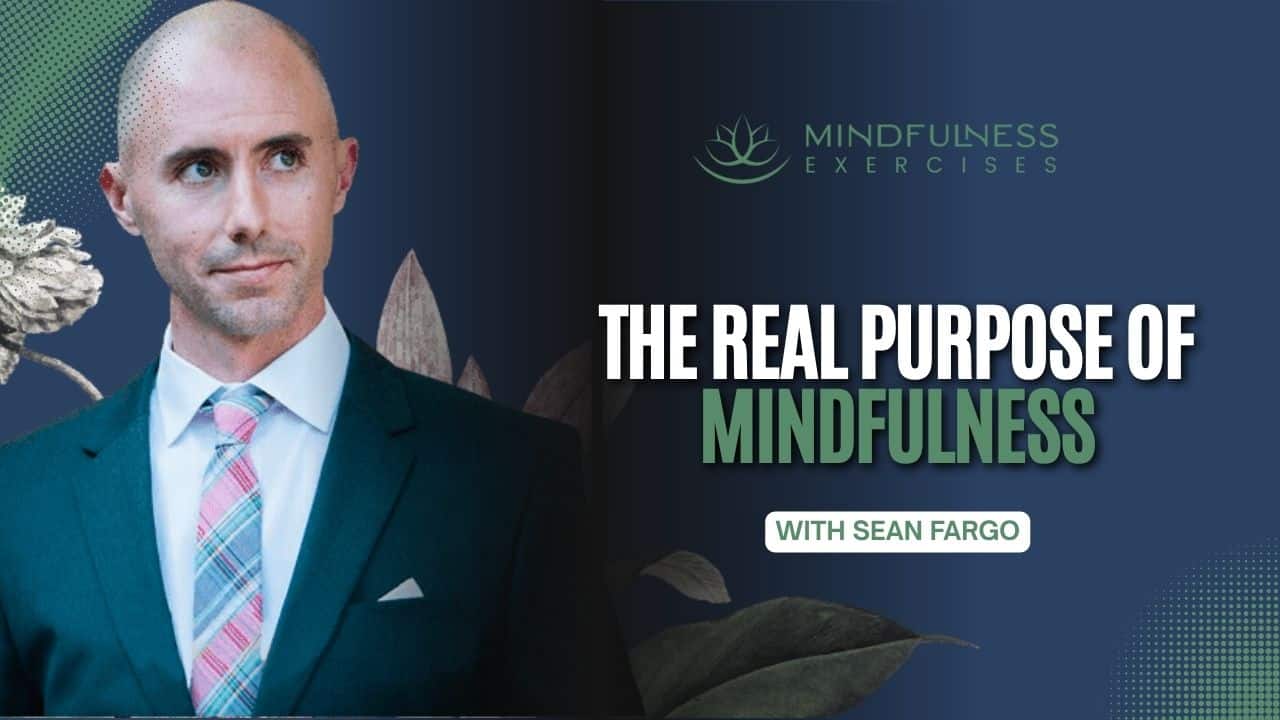
    The Real Purpose of Mindfulness

    SF
    Sean FargoPublished February 6, 2025 · Updated November 4, 2025 · 3 min read
    The Real Purpose of Mindfulness

    Loading episode player

    The Real Purpose of Mindfulness — Tunein Logo

    TuneIn

    The Real Purpose of Mindfulness

    In this deep and insightful episode, Sean Fargo offers clarity around a common misconception: that mindfulness is about feeling calm, fixing discomfort, or escaping difficult emotions. Instead, he reframes mindfulness as a courageous, compassionate act of meeting life exactly as it is — including moments of discomfort, fear, anger, or planning. Through stories, teachings, and grounded examples, this episode serves as a reminder that mindfulness isn’t about avoiding experience, but fully embracing it with gentle awareness.

    Sponsored by our Mindfulness Meditation Teacher Certification Program MindfulnessExercises.com/Certify

    What You’ll Learn in This Episode:

    • Why mindfulness isn’t about fixing or avoiding
    • How we sometimes use mindfulness tools as distractions
    • The power of meeting emotions with presence, not preference
    • Why presence matters more than performance in mindfulness
    • How mindfulness reveals patterns underneath emotions
    • The invitation to meet life as it is, every moment

    Show Notes:

    Why mindfulness isn’t about fixing or avoiding

    Many people approach mindfulness as a tool for calming down or getting rid of difficult emotions. This episode challenges that belief and reveals that the heart of mindfulness lies in meeting whatever arises — even discomfort, resistance, or strong emotions — without trying to change it. Sean explains that true mindfulness is about being with life as it unfolds, rather than using meditation to escape it.

    How we sometimes use mindfulness tools as distractions

    It’s easy to fall into the habit of using mindfulness practices like breath awareness or body scans as a way to bypass emotional discomfort. Sean reminds us that while these tools are incredibly helpful, they lose their power when used to avoid what’s truly present. Instead of rushing back to the breath or a calming sensation, the invitation is to gently stay with what’s arising — even if it’s messy or unclear — and to trust that this presence is enough.

    The power of meeting emotions with presence, not preference

    Whether it’s rage, fear, planning, or judgment, emotions often arise with intensity. Rather than labeling these as bad or unwelcome, mindfulness teaches us to turn toward them with interest and care. Sean illustrates how naming and feeling what’s present — without needing it to change — is where the real transformation begins. It’s not about transcending emotion, but about making room for it and learning from its message.

    Why presence matters more than performance in mindfulness

    Mindfulness isn’t about doing things “right” — it’s about showing up with curiosity and honesty. Sean explains that mindfulness teachers, coaches, and practitioners don’t need to have perfect answers. What matters is how we support others in exploring what’s present in their moment-to-moment experience. Whether guiding someone through a tough story or feeling into a difficult emotion, our job is to be present with them — not to fix, correct, or analyze.

    How mindfulness reveals patterns underneath emotions

    Practicing mindfulness regularly helps us notice patterns like planning, overthinking, or controlling. Sean shares how staying present with these habits can reveal deeper layers — such as fear or the need for certainty. As we sit with these patterns over time, we may discover how tightly we hold onto them and explore whether that holding is helpful or limiting. This awareness helps soften rigid patterns and makes space for self-compassion and flexibility.

    The invitation to meet life as it is, every moment

    Ultimately, mindfulness invites us to stop resisting and start relating. Rather than striving for peace or trying to reach a certain state, we are called to meet each moment with openness — whether it’s calm, chaotic, painful, or joyful. Sean beautifully reminds us that the real purpose of mindfulness is not to transcend life, but to fully live it — breath by breath, moment by moment, with kindness and authenticity.

    Additional Resources:

    Transcript

    Show transcript· 7 min read

    Welcome to the Mindfulness Exercises Podcast, your space to deepen your presence, elevate your mindfulness teaching, and embody mindfulness with confidence, authenticity, and integrity. Join us as we explore insights and tools to transform lives, including your own. Hi, I'm Sean Farco. In today's episode, we're going to explore an important yet often misunderstood topic. Mindfulness is not what most people think it is. Many of us begin our mindfulness journey with this idea that it's about stopping certain thoughts or avoiding certain emotions, or that we need to be calm. But true mindfulness invites us to meet whatever arises without judging it to be good or bad, without resisting it, or needing to fix it. Whatever arises is an object of mindfulness, including judgment, resistance, or agenda. So in this episode, we're going to unravel what mindfulness is, what it isn't, and how it can transform not only our meditation practice, but also our everyday experience. This took me years to start to realize. And it's not just the jumping ahead by a minute, it's like way more than this. You know, mindfulness is not just like coming back from somewhere, it's meeting this. There's a difference. Mindfulness is not like stopping something to start this, jumping. Feels like this. And come back to feel relaxed with breathing. Or I have to scan my body to see if I can notice what the bones feel like. Or I have to feel meta. I need to feel love. There's nothing wrong with feeling love. Nothing wrong with feeling bones. Nothing wrong with breathing. But am I doing those things in order to not feel all these other things? Or because I think I should be doing this thing, or that I shouldn't feel those things, or that mindfulness is about transcending all these other things. In our journey, cultivating breath awareness is a great first step. Doing the body scan as a meditation. Awesome. You know, opening the heart, beautiful. There are these practices that we're practicing in meditation that can be helpful later on as a tool. You know, I can practice the body scan, even walking down the sidewalk or waiting in line at the grocery store to feed it, find a sense of groundedness, centeredness, get a sense for what's going on in the body. I can cultivate the heart and notice what's getting in the way of the heart opening, or just cultivating a remembering of connection, care. But oftentimes we use these tools as the focus so that I don't have to feel all these other things. Like, oh, I better get back to the tools, or I need to ironically like distract myself from life to get to the tool that's meant to help me connect to life. If something's feeling overwhelming or too intense, then yeah, back off, find some uh find a safe way of being, take care of yourself, ask for help, etc. Mindfulness is tending to whatever arises. So if jumping ahead is what's arising, notice the energy of jumping ahead. If rage is arising, tend to the energy of rage and the layers of that, etc., etc., etc. And so it's kind of one of the beauties of mindfulness is that, like as facilitators, coaches, guides, teachers, in a way it's kind of easy to work with people. Whatever they say or whatever's coming up for them, any emotion that they're presenting, if they give you a three-minute monologue of what's going on in their lives, we can invite an exploration of how that feels right now. How does that feel in the body? How are we holding ourselves? Are we breathing? Are there judgments? Can we explore this moment for you? You know, on this list of physical descriptors, what can you feel in different parts of the body? On this map of emotions, what specific emotions are present? And can we practice noticing them moment to moment without trying to feel a certain way? You know, like Jack Cornfield often leads a meditation in which we're grounding in the body, we're just kind of breathing, sensing in the body. And it's basically a mindfulness of breathing practice. We're just kind of noticing the belly rise and fall like waves of an ocean. And he makes it very clear that if a strong emotion arises, or if something predominant comes into the mind that's kind of pulling you away, or that's really top of mind, or something strong is arising for you, that it's okay to not tend to the belly as you breathe. It's okay to tend to those emotions. Meet whatever's arising. You know, if it's a jumping ahead, meet that. Notice what that's like. If it's a strong emotion, yeah, open to that, notice the energies of that as it unfolds moment to moment. See, notice how it's changing as you bring this gentle awareness to it. And then if that energy of jumping or that emotion, if the energy of that dissipates, which it will over time, then we can come back to breathing in the belly. But outside of a meditation, like if we're not practicing mindfulness of breathing, and this strong emotion comes up, a lot of us will have this reflex to go to breathing. Oh, I better meditate on an object, like a concentration object or a part of the body that you know I tend to feel relaxation of. Even though if we were meditating beforehand and the emotion arose, the invitation would be to meet the emotion. But outside the meditation in daily life, if that predominant emotion arises or that energy of jumping arises, the practice is not to go to breathing. I mean, it it can be a good practice if it's appropriate, or if we want to attend to this later for some reason, that's fine. We can go to breathing. But the main invitation, the primary invitation is to meet that emotion rather than jumping to a tool to not meet the emotion. I hope this is making sense. It it takes most people years to really appreciate this. So if if some of you are not quite there on an experiential level, that's totally fine. It may sound confusing because you may sound like we're sending mixed messages, but the main invitation is to meet whatever's here, whether it's in a meditation or not, including jumping or whatever, you know, planning. Oh, yes, planning feels like this. It's not bad or good. It's just that's what planning is. And and the more we sit with planning, the more we can sense into the layers of what's underneath planning and the patterns of planning. And is there a line between when planning is say wholesome or detrimental? Am I holding on to planning maybe a little too tightly? And what does that feel like to need to plan a lot all the time? Does that get in the way of holding things a little bit more lightly, allowing for mystery, being self-compassionate? Yes, there are reasons why I plan a lot. And I'm not saying you plan too much, but like for some of us, maybe we do plan too much. Oftentimes it's out of a need to think that we can control something, which often comes from a fear of many things. But so is there layers of fear? Is there a sense of control? You know, at what point is planning really helpful? What does it feel like to plan sometimes? Maybe it's super wholesome, super helpful. Just kind of sensing into the patterns and the feelings of planning. Thank you for joining me in this exploration of mindfulness. Remember that mindfulness is not about transcending or avoiding or trying to be a certain way. It's about meeting life however it is, with openness, curiosity, and gentleness. If today's discussion resonated with you and you'd like to learn more about how to bring these teachings to others, feel free to check out our Mindfulness Meditation Teacher Certification at mindfulnessercises.com slash certify, or we'd be grateful if you left us a five-star review on wherever you get your podcast. Thank you for joining us, and I wish you well. Until next time, stay present, stay grounded, and continue showing up with authenticity and compassion. Thank you for listening.

    Share

    Continue reading

    • Grounding Through Anxiety With Senses

      Grounding Through Anxiety With Senses

      Read
    • Shamatha Vipassana Explained For Modern Minds

      Shamatha Vipassana Explained For Modern Minds

      Read
    • How To Stop Believing You Are Not Enough

      How To Stop Believing You Are Not Enough

      Read

    Professional training

    Accredited mindfulness teacher certification

    Trusted by teachers in 100+ countries

    Structured training, CE credits for eligible pay-in-full registrants, and support for teaching without self-doubt — after you have explored this episode.