
TuneIn
Some mornings arrive with the kind of stress that settles into your shoulders before you’re even fully awake.
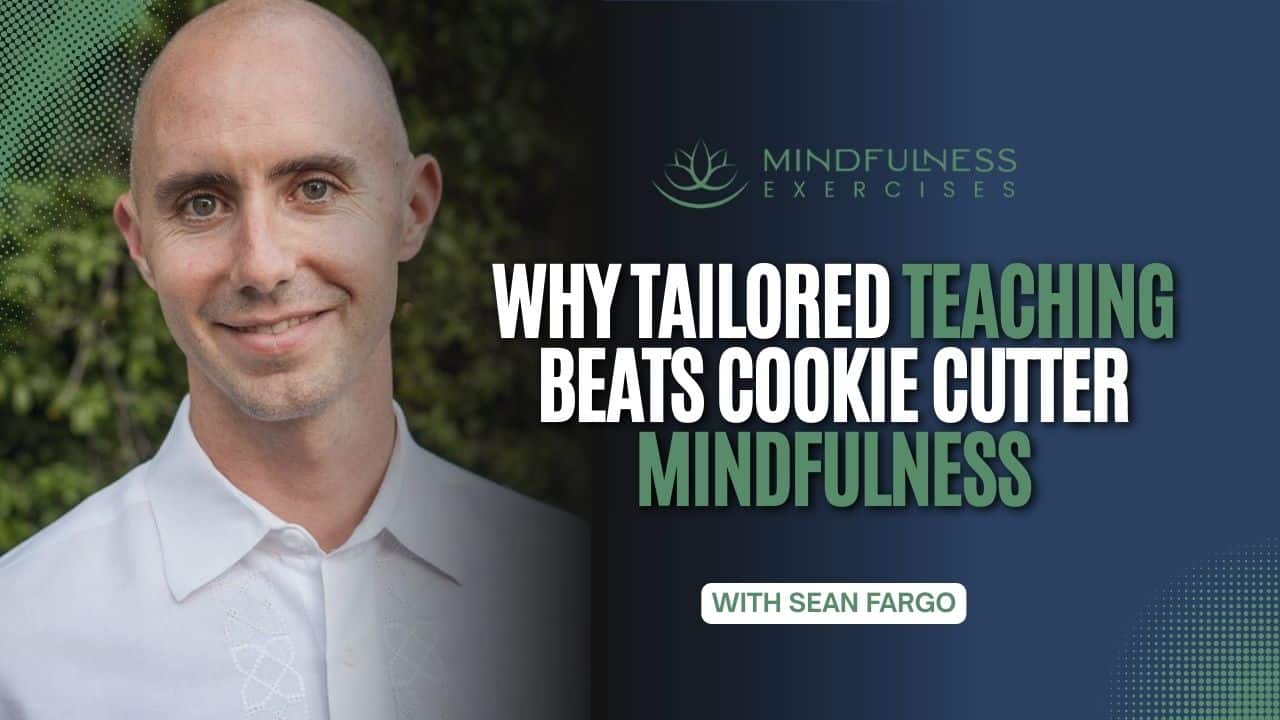
In a short talk on the Mindfulness Exercises podcast, Sean Fargo starts with a stressful morning of juggling work and family, and the deep tissue sports massage that followed. From there he turns to a common challenge for mindfulness teachers: knowing what to teach to a given audience. His answer is to make mindfulness relevant to the people you are teaching.
The episode runs about three minutes and is for new instructors and for teachers with years of guiding behind them. It speaks to the question:
“What should I teach this group, right now?”
Sponsored by the Mindfulness Meditation Teacher Certification MindfulnessExercises.com/Certification
Episode Overview:
- Why relevance matters in teaching mindfulness
- A stressful morning and a deep tissue massage
- Taking care of the body and feeling into what we’re carrying
- Trauma-informed teaching principles
- How asking about people’s challenges and experience guides what to teach
- Cues that sound human, warm, and invitational
- Short, concrete, practical practices for time-pressed groups
- Tailoring mindfulness for healthcare teams, caregivers, corporate groups, and teens
- Sean’s 900-minute mindfulness teaching curriculum
- How to adjust tone, length, and focus
- Practical tools teachers can use today
Show Notes:
Routine Is Comfortable—But Not Always Helpful
Many of us teach mindfulness the way we learned it: with a familiar sequence, a reliable script, a structure we can lean on. There’s comfort in that.
Sean names the challenge this creates: there are so many mindfulness practices, principles, and foundational layers that it is hard to know what to teach to whom, whether the audience is patients, students, or clients. He makes a point of stressing that mindfulness needs to be relevant to the people you are teaching.
Teaching from a premade script, even a good one, can feel like laying a template over someone’s lived experience. It fits in some places and misses in others. Relevance is the fix Sean points to.
The Body as a Compass: Listening Before Leading
Sean says a stressful morning and a deep tissue massage reminded him how important it is to take care of our bodies, to unwind tension, and to feel into the body and get to know what we’re carrying. The questions below extend that idea to a room of students.
Before deciding what practice to offer, ask:
- How is the body right now?
- What signals are showing up?
- Where is attention naturally drawn?
- What’s the emotional weather of the room?
These can be quick: a brief read of posture, energy, and tone.
Teaching begins with listening: to yourself, to your students, and to the moment.
Why Trauma-Informed Teaching Matters
Sean touches on trauma-informed care in passing. He recommends a trauma-informed therapist for deep tissue massage, because we don’t want to exacerbate any trauma we may or may not have.
The same stance applies in teaching, because we rarely know what someone is carrying. Trauma-informed teaching is a stance rather than a special module.
Trauma-informed teaching includes:
- using invitational language (“if it feels supportive…”)
- avoiding commanding or clinical phrasing
- emphasizing choice and agency
- offering multiple options and anchors
- keeping everything adjustable
The intent is a space where participants can explore without pressure.
Language Matters: Human, Not Clinical
Sean says to find the right wording, stories, and practices that people can relate to. These examples show one way to soften stiff or clinical cues.
Instead of: “Bring your attention to your breath and observe without judgment…”
Try: “Maybe notice how your breath feels right now, in your own way.”
Instead of: “Scan your body from head to toe…”
Try: “If it feels okay, you might check in with a few places in the body and see what’s there.”
Warmth and plain wording make mindfulness easier to take in.
Short, Concrete Practices Often Work Best
Sean stresses making mindfulness as applicable and practical as possible for the people in front of you.
Shorter practices are one way to do that for groups such as:
- overwhelmed parents
- corporate teams on tight schedules
- medical professionals on shift
- teens with limited attention
- caregivers who show up emotionally drained
A two-minute grounding practice can fit where a 20-minute one cannot.
Listening for Needs: The Art of Asking small questions
Sean’s approach is to ask questions about what people’s challenges are, what their experience is like, whether they have tried different kinds of mindfulness practices, and what has worked and what hasn’t. Then make the practices and teachings relevant for them.
Other short questions you might use:
- “What kind of day has it been so far?”
- “What would feel supportive right now?”
- “More grounding or more openness today?”
- “Energy check: low, medium, or high?”
No intake form is needed, only curiosity.
Adapting for Different Audiences: Practical Examples
Sean mentions teaching patients, students, and corporate clients. These adjustments are suggestions for common groups:
Healthcare workers
-
Keep it short.
- Emphasize grounding and body-based presence.
- Use steady, practical language.
Corporate teams
-
Normalize distraction.
- Highlight stress relief, not spirituality.
- Offer techniques useful between meetings.
Caregivers
- Focus on compassion for fatigue.
- Keep practices restorative, spacious, gentle.
- Reinforce permission to rest.
Teens
- Make it relatable and concrete.
- Use shorter silences and accessible language.
- Give agency and options, not instructions.
The goal is always the same: meet people where they are.
A Plug-and-Teach Curriculum: 900 Minutes of Adaptable Training
Sean describes a mindfulness teaching curriculum his team put together a couple of months before this recording. It is about 900 minutes of teaching material you can download and teach from word for word, with:
- hundreds of slides that map onto the teachings
- in-depth teacher notes that give the nuance of how to teach it
- teacher guidebooks
- student handbooks for students to follow the practices and teachings
- room to brand it
You can adapt and modify it for your audience, teach courses and programs from it, consult for corporate clients or medical patients, and monetize your teaching. You can’t resell the curriculum itself as it is.
The Three-Part Formula for Effective Mindfulness Instruction
The talk comes down to three moves, summarized here:
1. Assess
Ask about challenges, experience, past practice, and what has and hasn’t worked.
2. Adapt
Find the wording, stories, and practices people can relate to.
3. Keep it Practical
Make it as applicable as possible, with tools people can use today.
A Final Reflection: Who Are You Tailoring For Next?
Sean ends by saying he doesn’t believe in cookie cutter mindfulness teachings, or cookie cutter massages. We need to tune in to what is here for each person, so that we can connect with our students from the heart. People aren’t cookies.
A question for your own planning: who is your next audience, and how can you tailor your teaching to support them more fully?
Additional Resources:
- Free Training with Sean Fargo: How to Teach Mindfulness With Confidence & Credibility
- Certification: Mindfulness Meditation Teacher Certification
- Blog: 100 Positive Affirmations for Women: Journey to Self-Empowerment
- Blog: 100+ Empowering Self Love Affirmations for Boosting Confidence and Self-Esteem