📖 Free guide: How to Teach Mindfulness & Meditation

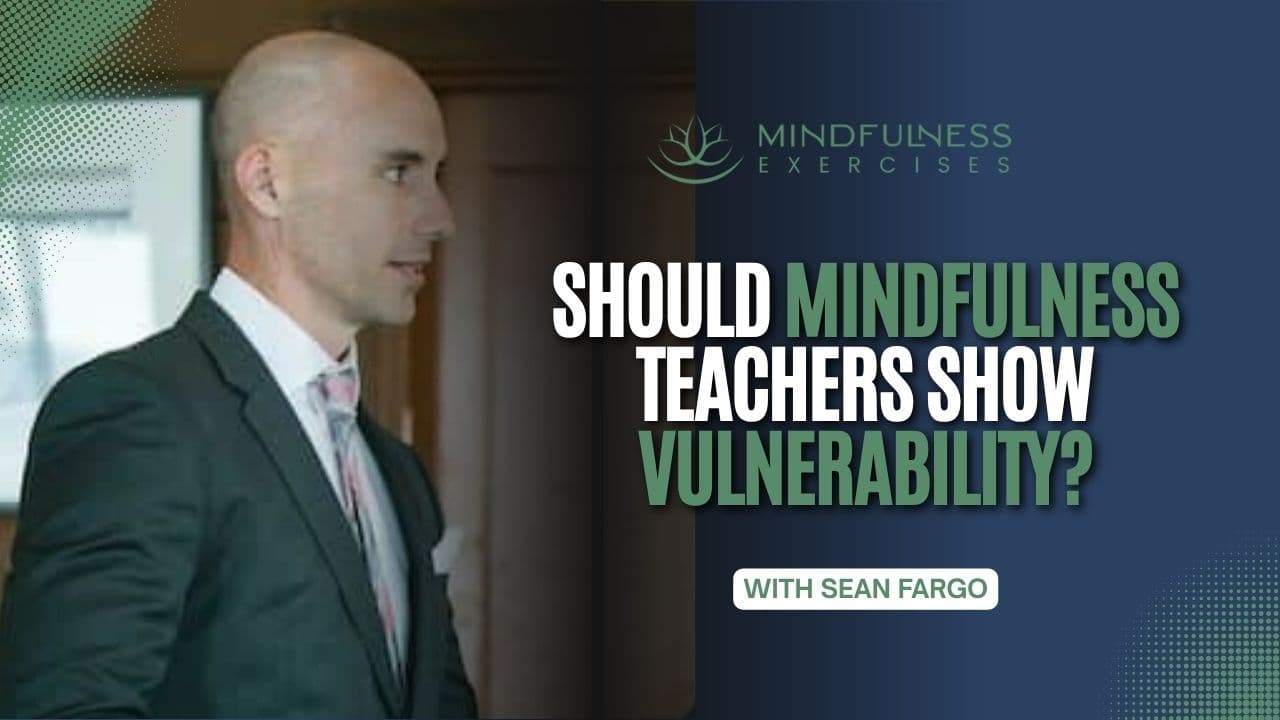
    Should Mindfulness Teachers Show Vulnerability?

    SF
    Sean FargoPublished October 25, 2024 · Updated November 13, 2025 · 3 min read
    Should Mindfulness Teachers Show Vulnerability?

    Loading episode player

    Should Mindfulness Teachers Show Vulnerability? — Tunein Logo

    TuneIn

    In this honest and thought-provoking episode, Sean Fargo explores one of the most common inner questions among mindfulness teachers: Should I show my vulnerability when I teach? Drawing from personal stories and years of experience as a teacher and former monk, Sean reflects on the balance between openness and professionalism, authenticity and appropriateness.

    Whether you’re just beginning to share mindfulness or have been teaching for years, this episode will support you in navigating the delicate territory of trust, truth, and teaching from the heart.

    Sponsored by our Mindfulness Meditation Teacher Certification Program MindfulnessExercises.com/Certify

    What You’ll Learn in This Episode:

    • Why vulnerability can build trust—but also requires discernment
    • How mindfulness teachers can teach from authenticity instead of perfection
    • Common mistakes mindfulness teachers make when navigating vulnerability
    • Ways to explore your own boundaries with sharing
    • How trust is more of a heart practice than a mental calculation
    • The connection between vulnerability, humor, and lightness in teaching

    Show Notes:

    Why vulnerability can build trust—but also requires discernment

    Sharing personal challenges or emotions can create powerful, authentic connections with students. It reminds them that mindfulness teachers are human too—imperfect, learning, and evolving. However, discernment is key. Vulnerability should be grounded and intentional, not reactive or impulsive. Sean explores how mindful awareness can help teachers recognize when and how much to share, so it supports the student’s experience rather than centering the teacher’s own emotional process.

    How mindfulness teachers can teach from authenticity instead of perfection

    One of the most freeing truths for a teacher is realizing you don’t have to have it all figured out. In fact, striving to appear flawless can create distance between you and your students. When you teach from your own genuine experience—with its ups, downs, and learning moments—you invite others to be more real and accepting of themselves. Sean reminds us that authenticity fosters safety and connection, which are foundational to a healthy mindfulness practice.

    Common mistakes mindfulness teachers make when navigating vulnerability

    Vulnerability, when not skillfully navigated, can lead to unhelpful oversharing, emotional dumping, or confusion about boundaries. Sean highlights some of the common pitfalls, such as telling personal stories that aren’t fully integrated or using teaching time to seek validation or sympathy. He offers examples and gentle guidance on how to reflect beforehand and ask, “Is this in service of the student?” This question alone can help teachers stay aligned with their intention to support others.

    Ways to explore your own boundaries with sharing

    Each teacher has a different relationship with vulnerability, shaped by personality, culture, and lived experience. Sean encourages listeners to explore these boundaries thoughtfully. Where do you feel comfortable opening up? Where do you feel exposed or unsure? Instead of pushing past those feelings, he invites us to honor them as part of our own mindfulness journey. Vulnerability doesn’t have to mean full transparency—it can simply mean being present, real, and available.

    How trust is more of a heart practice than a mental calculation

    Trust is often thought of as something logical or earned through consistency, but in mindfulness teaching, trust often begins in the heart. Sean shares how being fully present, listening deeply, and showing care can build trust more effectively than trying to appear “put together.” This heart-based trust grows over time and is nurtured by empathy, compassion, and genuine presence—not just by knowledge or technique.

    The connection between vulnerability, humor, and lightness in teaching

    Vulnerability doesn’t always need to be heavy. In fact, some of the most impactful teaching moments arise from laughter, humility, and the ability to not take ourselves too seriously. Sean reflects on how lightness and humor, when used mindfully, can create a sense of ease and approachability in your teaching. It reminds everyone in the room that mindfulness isn’t about being solemn—it’s about being fully human.

    Additional Resources:

    Transcript

    Show transcript· 5 min read

    Should I show my vulnerability teaching mindfulness as a way to instill trust from others? Should I be forthcoming about my weaknesses, my challenges, as a way to build rapport with people who I'm helping to teach mindfulness to? How do we navigate this territory? How much do we share? How much do we show that we know things? It's a tricky dance. And so I'd love to help you in navigating that territory to help you identify how vulnerable you should be when you're helping others to be present and self-compassionate and resilient. How much should you divulge what's appropriate in certain circumstances? I've certainly made that mistake and learned the hard way many times in my years of teaching mindfulness. I've taught for the Mindfulness Program born at Google. I was a monk for a couple years in the Buddhist Thai tradition. I was at Spirit Rec Meditation Center for five years, full-time, supporting Jack Cornfield and a lot of the senior teachers there. And I've seen other teachers kind of navigate this territory very differently. Some teachers are very closed off and they don't really show much persona or personality or you know authenticity, quite frankly. They kind of uh play a role as a um guru, if you will. Other teachers are the opposite, where they're very um loosey-goosey. Maybe they might go into the deep end on divulging everything and sharing maybe too much about uh their insecurities, their shortcomings, their bad habits. Where it's like, wait, why am I learning mindfulness from you? What's going on here? Should I be teaching you how to be mindful? Um, most mindfulness teachers are a little bit in the middle where they're themselves, they're authentic. They divulge a little bit about what they've learned from the past, how they've overcome challenges, um, but they're also real and not too forthcoming. So there's definitely a delicate balance here. But I want to share a clip with you of an interaction that I had with someone who's in our mindfulness teacher certification program who had this question like, how vulnerable should I be in order to instill trust from others? Do we need to be vulnerable to get trust? You know, it's a tricky terrain here. So I'd love to share this clip with you of uh a raw, impromptu interaction uh with someone who had this question. I want to share uh my thoughts on this and get your feedback. You know, does this resonate with you? How vulnerable are you when you teach mindfulness? How vulnerable do you want your teachers, your mindfulness and meditation teachers to be in sharing their own life story? Some of us crave more stories and vulnerability, and some of us are repelled by it. But I'd love to get your take on how you relate to this. And if you're teaching mindfulness, how vulnerable are you? How scary is it to be vulnerable? Um, you know, have you found that balance for yourself? And then if you want to teach mindfulness and meditation with this balance of vulnerability and um and instilling trust, then uh we'd be honored to support you in our mindfulness teacher certification program. The link is below. But regardless, I hope that you enjoy the following clip. Um, and I hope that it provides a lot of value for you. Thank you. Yeah, there's so much to unpack with trust and what trust is or what it means, you know, and then there's parallels with confidence, faith. Read for me, reading the book Loving Kindness was really helpful for sensing into the layers of trust. Which for me over the years is less and less in the head and more and more in the heart. I think it's really easy to think of trust as sort of a logical analysis. For me, trust exponentially increases if it's felt in the heart, you know, if it's hard to trust, you know, often there's you know repair work that can be done, forgiveness work, you know, forgiving others, asking for forgiveness, and forgiving self in journaling. Like what what are the conditions for trust for certain people for ourselves? What are the things that we ultimately have unshakable trust in, if anything, and why some people include mindfulness in that category or presence or whatever's what words we want to use, but some people put mindfulness in that category. What do we trust about ourselves? That could be really rich exploration. But you know, when we're teaching mindfulness or sharing it with others, yeah, we can reflect on, you know, like what would I want in a teacher to trust them? And it just kind of connects with the vulnerability piece that you're talking about, and you know, are they pretending to be a certain way? You know, like you know, can I be vulnerable in certain ways to invite a sense of trust? You know, not to be overly self-deprecating, but to be real, and you know, some some mindfulness teachers will kind of fake it till they make it in the sense that like they feel like they need to be a certain way, they need to be like a famous mindfulness teacher they like, or they need to I don't know, be like a monk, or they need to kind of be perfect in how they move and you know they need to be calm all the time and smooth and all that all that stuff. You know, and people can usually tell that they're faking it. You know, my favorite mindfulness teachers are the ones that can laugh at themselves or just laugh at life, you know, not in a sarcastic demeaning way, but just find the humor in life. So, you know, maybe not being overly serious or overly profound thousand percent of the time. You know, there's these cycles of depth and lightness.

    Share

    Continue reading

    • Grounding Through Anxiety With Senses

      Grounding Through Anxiety With Senses

      Read
    • Shamatha Vipassana Explained For Modern Minds

      Shamatha Vipassana Explained For Modern Minds

      Read
    • How To Stop Believing You Are Not Enough

      How To Stop Believing You Are Not Enough

      Read

    Professional training

    Accredited mindfulness teacher certification

    Trusted by teachers in 100+ countries

    Structured training, CE credits for eligible pay-in-full registrants, and support for teaching without self-doubt — after you have explored this episode.