
TuneIn
In many ways, modern life feels like one long, unbroken sentence. We move from meeting to message, from traffic to dinner, from scrolling to sleep, often without a single clear pause to mark where one part of the day ends and another begins. Our bodies arrive home, but our minds are still mid‑conversation.
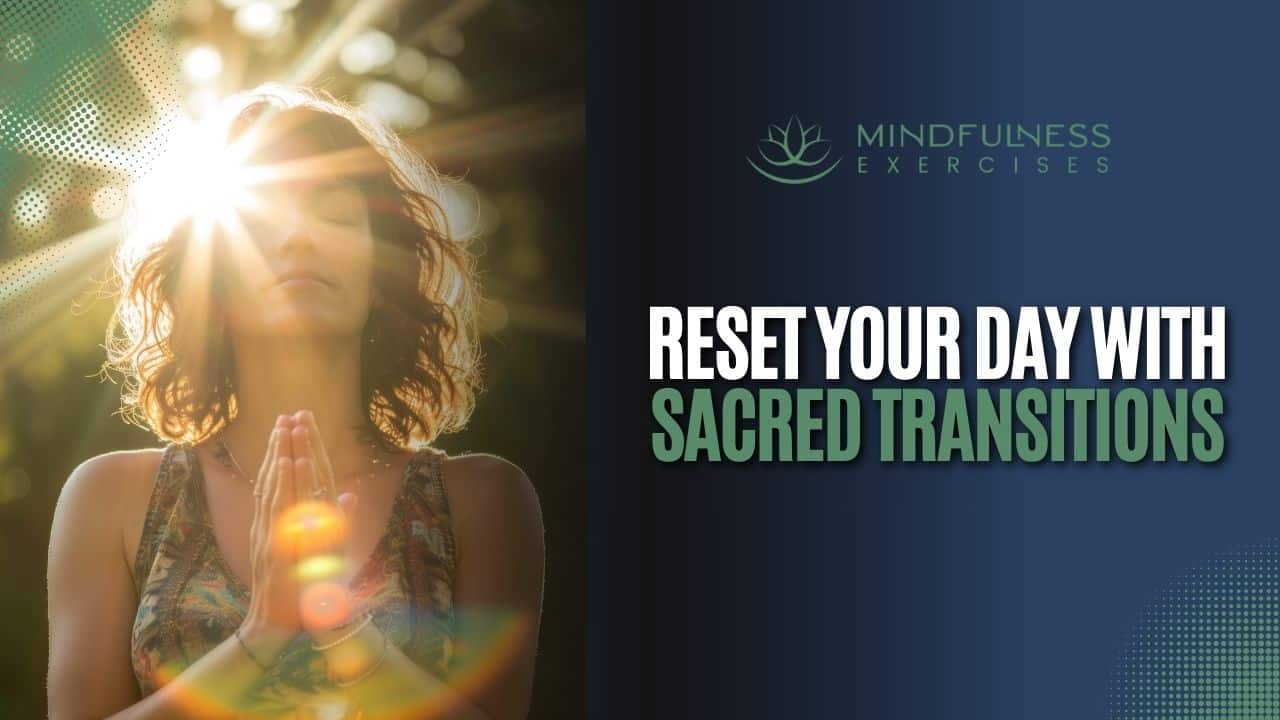
This short episode of the Mindfulness Exercises Podcast is about sacred transitions: small, intentional pauses at the turning points of the day. The speaker names five of them, dawn, noon, mid‑afternoon, dusk, and before bed, and suggests that marking them can help us feel at home in our own lives.
Nothing here is elaborate or time‑consuming. A single breath at the doorway. Ending a call before you park. Placing your keys down with care. The practices on this page take seconds, and they are meant to be repeated.
Sponsored by the Mindfulness Meditation Teacher Certification MindfulnessExercises.com/Certification
Episode Overview:
Topics Covered:
- Why modern days feel like one long, uninterrupted scroll
- How technology blurs the line between work, travel and home
- The concept of sacred transitions, and why the speaker says sacredness comes from how we treat things
- Simple, repeatable practices to mark thresholds throughout the day
- How treating space with care changes how a home feels
- Gratitude as a way of feeling at home in the world
- Why starting with just one daily anchor is enough
Key Takeaway: The speaker passes on a line from a teacher: nothing is inherently sacred, and the sense of sacredness comes from the way we treat things. Marking endings and beginnings with care is one way to do that.
Show Notes:
Why Our Days Feel Like a Blur
Technology has erased many of the natural boundaries that once structured daily life. The speaker describes leaving work on the phone, getting in the car, driving ten miles in traffic with the conversation still running, then walking into the house and starting dinner with the call still going. A conversation that used to end at the office now continues through the commute, and news, work, and social life live in the same small rectangle we carry everywhere.
The speaker's view is that we drag these experiences with us, often without noticing, into or out of our homes. Without clear endings, the day can run together, and it gets harder to arrive anywhere fully.
Sacred transitions interrupt this blur. They create chapter breaks in the day, moments where attention is invited back into the body and into the present space. Over time, these pauses can make daily life feel more inhabitable.
What Makes a Transition “Sacred”?
The speaker passes on something a teacher once said: nothing is inherently sacred, and the sense of sacredness comes from the way we treat things.
A doorway is just a doorway until we pause there. A pair of shoes is just footwear until removing them becomes a conscious handoff from “out there” to “in here.” Taking off your shoes at the door is already a habit in many households, a way of saying you are leaving one world and entering another. On this view, sacredness comes from care.
The more small gestures like this we bring in, the speaker says, the more a home that may have felt external, cold, or unfit for who we are can become a home that is living, conscious, and supportive, simply because we have given it that attention. The speaker describes this as saying “I'm caring for you, I see you, thank you” to the space over and over.
The Day’s Natural Anchor Points
Rather than adding more to your schedule, this practice works with moments that already exist. The speaker is drawn to the Muslim call to prayer, which comes at set points through the day and keeps pulling a person back from their conceptual view of the world. Think of the day as having built‑in thresholds:
- Dawn – waking and orienting to the day ahead
- Noon – shifting from morning momentum into midday presence
- Mid‑afternoon – the dip after lunch
- Dusk – the transition from work or outward focus to home life
- Night – preparing the body and mind for rest
You don’t need to practice at every anchor. Start with just one.
Simple Sacred Transition Rituals (That Actually Stick)
These are suggestions for putting the idea to use. They are invitations to arrive, and the talk itself mentions only the shoes at the door.
1. End the Call Before You Park
Before stepping out of your car, end the conversation, even if it feels abrupt. Sit for one breath. Let the body register that the workday has ended.
2. Pause at the Doorway
Hand on the doorframe. One conscious inhale, one slow exhale. Silently name where you are going: “Entering home.”
3. Remove Your Shoes as a Handoff
As your shoes come off, imagine leaving the day with them.
4. Place Your Keys Down With Attention
Instead of dropping them mindlessly, set them down deliberately. Feel the surface. Notice the sound. Let this be the punctuation mark at the end of the outside world.
5. Two Minutes at Dusk
Before dinner or evening activities begin, sit quietly for two minutes. No phone. No fixing. Just letting the day settle.
None of these practices requires special tools or extra time, and each is easy to repeat.
Gratitude as the Quiet Engine of the Day
The speaker does not describe gratitude as a burden. It means being grateful for the good and for the challenges, for the cold and the heat, and for the chance to take part in life as embodied beings who live in homes. In the speaker's view, this is another thing that lets us feel at home in the world, and it makes our lives deeper and richer.
You can pair a brief acknowledgment with any of the anchors above: warm food, a safe place to sit, a body that carried me here.
Start Small, Notice Big Shifts
The invitation is simple: choose one anchor point and stay with it for a week.
Maybe it’s the doorway pause when you come home. Maybe it’s two minutes at dusk. Let it be imperfect. Let it be human.
Pay attention to what changes in your tone, your patience, and your sense of being where you are.
Additional Resources:
- Free Training with Sean Fargo: How to Teach Mindfulness With Confidence & Credibility
- Certification: Mindfulness Meditation Teacher Certification
- Blog: Boost the Relationship with yourself with 8 Self-Compassion Exercises
- Blog: Self-Esteem vs. Self-Compassion: Understanding the Difference