There’s something curious about the way the mind works.
Moments that once felt extraordinary—life-changing conversations, unexpected opportunities, quiet breakthroughs—slowly fade into the background of our awareness. What once felt magical becomes… normal. Familiar. Easy to overlook.
But what if you could bring that sense of awe back?
Not by chasing new experiences, but by seeing your existing ones differently.
This is where a simple yet profound mindfulness practice comes in—one rooted in both positive psychology and ancient awareness techniques. It’s called mental subtraction, and it has the power to transform ordinary memories into sources of deep gratitude.
Sponsored by our Mindfulness Meditation Teacher Certification Program
certify.mindfulnessexercises.com
Episode Overview:
Key Themes:
- Mental subtraction as a pathway to gratitude
- The “George Bailey effect” in positive psychology
- Moving from intellectual gratitude to embodied experience
- The role of near-misses in shaping appreciation
What You’ll Learn:
- Why your best memories start to feel ordinary
- How to reawaken appreciation without forcing it
- A simple, repeatable mindfulness technique
- How small decisions and timing shape meaningful moments
Practice Highlights:
- Somatic grounding (jaw, shoulders, breath)
- Reflecting on meaningful life events
- Exploring “what almost didn’t happen”
- Feeling gratitude in the body
Best For:
- Quick emotional resets
- Deepening gratitude practice
- Shifting perspective during stressful periods
- Building mindful awareness in daily life
Show Notes:
Why Our Best Moments Lose Their Spark
The brain is wired for efficiency. It quickly adapts to positive experiences—a process psychologists call hedonic adaptation. What once felt rare becomes expected. What once felt meaningful becomes routine.
This isn’t a flaw—it’s a survival mechanism.
But it also means we often stop feeling the richness of our lives, even when nothing has changed externally.
Gratitude practices help, but many people notice something:
Saying “I’m grateful” doesn’t always make you feel grateful.
That’s because true gratitude isn’t just cognitive—it’s experiential. It needs to be felt in the body, not just listed in the mind.
A Different Approach: Mental Subtraction
Instead of adding more things to appreciate, this practice invites you to take something away—mentally.
Imagine one meaningful moment in your life.
Now ask yourself:
What if it never happened?
This isn’t about negativity or regret. It’s about clarity.
When you explore how easily a moment could have disappeared—how fragile its existence really was—you begin to see it with fresh eyes.
Researchers sometimes refer to this as the “George Bailey effect”—a nod to the idea of seeing life not as it is, but as it could have been without certain key moments.
And the result?
Gratitude doesn’t feel forced anymore. It feels natural. Immediate. Real.
The Mindfulness Practice: Step-by-Step
This short practice can be done in just a few minutes, yet its effects can linger throughout your day.
1. Settle Into the Body
Begin by grounding yourself physically.
- Relax your jaw
- Drop your shoulders
- Let your belly soften
- Take slow, steady breaths
This somatic awareness helps signal safety to your nervous system, making it easier to access emotional depth.
2. Choose One Meaningful Moment
Bring to mind a moment that matters to you.
It doesn’t have to be dramatic. Often, the most powerful choices are:
- A conversation that changed your direction
- A small “yes” that opened a door
- A chance meeting that became a relationship
Let the memory come into focus gently.
3. Trace the Chain of Events
Now, begin to explore:
What had to happen for this moment to exist?
- Timing
- Decisions (yours and others’)
- Circumstances beyond your control
- Support you received
Notice how many variables aligned—often in ways you couldn’t have planned.
4. Explore the Near-Misses
This is where the shift happens.
Ask yourself:
- What if I hadn’t sent that message?
- What if I missed that opportunity?
- What if I chose differently that day?
You might notice just how easily this moment could have not happened.
Let that realization land—not as fear, but as awareness.
5. Feel What Emerges
Now return to the original memory—but with this new perspective.
Notice:
- How it feels in your body
- Any warmth, openness, or softness
- A sense of appreciation or even awe
This is gratitude—not as a concept, but as a felt experience.
Why This Practice Works
This approach blends two powerful mechanisms:
1. Cognitive Reframing
By shifting perspective, you interrupt the brain’s tendency to take things for granted.
2. Somatic Awareness
By grounding in the body, you allow emotions to be experienced—not just analyzed.
Together, they create a deeper, more lasting sense of gratitude than surface-level affirmations.
The Ripple Effect of Remembering
When you reconnect with the fragility and beauty of your past moments, something subtle begins to change.
You may notice:
- Greater presence in everyday interactions
- Increased appreciation for small experiences
- More intentional choices moving forward
- A quieter, steadier sense of contentment
Because when you truly feel how easily something could have been lost…
You begin to meet life with more care.
More attention.
More gratitude.
A Practice to Return to Again and Again
One of the most powerful aspects of this exercise is its repeatability.
Each day, you can choose a different moment:
- A recent conversation
- A childhood memory
- A turning point in your career
- A quiet, seemingly ordinary experience
Each time, you deepen your capacity to see—not just what happened—but how meaningful it is that it happened at all.
Final Reflection
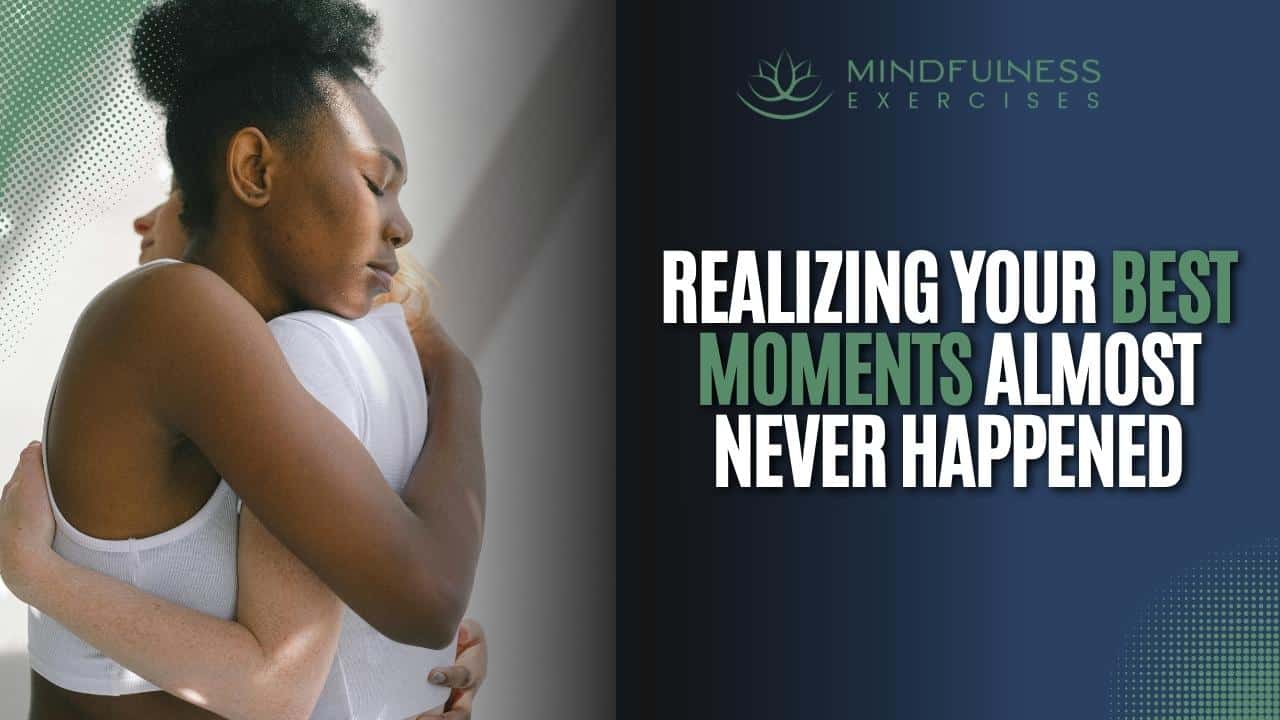
Your life isn’t just a series of events—it’s a delicate web of moments that almost didn’t happen.
And when you begin to see that clearly, even briefly, something shifts.
Gratitude stops being something you try to practice…
…and becomes something you naturally feel.
Additional Resources:
- Free Training with Sean Fargo: How to Teach Mindfulness With Confidence & Credibility
- Certification: Mindfulness Meditation Teacher Certification Program
- Blog: Honoring Joanna Macy: A Tribute to a Visionary of Interconnection and Courage
- Blog: Powerful Letting Go Quotes for Renewal and Growth