
TuneIn
Trauma can change how people respond to stress, how they inhabit their bodies, and how they relate to others. Post-Traumatic Stress Disorder (PTSD) is a response to overwhelming experience and no sign of weakness. This approach emphasizes meeting yourself with awareness, compassion, and supportive tools, moment by moment, rather than pushing through.
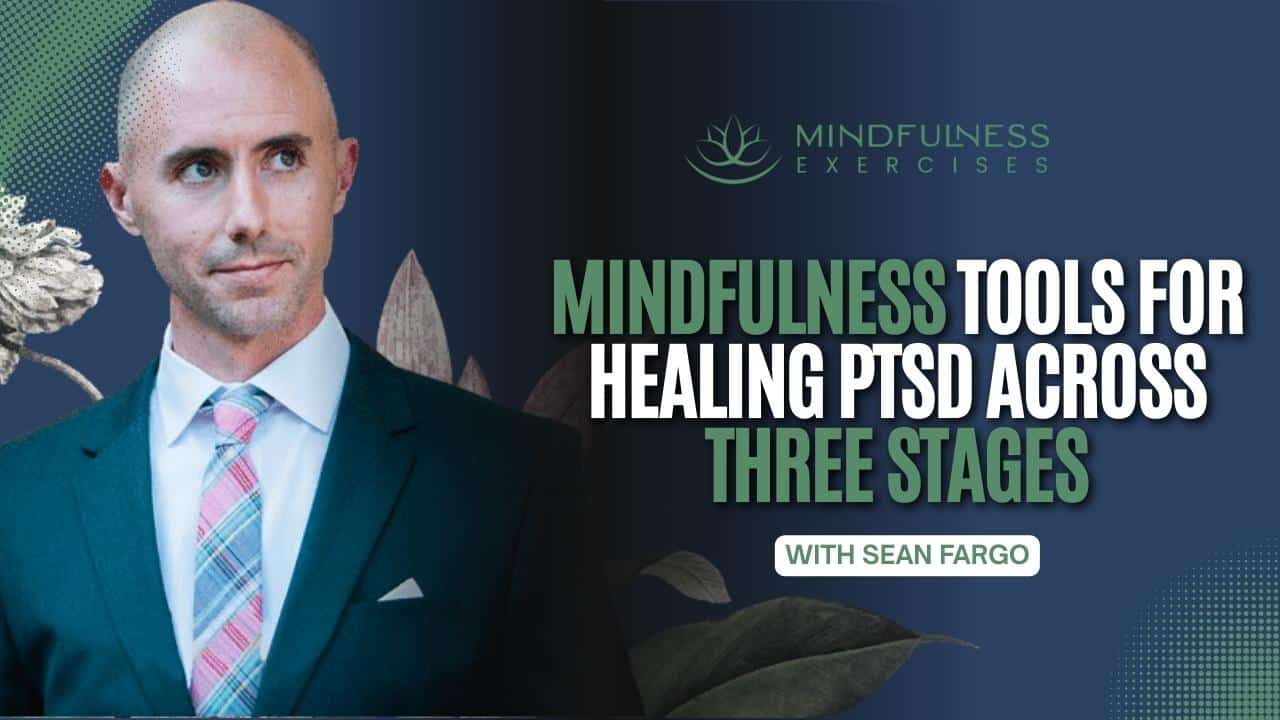
In this recording, Sean Fargo outlines a three-stage approach to using mindfulness with PTSD and leads a short self-soothing practice. He asks listeners to practice with courage, says it is fine to stop if an exercise becomes unbearable, and gives safety guidance for an emergency.
The notes below expand on the recording with additional context and practices. The audio itself is a short introduction and one brief exercise.
Sponsored by the Mindfulness Meditation Teacher Certification MindfulnessExercises.com/Certification
Episode Overview:
- A three-stage outline for applying mindfulness to PTSD
- Immediate self-soothing and grounding tools
- Reconnecting with emotions and feelings with courage, confidence and authenticity
- Longer-term healing and rebuilding awareness, confidence, and relationships
- Guided breath and softening cues
- When to stop, and who to call in an emergency
- Rebuilding confidence, self-esteem, and relationships through awareness
Show Notes:
Understanding the Three-Stage Mindfulness Approach to PTSD
Sean describes the series in three stages, each with its own set of exercises. Mindfulness can be practiced with attention to the body’s pace and boundaries at every stage.
He asks listeners to bring a sense of courage, and he says that if an exercise is unbearable it is fine to stop and find some space to relax. Mindfulness for PTSD should not be forced; choice, small steps, and safety come first.
The three stages in the episode are:
- Immediate Self-Soothing & Stabilization
- Reconnecting With Emotions — Carefully & Courageously
- Long-Term Integration & Rebuilding Confidence
Here is a closer look at each stage.
Stage One: Immediate Self-Soothing and Grounding
Sean says that in the immediate aftermath of trauma, self-soothing mindfulness practices can help settle the body and mind and give access to more calm, groundedness, and ease, especially when disturbing emotions start to well up. During a flare-up of symptoms (such as overwhelm, panic, or dissociation), simple, steady, sensory practices are the place to start.
Approach mindfulness gently at this stage.
Why Self-Soothing Matters
In Sean’s framing, settling the body and mind first makes calm and ease easier to reach. He says it takes a little practice, but over time you can deepen self-soothing and find this feeling of calm in many places.
Self-Soothing Practices Highlighted in the Episode
The recording uses the first three below. The others are additional options.
- Anchoring attention in the breath, without forcing a particular pace
- Grounding through touch, such as feeling your body where it meets the ground or chair, or your feet on the floor
- Softening cues like unclenching the jaw or loosening the shoulders
- Orienting to the environment: looking around the room slowly, noticing colors or shapes
- Hand-to-heart touch for reassurance and safety
- Co-regulation, when available, through connection with a trusted person
These practices are meant to steady the body before asking it to explore anything deeper.
Stage Two: Reconnecting With Emotions With Courage and Choice
Sean says the next set of exercises goes a little deeper, to help you re-establish a connection to your internal world of emotions and feelings with courage, confidence, and authenticity, using internal and external resources. The aim is to integrate the initial trauma and begin to move beyond it. The pace is yours: step back whenever it feels like too much.
Why This Stage Is Important
Trauma can disconnect people from their emotional experience. That disconnection may once have served a protective purpose, and over time it can limit expression and relationships.
The practices at this stage approach the inner world with curiosity.
Trauma-Sensitive Emotional Mindfulness Practices
The recording introduces this stage briefly. These are practices that fit it:
- Noticing an emotion in the body without diving into the story
- Labeling feelings softly: “sadness,” “anger,” “tightness,” “fear”
- Welcoming emotions in small doses (a practice known as titration)
- Staying anchored in breath or body sensations while observing emotion
- Practicing courage through choice — stepping back anytime sensations increase
The point of this phase is to build capacity to feel again, at a pace that feels safe.
Stage Three: Long-Term Integration and Transformation
Sean says the final practices look at longer-term healing, after the highly reactive core difficulties have healed or are on their way to healing.
He describes the work as rebuilding kind, non-judgmental awareness of your experience and, from there, confidence, self-esteem, behavior, and even relationships. He says this can be done whether the trauma was recent or long ago.
Long-Term Mindfulness Tools for Integration
The recording introduces this stage briefly. These are tools that fit it:
- Daily grounding rituals such as breathwork, mindful walking, or journaling
- Gentle compassion practices to soften inner criticism
- Reconnecting with meaningful relationships
- Rebuilding confidence through small successes and mindful self-support
- Tracking triggers with curiosity rather than judgment
- Mindful communication to strengthen interpersonal trust
Sean also speaks of cultivating caring presence, or mindfulness, and integrating it throughout your life.
Guided Breath & Body Softening Practice
In the short practice at the end of the recording, Sean invites you to:
- Close your eyes or look downward, in a safe and secure place, to limit visual distraction.
- Feel your body where it touches the ground or the chair, in whatever posture you are in.
- Relax the belly and see if you can breathe naturally, in and out.
- Drop the shoulders, loosen the jaw, and soften the muscles of the face and around the eyes.
- Invite a sense of ease, and ask what that peace would feel like in the body and mind.
- If anything feels too intense, return to your anchor or stop and find some space to relax.
Honoring Safety Boundaries
Safety runs through Sean’s introduction. Trauma-sensitive mindfulness emphasizes:
- Pausing at any moment something feels too strong; Sean says it is fine to stop an exercise you find unbearable
- Opening your eyes or shifting posture whenever needed
- Seeking professional support when symptoms escalate, and telling your health care provider about any unhealthy or concerning thoughts that come up
- Avoiding prolonged focus on distressing emotions or memories
- Practicing with a teacher skilled in trauma-sensitive mindfulness, when possible
Emergency Note
If you or someone you know is experiencing a psychiatric emergency, please contact your doctor or call 911 immediately.
Rebuilding Confidence, Self-Esteem, and Relationships
Sean says the later practices aim to rebuild confidence, self-esteem, behavior, and relationships. Over time, these practices aim to help people:
- Trust their bodies again
- Reconnect with loved ones
- Notice moments of safety and joy
- Build self-esteem through small victories
- Strengthen emotional resilience
Final Thoughts
Mindfulness practice is not a replacement for therapy or medical care. Sean frames the series in three stages: self-soothing, reconnection, and long-term integration.
He closes by saying it may not be easy but you can do it, and he applauds listeners’ courage.
More practices are in the free library at MindfulnessExercises.com.
Additional Resources:
- Free Training with Sean Fargo: How to Teach Mindfulness With Confidence & Credibility
- Certification: Mindfulness Meditation Teacher Certification
- Blog: 100 Positive Affirmations for Women: Journey to Self-Empowerment
- Blog: 60 Healing Quotes that Inspire: A Journey to Inner Peace