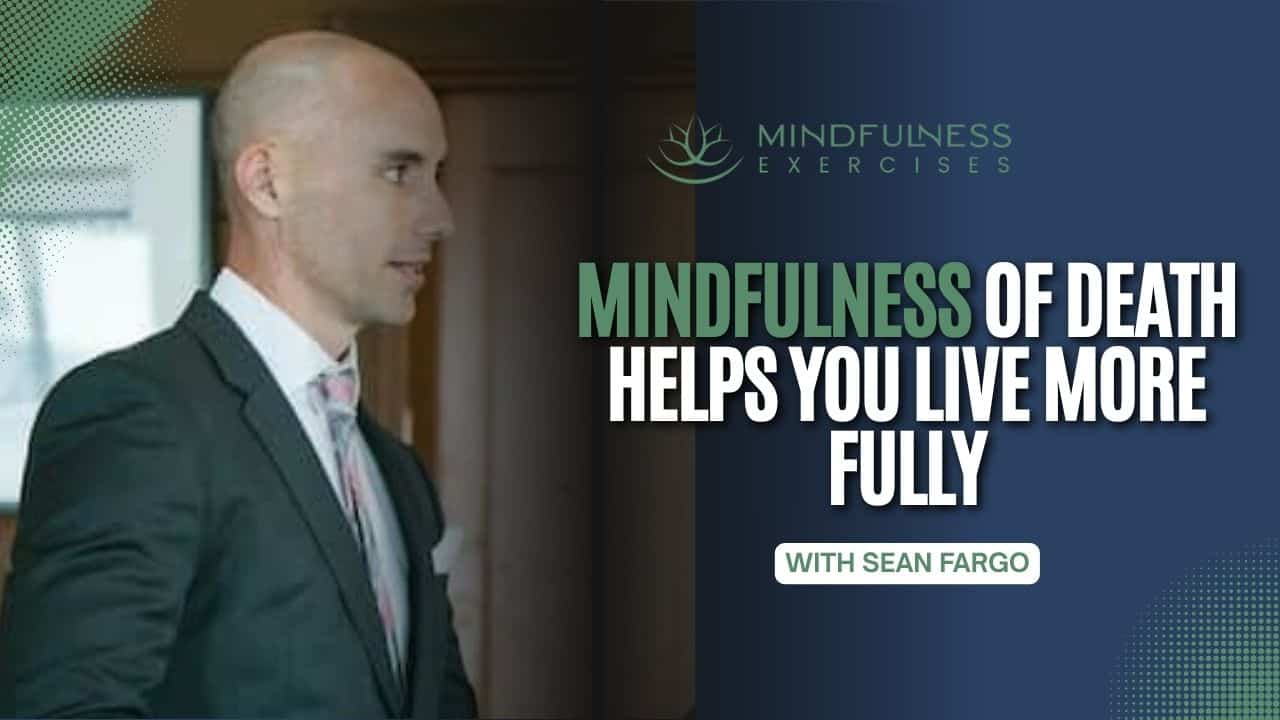
There’s a quiet truth most of us spend our lives circling around: we are here, and one day we won’t be.
It’s not a thought we’re encouraged to dwell on. In fact, much of modern life is designed to help us avoid it—scrolling, striving, planning, distracting. But what if, instead of turning away, we gently turned toward this reality with mindfulness?
What if awareness of death wasn’t morbid—but clarifying?
Mindfulness of death, when approached with care, isn’t about fear or darkness. It’s about waking up. It’s about stepping out of autopilot and reconnecting with what truly matters: love, presence, honesty, and the fleeting miracle of being alive at all.
Sponsored by our Mindfulness Meditation Teacher Certification Program
certify.mindfulnessexercises.com
Episode Overview:
Key Themes:
- Reframing death from something to avoid into something to gently explore
- Using the breath as an anchor for mortality awareness
- Stepping out of autopilot and reconnecting with what matters most
- Practicing mindfulness of death in a grounded, trauma-sensitive way
What You’ll Learn:
- A simple 10-to-1 breath countdown meditation
- How to work with fear, grief, and uncertainty during practice
- When this practice may not be appropriate
- How to integrate insights into daily life through reflection
Practice Highlights:
- Breath-based awareness of impermanence
- Reflection prompts for meaningful action
- Emphasis on safety, pacing, and self-compassion
Reflection Questions:
- What matters most to me today?
- Who do I want to connect with?
- What am I ready to let go of?
- What deserves my attention now?
Show Notes:
Why Mindfulness of Death Matters
When we avoid thinking about death, we often end up avoiding life too.
We postpone meaningful conversations.
We delay forgiveness.
We assume there will always be more time.
But when we bring gentle awareness to our mortality, something shifts. Life becomes more vivid. Moments feel less disposable. Even an ordinary breath can take on a quiet sense of wonder.
Mindfulness of death isn’t about creating anxiety—it’s about dissolving illusion. It helps us see clearly: this moment matters.
A Grounded Approach: Staying Close to Direct Experience
Rather than turning death into a story or concept, this practice invites us to stay grounded in direct experience—especially the breath.
Each inhale arrives on its own. Each exhale leaves without asking permission.
And in this simple rhythm, we can begin to notice something profound:
One day, there will be a last breath.
Not as a dramatic idea—but as a gentle, sobering truth.
When you sit with this awareness, even briefly, you may notice a shift:
- A deeper appreciation for being here
- A softening of urgency around trivial concerns
- A clearer sense of what actually matters
This is where mindfulness of death becomes less about endings—and more about presence.
A Simple Practice: The 10-to-1 Breath Countdown
This practice is intentionally simple, but deeply powerful when approached with care.
How to Practice:
- Find a comfortable seated position
- Allow your breath to settle naturally
- Begin counting your breaths from 10 down to 1
- Inhale, exhale: “10”
- Next breath: “9”
- Continue down to “1”
- With each breath, gently acknowledge:
This could be my last breath
There’s no need to force emotion or create intensity. Let the awareness be light, spacious, and real.
If your mind wanders, simply return to the next number and the next breath.
What You Might Notice During Practice
This kind of meditation can stir up a range of experiences. That’s completely natural.
You may encounter:
- Fear or anxiety
- Grief or sadness
- Regret about the past
- A grasping toward the future
When these arise, the invitation is not to push them away—but to meet them with kindness.
You might silently say:
- This too belongs
- It’s okay to feel this
Let the breath be your anchor. You’re not trying to solve anything—just noticing what’s here.
Turning Insight Into Action
One of the most meaningful aspects of mindfulness of death is how it carries into daily life.
After your practice, take a few moments to reflect:
- If life is uncertain, what truly matters today?
- Who have you been meaning to reach out to?
- Is there something you need to forgive—or ask forgiveness for?
- What have you been putting off that feels important?
These aren’t abstract questions. They’re invitations.
Mindfulness of death doesn’t end on the cushion—it continues in how you choose to live.
Practicing Safely and Responsibly
This practice can be powerful, but it’s not for everyone at every time.
It may not be suitable if you are:
- Experiencing acute anxiety or panic
- Navigating recent trauma or grief
- Feeling emotionally overwhelmed or unstable
In these cases, it’s often better to begin with more grounding practices like:
- Simple breath awareness
- Body scans
- Gratitude meditation
If you’re guiding others, it’s important to introduce mindfulness of death gradually—ideally after participants have established a sense of safety and stability in their practice.
Trauma-sensitive mindfulness principles are essential here:
- Offer choice and autonomy
- Encourage participants to pause or stop at any time
- Normalize a wide range of emotional responses
Mindfulness should never feel like something you have to push through.
Starting with Gratitude and Breath
Before exploring mindfulness of death, it can help to settle the mind with gentler practices.
Try beginning with:
- A few minutes of slow, natural breathing
- Noticing sensations in the body
- Reflecting on something you’re grateful for
This creates a foundation of steadiness—so when you turn toward deeper reflections, you’re supported.
Living More Fully, One Breath at a Time
There’s a quiet paradox at the heart of this practice:
When we remember that life is finite, it becomes more precious.
Not in a dramatic or overwhelming way—but in small, grounded moments:
- A conversation that feels more honest
- A meal that tastes more vivid
- A breath that feels like a gift
Mindfulness of death isn’t about focusing on the end.
It’s about finally arriving in the present.
And from that place, life has a way of opening.
Final Thoughts
You don’t need to think about death all the time to benefit from this practice. Even a brief moment of awareness can be enough to shift your perspective.
A single breath.
A single pause.
A single honest reflection.
That’s where it begins.
And sometimes, that’s all it takes to start living more fully.
Additional Resources:
- Free Training with Sean Fargo: How to Teach Mindfulness With Confidence & Credibility
- Certification: Mindfulness Meditation Teacher Certification Program
- Blog: The Rising Demand for Mindfulness Teachers (2026–2030 Industry Forecast)
- Blog: Mindfulness Teacher Salary Guide (How Much Can You Earn in 2026?)