🎧 New episode: Nothing's Missing: Dr. John Demartini on Mindfulness as WholenessListen →

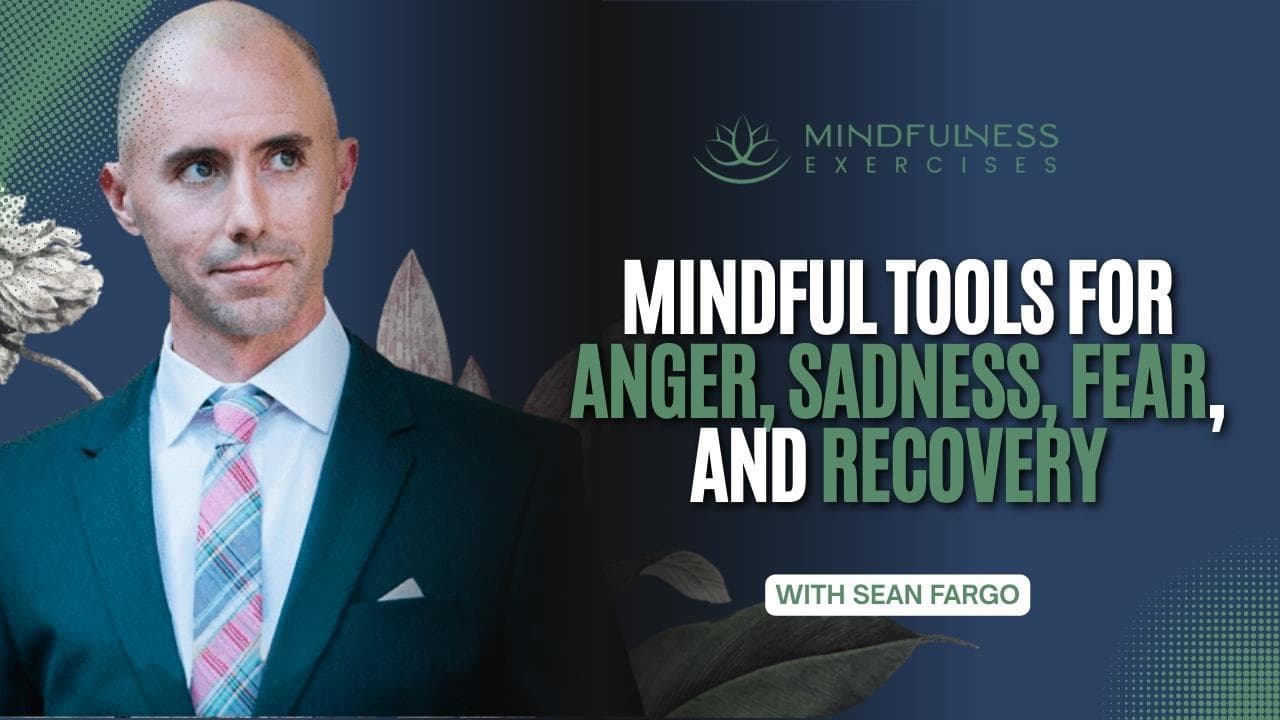
    Mindful Tools For Anger, Sadness, Fear, And Recovery

    SF
    Sean FargoPublished November 26, 2025 · Updated December 7, 2025 · 5 min read
    Mindful Tools For Anger, Sadness, Fear, And Recovery

    Listen to this episode

    Mindfulness Exercises Podcast

    Enjoying the episode?

    Follow the show in your podcast app. If this conversation supports your practice, a rating or review helps more listeners find it.

    Mindful Tools For Anger, Sadness, Fear, And Recovery — Tunein Logo

    TuneIn

    When collective heartbreak hits—whether through public tragedy, personal loss, or the steady stream of painful headlines—it can feel impossible to find our footing. Many of us either shut down in emotional overload or sprint into action before we’ve taken a moment to breathe. But true healing and meaningful action require something counterintuitive: the willingness to feel.l

    Sponsored by our Mindfulness Meditation Teacher Certification Program MindfulnessExercises.com/Certify

    This episode of the Mindfulness Exercises Podcast explores a grounded way to meet emotions like anger, sadness, depression, and fear without judgment—and without losing ourselves. These tools don’t bypass pain, nor do they demand that you “stay positive.” Instead, they help you name what’s real, stay within your window of tolerance, and gently channel your emotional energy into clarity, resilience, and compassionate action.Below, you’ll find the full article inspired by the conversation, helpful practices you can begin today, upcoming live retreat details, and resources from leading voices in trauma-sensitive mindfulness.

    Show Notes:

    Timestamp Section Title Summary
    00:00 Opening Reflections Why it’s important to name emotions honestly during moments of collective grief or public tragedy.
    03:45 The Nervous System & Emotional Overwhelm Explains affect labeling and how naming emotions reduces overwhelm, supporting the idea that “feeling is healing.”
    07:20 Mindful Tools for Anger How mindful awareness helps transform anger into clarity and grounded responsiveness.
    13:18 Sadness & the Tenderness of Allowing Making gentle space for heaviness, grief, and sorrow without rushing to change or fix them.
    18:40 Depression as Emotional Collapse Discusses how micro-movements, breath, and embodied presence can reconnect us during low or collapsed states.
    24:50 Fear & Nervous System Protection Grounding techniques to help fear arise without overwhelming the system, revealing its wisdom as protection.
    29:30 Staying Inside the Window of Tolerance How slow, safe emotional processing supports regulated presence and mindful resilience.
    33:50 Trusted Resources Recommended teachers and practitioners: Sharon Salzberg, Gabor Maté, and Rick Hanson.
    39:10 Live Retreat Invitation Details on the retreat format, schedule, accessibility options, discounts, and certification pathways.

    Why Naming Emotions After a Public Tragedy Matters

    When something devastating happens in our community or in the world around us, the emotional landscape becomes charged. We feel it in our bodies before we fully understand it in our minds.

    Many of us learned early in life to avoid or numb uncomfortable emotions, especially the ones labeled “negative.” But emotions are not moral judgments—they’re signals. They point to our values, our humanity, and our capacity for connection.

    Naming emotions like:

    • Anger
    • Sadness
    • Fear
    • Hopelessness
    • Numbness
    • Overwhelm

    allows the nervous system to soften just enough to stay present. Research shows that affect labeling (naming an emotion) helps the amygdala regulate and quiets internal alarm bells. In other words: naming is the beginning of healing.

    Feeling Is Essential for Healing

    One of the core teachings in mindfulness—found in Buddhist psychology, somatic therapy, and trauma-sensitive practice—is that we cannot heal what we refuse to feel.

    This doesn’t mean drowning in emotion or retraumatizing ourselves. It means meeting our inner experience with:

    • Curiosity
    • Embodied awareness
    • Compassion
    • Permission

    When we allow emotions to move through the body, instead of blocking or suppressing them, something powerful happens: the energy of the emotion transforms. Anger becomes clarity and protection. Sadness becomes connection. Fear becomes alertness and care. Even depression may soften into a subtle sense of presence.

    This is how emotions become teachers, not enemies.

    Mindful Approaches to Four Natural Emotional States

    Below are steps you can use immediately—gentle, accessible, and grounded in real human experience.

    1. Mindful Tools for Anger

    Anger often shows up as heat or pressure in the body. Instead of acting on it or pushing it down:

    Try This:

    • Notice where anger lives in the body.
    • Breathe slowly into that region, without trying to fix it.
    • Acknowledge what the anger is protecting.
    • Say internally: “Anger is here. I can feel this safely.”

    Anger held mindfully becomes a source of strength, justice, and clear boundaries.

    2. Mindful Tools for Sadness

    Sadness often feels heavy, slow, or tender. It wants space—not solutions.

    Try This:

    • Place a hand on your heart or cheek.
    • Allow heaviness to be present; no need to brighten it.
    • Soften the muscles around the eyes.
    • Whisper: “This sadness belongs. I’m allowed to feel this.”

    Sadness held gently leads to connection, empathy, and authenticity.

    3. Mindful Tools for Depression

    Depression is not simply sadness; it’s a collapse—a loss of momentum, aliveness, and clarity.

    Try This:

    • Begin with one breath that’s slightly deeper than usual.
    • Wiggle your toes or fingers (micro-movements interrupt shutdown).
    • Bring awareness to one anchoring sensation—your feet, your breath, or your hands.
    • Say: “I’m here. I’m trying. That is enough for this moment.”

    Mindful presence can help widen the window of tolerance without forcing change.

    Note: Severe depression requires professional support. Mindfulness can complement, not replace, therapy or medical care.

    4. Mindful Tools for Fear

    Fear rushes the nervous system into survival mode.Mindfulness helps slow the spiral.

    Try This:

    • Ground by pressing your feet gently into the floor.
    • Lengthen your exhale.
    • Notice one sensory detail in the room: a color, sound, or temperature.
    • Say: “Fear is trying to protect me. I don’t have to push it away.”

    When held with compassion, fear reveals discernment, caution, and wisdom.

    Opening Within Your Window of Tolerance

    All emotions are welcome—but not all at once, and not at full intensity.

    Your window of tolerance is the zone where your nervous system stays regulated enough to process what’s happening without shutting down or blowing up. Anything outside that window feels like:

    • panic
    • collapse
    • emotional flooding
    • numbness
    • irritability
    • dissociation

    Mindfulness helps widen this window slowly and safely.

    If an emotion feels too big, soften your focus.If it feels manageable, stay with it gently.Your system knows the pace.

    Trusted Resources Mentioned in the Episode

    If you want to go deeper, here are the teachers referenced:

    Sharon Salzberg

    Loving-kindness, compassion, and trauma-informed mindfulness

    https://www.sharonsalzberg.com/

    Dr. Gabor Maté

    Trauma, emotional healing, and compassionate inquiry

    https://drgabormate.com/

    Rick Hanson, PhD

    Neuroscience of resilience and positive neuroplasticity

    https://www.rickhanson.net/

    Internal Resources from MindfulnessExercises.com:

    Closing Thoughts

    Emotions are not obstacles to mindfulness; they are pathways to deeper presence, wisdom, and compassion. When we allow ourselves to feel—even the most difficult emotions—we step into our fullest humanity.

    May these tools help soften your heart, steady your breath, and support you in moving through the world with clarity, resilience, and care.

    If you’d like to deepen your practice, join our upcoming retreat or explore the free resources throughout MindfulnessExercises.com.

    You don’t have to hold any of this alone.

    Additional Resources:

    Transcript

    Show transcript· 5 min read

    Naming The Tragedy And Emotions

    Hi everyone, I'm Sean Fargo, founder of Mindfulness Exercises. And here in the wake of this week's tragic school shootings in Texas, a lot of people are struggling with really strong emotions of anger, sadness, depression, and fear. And I wanted to let you know that I'm feeling all of those things too. That no one is above these natural human emotions. It means that we care, that we want things to be better. We want things to be kinder and ultimately safer. In stressful moments like these, I think it's really, really helpful to remember that it's okay to feel what we feel. It's okay. We're human.

    Why Feeling Is Essential

    And even more accurately, I'd say it's important to feel what we feel, to give ourselves the space and the time to be with our feelings, to sense into them, to allow them to be expressed, either through journaling or verbally, and to try to soften judgments we may have around these feelings. So not judging them to be right or wrong, good or bad, but rather these natural human emotions that come and go. So if we don't do this, then what we bottle up inside becomes increasingly toxic. And the energy that we react with divides us from others and also divides us from our own spirit.

    Mindful Anger, Sadness, Depression, Fear

    And so, in terms of mindfully feeling anger, we can ask ourselves: well, how does this anger feel in my belly or my head? How can I express it in a healthy way, either verbally or written? How can I help create real change that I want to see in the world without hatred or bitterness? For sadness? How does a sadness feel around the heart? Can I cry without judging myself? Or without judging the sadness to be right or wrong? For depression, how does this depression feel when I'm curious about its sensations in the body? Am I capable of meeting it without judgment? Am I capable of asking for a little bit of help from others or from myself? So can I feel more capable? Because you are capable. For fear. How does this fear feel inside? Can I allow it to be here just a little bit more without hiding from it? Can I open to it a little bit more within my window of tolerance? And remember that this is a natural human emotion that we all have, and that it's okay.

    Trainings And Teacher Resources

    So for all of these questions, we're gonna be adding links to some trainings on meeting each of these emotions. Most of them are interviews and practices that I've had with Sharon Salzberg, Gabor Mate, and Rick Hansen. So links to those practices can be found below. And for some of us, the challenge may not necessarily be how to feel what we feel, but when to do this.

    Live Retreat Invitation And Format

    And so to give you the appropriate space and time to honor your emotions, I'll be offering a live meditation retreat where we'll meditate together and we'll do these practices together in a safe space where we can tend to ourselves. It'll help you to recover, to rest, to regain your sense of balance and resilience. And I'll be offering the best mindfulness meditations I can to support you through these difficult times. Whether you've done a lot of retreats or not, I invite you to join me and a couple of my colleagues, where we'll be doing a lot of these mindfulness practices together. The next retreat is early June, so I encourage you to check that out. But our retreats, we do about one a month now, from Friday evening until Sunday afternoon Pacific time. We'll meet

    Pricing, Bonuses, And Discounts

    together on Zoom for restorative meditations, mindfulness talks, QA sessions, where we'll offer personalized guidance for you on this and times to connect with each other as well. We don't need to come to every session. We don't take attendance unless you want a certificate of completion, which we do offer. And every session is recorded for you to watch anytime, anywhere in your members area. To make these retreats more accessible, especially these days, we've lowered the price of these retreats by half. And we're also including these certificates of completion and more than $300 worth of downloadable bonuses for you if you're one of the first people to register. And to support our community even further, for a few days, we're offering 50% off most of our trainings, including the teacher certification program and our brandable curriculum. Coupon code and the link are down below, but that will expire shortly.

    The Paradox Of Joy And Pain

    But I just wanted to share these practices with you in case it's helpful, in case, you know, we just need a little bit of encouragement to open to these emotions that are unpleasant. You know, of course, we want to feel happy and joyful. The paradox is that to feel those things, we also need to feel what's unpleasant as well, without deeming it to be wrong or bad. But just to feel these natural emotions.

    Text For Personal Guidance

    If you have any questions about these practices, if you want to learn more, feel free to text me. You can text me at 510-800-7422. Again, that's 510-800-7422. And I'll reply with some personal guidance and some practices from my own phone. And you can feel free to ask any questions that you may have. So I hope you're doing well. I wish you well. And remember, we're all in this together. So I wish you a great day and looking forward to connecting again soon.

    Bye.

    Share

    Continue reading

    • Grounding Through Anxiety With Senses

      Grounding Through Anxiety With Senses

      Read
    • Shamatha Vipassana Explained For Modern Minds

      Shamatha Vipassana Explained For Modern Minds

      Read
    • How To Stop Believing You Are Not Enough

      How To Stop Believing You Are Not Enough

      Read

    Professional training

    Accredited mindfulness teacher certification

    Trusted by teachers in 100+ countries

    Structured training, CE credits for eligible pay-in-full registrants, and support for teaching without self-doubt — after you have explored this episode.