
TuneIn
Many students first come to yoga for exercise and treat meditation as something separate. A class that opens and closes with a seated sit can leave mindfulness at the edges, a “spiritual sandwich” with little in the middle. This episode looks at carrying the same attention through the whole class.
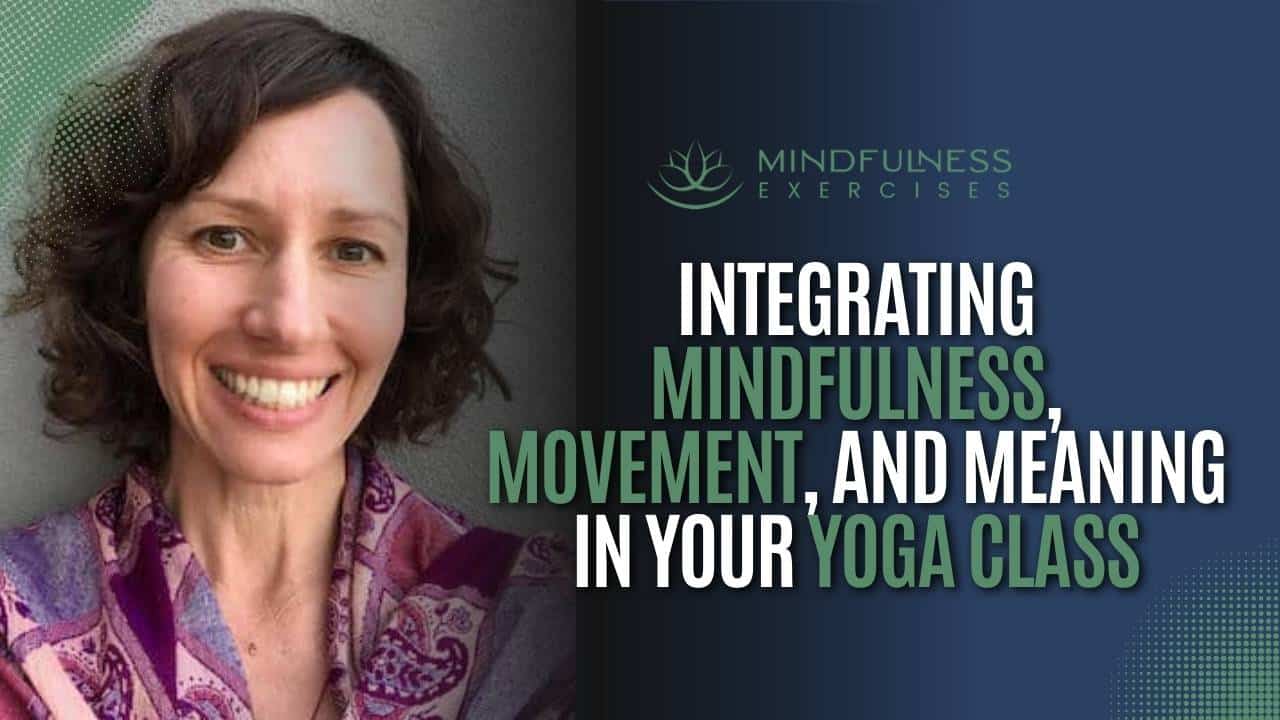
This is a recorded guest-teacher session for the Mindfulness Meditation Teacher Certification. Yoga and meditation teacher and writer Sara-Mai Conway, one of the senior teachers and main writers at Mindfulness Exercises, explains how to build an asana class the way you would guide a seated meditation. Teachers in the group close the session by sharing how they work with silence.
Sponsored by the Mindfulness Meditation Teacher Certification MindfulnessExercises.com/Certification
Episode Overview:
- Structuring classes around a single intention
- Using repetition and breath to anchor awareness
- Embodying values like gratitude, grounding, and compassion
- Teaching silence as a safe and supportive presence
- Placing meditation naturally within movement
- Reclaiming savasana as true stillness
- Closing practice with dedication and meaning
Show Notes:
Redefining Yoga: One Practice, Many Doorways
Rather than treating yoga, mindfulness, and meditation as separate disciplines, Sara-Mai invites us to return to a more integrated understanding of yoga itself.
Her working definition: yoga is moving energy through the body, using both outer and inner methods:
- Ethics and values (the yamas and niyamas) reduce mental friction and inner conflict
- Asana prepares the body for steadiness and comfort
- Pranayama bridges body and mind through breath
- Focused attention (dharana and dhyana) matures into insight
- And at times, practice opens into deep stillness or samadhi
Seen this way, she says, yoga is meditation and meditation is yoga, expressed through changing shapes, sensations, and states of attention.
Teaching a Yoga Class Like a Guided Sit
Sara-Mai’s central idea is building a yoga class the way you’d guide a seated meditation: preliminaries and an intention, the body of the practice, and a closing with a dedication.
That begins with a clear intention.
She describes the intention as what sets the boundaries of the practice, for the student and for the teacher. Once named, it informs:
- Which poses you select
- What you say, and what you leave unsaid
- How much silence you leave
- When a pose supports the intention and when it becomes a distraction
Every instruction, ideally, points students back to the same inner thread.
Using Breath to Unify Movement and Attention
If the intention is mindfulness of breath, Sara-Mai favors fluid, repetitive sequencing, such as lifting the arms on an inhale and lowering them on an exhale, and cues around the breath through the whole class.
She says it is fine to ask students to come back to the breath again and again, even a hundred times in one class. Simple ways to stay with a breath intention:
- Repeat the same movement with the breath
- Cue around the breath from start to finish
- Leave out cues that do not serve the intention, even a habitual one such as a Warrior 2 correction
Letting Meaning Live in the Body
In the episode, Sara-Mai shares how intentions can take physical form:
- Gratitude expressed through bows and deep forward folds
- Grounding emphasized by contact with the earth,
- Breath awareness explored through fluid, repeated movement
She also tells the class what the poses are for, for example that the forward folds are a way of bowing to give thanks.
Practicing Non-Harming and Self-Compassion on the Mat
For non-harming (ahimsa) or self-compassion, Sara-Mai suggests offering postures with a real physical challenge.
Rather than avoiding difficulty, teachers can invite students to be honest about:
- Whether they are pushing themselves into the challenge
- What happens when they cannot do the pose
- Whether they are responding to themselves with self-compassion
She adds that awareness without compassion can start to feel like self-criticism and judgment, so part of the teacher’s job is to remind students to bring compassion to what they notice.
Silence as a Teacher, Not an Absence
Silence can feel risky for teachers and students alike. In the discussion after the talk, Sara-Mai and the teachers in the group describe ways to give it a sense of safety.
Suggestions from the session:
- Say how long the silence will last
- Say how you will bring students back, for example a bell you ring once beforehand so they know the sound
- Tell students you are still there while they rest
Teachers in the group add that they describe the silence as something that holds students safely. Sara-Mai also suggests asking students about their relationship to quiet.
Integrating Formal Meditation Into Movement
Rather than reserving meditation for the end of class, this approach allows moments of stillness to appear within the flow.
That might look like:
- Pausing in child’s pose or another resting shape after a rigorous sequence
- Pausing after a peak pose to check in with the breath
- Staying in a pose students can hold comfortably for a while, and asking what is happening in the body
Sara-Mai says to allow the sensation without trying to calm the breath down or fix anything.
Reclaiming Savasana as True Stillness
Sara-Mai calls savasana a good place to introduce students to total stillness and quiet, with no song and no complicated guided meditation.
It can also hold a relaxation practice or a body scan. She says a teacher’s own comfort matters: when students fidget, ask whether the discomfort is theirs or yours.
She closes the class with a dedication of practice: bring awareness to the intention, to one benefit felt in the body, and to how to carry it into the day, perhaps as a wish for all beings. She cites Rick Hanson, from a guest teacher appearance, on why bringing awareness to what we learn helps it take hold.
Teaching with Authenticity and Trust
Throughout the conversation, Sara-Mai emphasizes trusting students with depth.
Her answer to the “spiritual sandwich,” where mindfulness appears only at the beginning and end, is to hold the intention through the whole class.
Near the end, a participant who teaches a beginners’ class says that teaching from the heart means students who do not connect with their style will find another teacher. Sara-Mai agrees.
A Gentle Invitation
If you’ve ever wondered how to keep mindfulness alive between the opening sit and the final rest, this episode covers:
- A clear structure: intention, body of the practice, dedication
- Cues and sequencing tied to the intention
- Ways to introduce silence safely
Additional Resources:
- Free Training with Sean Fargo: How to Teach Mindfulness With Confidence & Credibility
- Certification: Mindfulness Meditation Teacher Certification
- Blog: Boost the Relationship with yourself with 8 Self-Compassion Exercises
- Blog: Self-Esteem vs. Self-Compassion: Understanding the Difference