📖 Free guide: How to Teach Mindfulness & Meditation

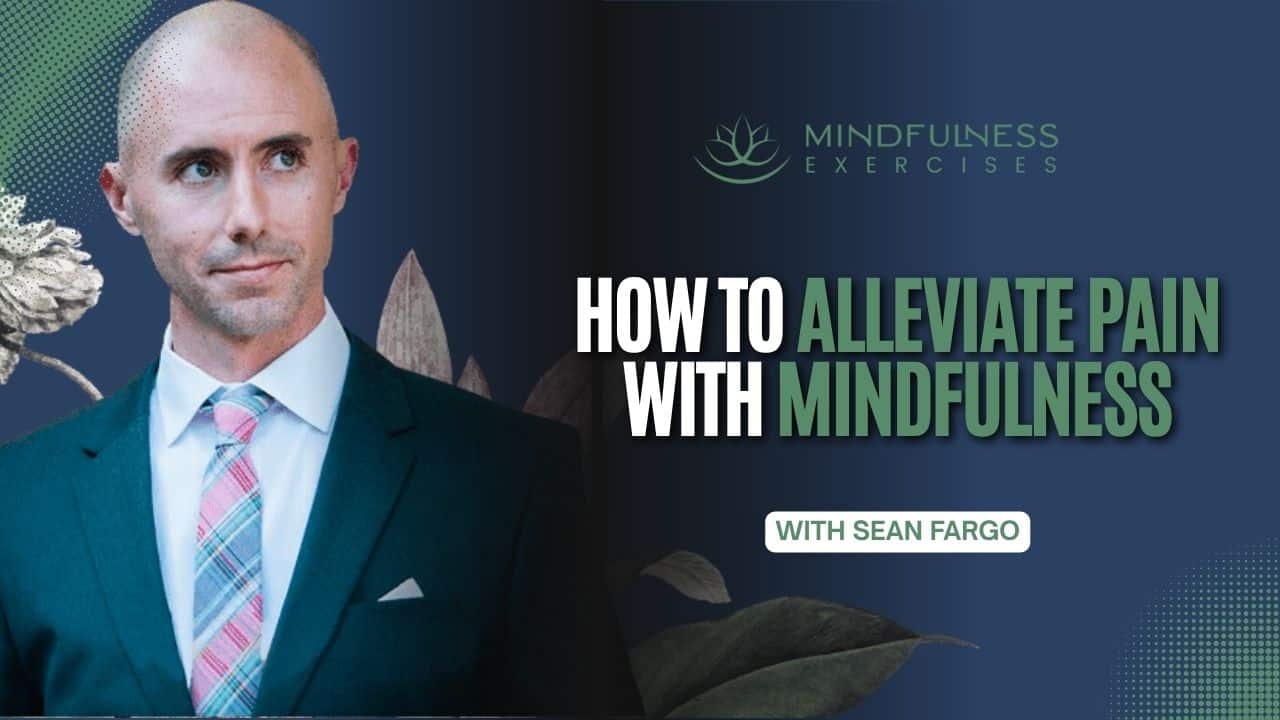
    How To Alleviate Pain With Mindfulness

    SF
    Sean FargoPublished November 20, 2024 · Updated November 4, 2025 · 3 min read
    How To Alleviate Pain With Mindfulness

    Loading episode player

    How To Alleviate Pain With Mindfulness — Tunein Logo

    TuneIn

    How To Alleviate Pain With Mindfulness

    It may seem counterintuitive to bring awareness to pain — especially when the natural instinct is to escape or numb it. But mindfulness offers a powerful alternative: a way to stay gently connected to our body and breath, even in the midst of discomfort. In this episode, Sean Fargo explores how mindfulness practice helps people approach pain with courage, non-judgment, and compassion. By learning to be with our full experience — including pain — we can shift our relationship with it, and often ease the intensity over time.

    This talk is especially valuable for mindfulness teachers, healthcare professionals, or anyone seeking a mindful path through physical or emotional pain.

    Sponsored by our Mindfulness Meditation Teacher Certification Program MindfulnessExercises.com/Certify

    What You’ll Learn in This Episode:

    • Why bringing attention to pain can be a healing act
    • How to approach pain without judgment or resistance
    • Techniques for working with overwhelming sensations
    • The role of self-compassion and emotional honesty
    • How much to practice and how long it takes
    • When mindfulness may need modification for safety

    Show Notes:

    Why bringing attention to pain can be a healing act

    While most people want to avoid pain, mindfulness invites us to explore it — not to fix or tolerate it, but to simply notice it with curiosity. Sean explains how this shift in perspective helps reduce the struggle, making pain feel less overwhelming and more manageable.

    How to approach pain without judgment or resistance

    Using the example of knee pain, Sean describes how we can gently bring awareness to the painful area — or to the regions around it — with a sense of openness and kindness. By softening our mental resistance, we reduce the added layer of suffering that comes from labeling pain as “bad” or “wrong.”

    Techniques for working with overwhelming sensations

    Mindfulness doesn’t mean forcing ourselves to sit with unbearable pain. Sean shares how to skillfully back off when needed — shifting focus to the breath, to adjacent body parts, or to sensations that feel neutral — while still staying grounded in the body.

    How to build the capacity to stay with discomfort over time

    Like strengthening a muscle, our ability to stay present with pain grows gradually. Sean outlines how a step-by-step approach — starting with small discomforts and moving gently toward more intense ones — helps practitioners build resilience and compassion.

    The role of self-compassion and emotional honesty

    Instead of pretending pain isn’t there or feeling trapped by it, mindfulness helps us acknowledge it honestly and kindly. Sean emphasizes the importance of engaging with our real-life experience — not to “accept” pain passively, but to meet it with courage and care.

    How much to practice and how long it takes

    Sean recommends starting with 10–15 minutes per day, even as little as one minute if that’s all that’s manageable. With consistent practice (three to four times a week for eight weeks), most people begin to experience meaningful benefits. Like going to the gym, the effects build gradually.

    When mindfulness may need modification for safety

    While mindfulness is generally safe, Sean notes that those with PTSD, schizophrenia, or certain mental health conditions may need extra care. Tailored practices, therapeutic support, and a slower pace can make mindfulness both safe and healing for those with sensitive backgrounds.

    Additional Resources:

    Transcript

    Show transcript· 5 min read

    It it's very counterintuitive to pay attention to your pain. Many chronic pain patients say that that's the last thing they want to do is why would I want to pay more attention to my pain? I'm trying to get rid of it. And that's the paradox of mindfulness. Mindfulness allows us to be with our whole experience without judgment. So let's say there's a patient with some knee pain. Might be very acute, might be adult pain, but let's say there's pain in the knee. With mindfulness, you can explore the regions of pain in the knee. If it's too much, you can back away and explore regions around the pain in the leg and explore the sensations around the knee with a sense of non-judgment or with a sense of courage and kindness, self-compassion. So you're exploring the areas without judgment, without judging it as good or bad, right or wrong, and really just sensing into it a little bit. If it's too overwhelming, we back out a little bit with a sense of courage to stay with our experience. If it's too overwhelming, we can explore the other areas of the leg or breathing. What is it like to be breathing right now? So, in a sense, you might be moving your attention away from the pain itself, but still staying engaged with your experience in your body, which is really helpful over the long term. You're building this muscle to be able to stay engaged with your experience. When the pain has lessened, you can bring your experience back, your awareness back towards the pain, and over time to the pain itself. So, in the beginning of what we teach in our classes, is we're not going straight to the pain right away. We need to build the muscles first to bring our awareness into our bodies, know what it's like to bring awareness to our bodies without judgment, and slowly start to explore the areas that are slightly uncomfortable, a little bit more uncomfortable, very uncomfortable. And over time, patients are able to actually almost embrace their pain with a sense of kindness. They're not welcoming more of it, and they're not necessarily even accepting it completely, but they're acknowledging that it's there because it's there. The more that they ignore it or pretend like it isn't there, or the more that they feel trapped by it, the worse the pain gets over time. So we're engaging them into their real life experience to be able to sense into areas of discomfort more and more over time. So a lot of patients ask how long they should practice mindfulness for each day. There is no right or wrong, but we recommend about 10 minutes minimum. If you can only do one minute, then that's great. But do it for as long as you can while staying engaged. The act of curiosity and enjoyment is an important part of it. The practice of mindfulness is not to necessarily make things feel better, but the more you can stay engaged with the practice, with a sense of lightness or ease or relaxation, the better. And so if you can practice for 10 minutes, 15 minutes a day, that will be enough to strengthen the muscles of mindfulness over time. We recommend that patients who are starting out practice for eight weeks before they decide whether or not to continue. This is like going to the gym. You may not see results right away. It doesn't work overnight. We invite skepticism and we invite patients to try it for eight weeks, at least three or four times a week, ten minutes each time, before they judge whether or not it's right for them. But I think 99% of all patients who go through this program over eight weeks find some benefit uh from the practice and will continue to practice it. We found that 60% of patients who try it for one week want to do more of it. And so I think the uh the findings of uh uh our beta testers uh are very encouraging for the long run of how much people are interested in trying this. There are a few um examples of when mindfulness may not be appropriate. Those struggling with uh acute PTSD, I would recommend uh trying bite-sized chunks of it along with uh guidance from a therapist. Those living with schizophrenia can be very challenging to bring your awareness to your actual experience. Um there may be a few other mental conditions that are sensitive around mindfulness practice, but for the most part those living with certain kinds of trauma, uh it's totally fine and very healing to practice mindfulness. And in our program, we pay attention to those living with PTSD, especially by giving specific mindfulness practices for those living with PTSD, so that if they either self-identify as having PTSD, or if a doctor notes that the patient has PTSD, then they'll be prescribed certain exercises that help them to bridge where they are and where they need to be to start a fruitful mindfulness practice. Um we pay attention to that. Um but by and large, mindfulness can can be learned by just about anybody who has the courage to bring awareness to their their actual experience. All you need is uh a little bit of focus, a little bit of courage to be with your experience, and that's it. So it's it's very quite simple.

    Share

    Continue reading

    • Grounding Through Anxiety With Senses

      Grounding Through Anxiety With Senses

      Read
    • Shamatha Vipassana Explained For Modern Minds

      Shamatha Vipassana Explained For Modern Minds

      Read
    • How To Stop Believing You Are Not Enough

      How To Stop Believing You Are Not Enough

      Read

    Professional training

    Accredited mindfulness teacher certification

    Trusted by teachers in 100+ countries

    Structured training, CE credits for eligible pay-in-full registrants, and support for teaching without self-doubt — after you have explored this episode.