
TuneIn
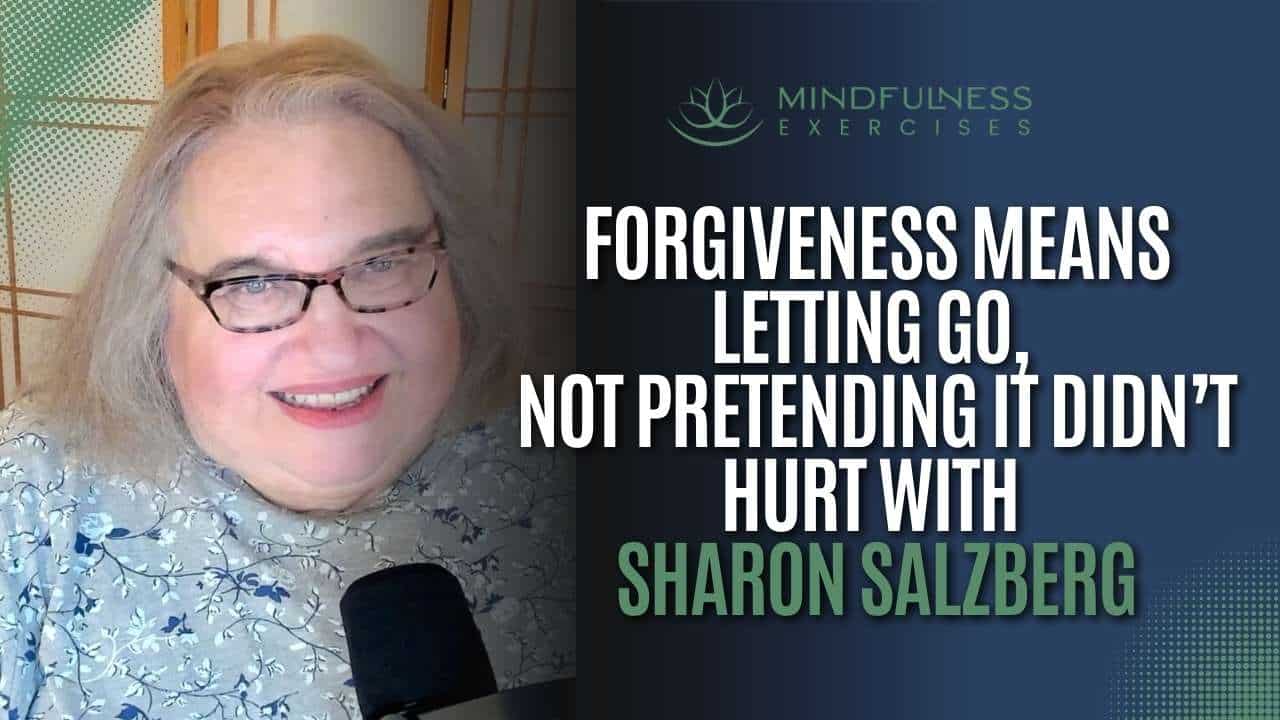
For many people, forgiveness feels impossible—not because they are unwilling to heal, but because forgiveness has been misunderstood. We’re often taught that forgiving means forgetting, excusing harm, or pretending something didn’t hurt. That version of forgiveness can feel invalidating, even unsafe.
In this episode of the Mindfulness Exercises Podcast, we explore a different path with renowned meditation teacher Sharon Salzberg—one that reframes forgiveness as letting go, not erasing. This approach honors what happened while gently loosening resentment’s grip on the heart.
Forgiveness, as Sharon teaches, is not a single decision or emotional leap. It is a practice of attention, kindness, and returning—again and again—to the present moment.
Sponsored by our Mindfulness Meditation Teacher Certification Program MindfulnessExercises.com/Certify
Episode Overview:
Key Themes:
- Forgiveness as letting go, not forgetting
- Loving-kindness meditation as a pathway to healing
- The power of repetition and returning
- Compassion with boundaries and discernment
- Shared vulnerability and emotional resilience
Practice Shared: A step-by-step loving-kindness meditation beginning with oneself and expanding outward to others and all beings.
Show Notes:
Forgiveness as a Shift in Identification
One of the most powerful reframes offered in this conversation is this: forgiveness is not a wipe of memory; it is a shift in identification.
The pain may still be remembered. The story may still exist. But over time, we stop being the story.
When we are identified with past harm, our inner world becomes shaped by replay—old conversations, imagined outcomes, unresolved emotions looping endlessly. Forgiveness interrupts this cycle, not by force, but by gently choosing not to rehearse the same narrative once more.
This doesn’t mean bypassing grief, anger, or truth. It means recognizing that we can remember without remaining trapped.
The Role of Loving-Kindness in Forgiveness
At the heart of this practice is loving-kindness meditation (metta) a simple yet profound training of attention and intention.
Rather than trying to forgive directly, we cultivate goodwill. Over time, that goodwill creates space where forgiveness can naturally arise.
Sharon guides listeners through a grounded, step-by-step practice using traditional phrases:
- May I be safe
- May I be happy
- May I be healthy
- May I live with ease
The power of these phrases does not come from perfection or emotional intensity. It comes from sincere repetition.
Even when the words feel mechanical or the heart feels closed, the practice still works—because we are planting seeds.
When the Mind Wanders (And It Will)
A wandering mind is not a failure of practice. It is the practice.
Each time we notice the mind drifting into old stories, self-criticism, or resentment, we are given an opportunity:
- Notice
- Let go
- Gently return
That small return mirrors forgiveness itself.
Forgiveness is rarely a one-time act. It is the repeated choice to come back—to the breath, to the body, to the present moment—rather than replaying what can no longer be changed.
Expanding the Circle of Kindness
After establishing loving-kindness toward ourselves, the practice widens in natural stages:
1. A Benefactor
Someone who has helped you, supported you, or simply makes you smile. Offering kindness here often feels easy and warm, helping the heart remember what openness feels like.
2. A Neutral Person
This step can be surprisingly profound. A neutral person—someone you pass on the street or see occasionally—reminds us of shared humanity. When we wish them well, we recognize that everyone carries unseen struggles.
3. All Beings
Rather than forcing forgiveness toward someone who caused harm, the practice expands outward—to life itself. This broad goodwill softens the heart without demanding premature reconciliation.
Compassion Without Losing Discernment
A common fear around forgiveness is that it will erase boundaries or undermine justice. This practice does neither.
As Sharon emphasizes, goodwill does not negate discernment.
We can:
- Forgive without reconciling
- Release resentment while maintaining boundaries
- Offer kindness without denying harm
In fact, clarity often improves when resentment loosens its hold. We become less reactive, more grounded, and better able to respond wisely.
Shared Vulnerability and the Fragility of Life
One of the humbling insights from this practice is the recognition that life can change in an instant.
Illness, loss, and uncertainty touch everyone—regardless of intention or fault. Loving-kindness helps us meet this truth without hardening.
When we remember our shared vulnerability, forgiveness becomes less about condoning behavior and more about choosing how we want to live inside our own minds and hearts.
What Forgiveness Makes Possible
As resentment loosens, something else emerges:
- Steadiness
- Emotional spaciousness
- A quieter nervous system
- Greater freedom in the present moment
The memory remains. The wisdom remains. But the suffering softens.
Forgiveness becomes an act of self-care—a way of reclaiming energy that was bound to the past and bringing it back to life as it is now.
Final Reflection
Forgiveness doesn’t ask us to rewrite the past. It invites us to loosen our grip on it.
Through loving-kindness, we practice releasing—again and again—the stories that no longer serve us. Each return to the present moment is an act of forgiveness in itself.
If this practice supports you, consider sharing the episode with someone who could use a little more ease, and leaving a review to help others find their way to this work.
Gentleness, after all, is not weakness. It is a skill—and one worth practicing.
Additional Resources:
- Free Training with Sean Fargo: How to Teach Mindfulness With Confidence & Credibility
- Certification: Mindfulness Meditation Teacher Certification Program
- Blog: Boredom, Grief, and the Light of Presence
- Blog: 70+ Stress Quotes: Navigating Stress with Wisdom