🎉 $1,000 off Mindfulness Teacher Certification — annual sale ending soon

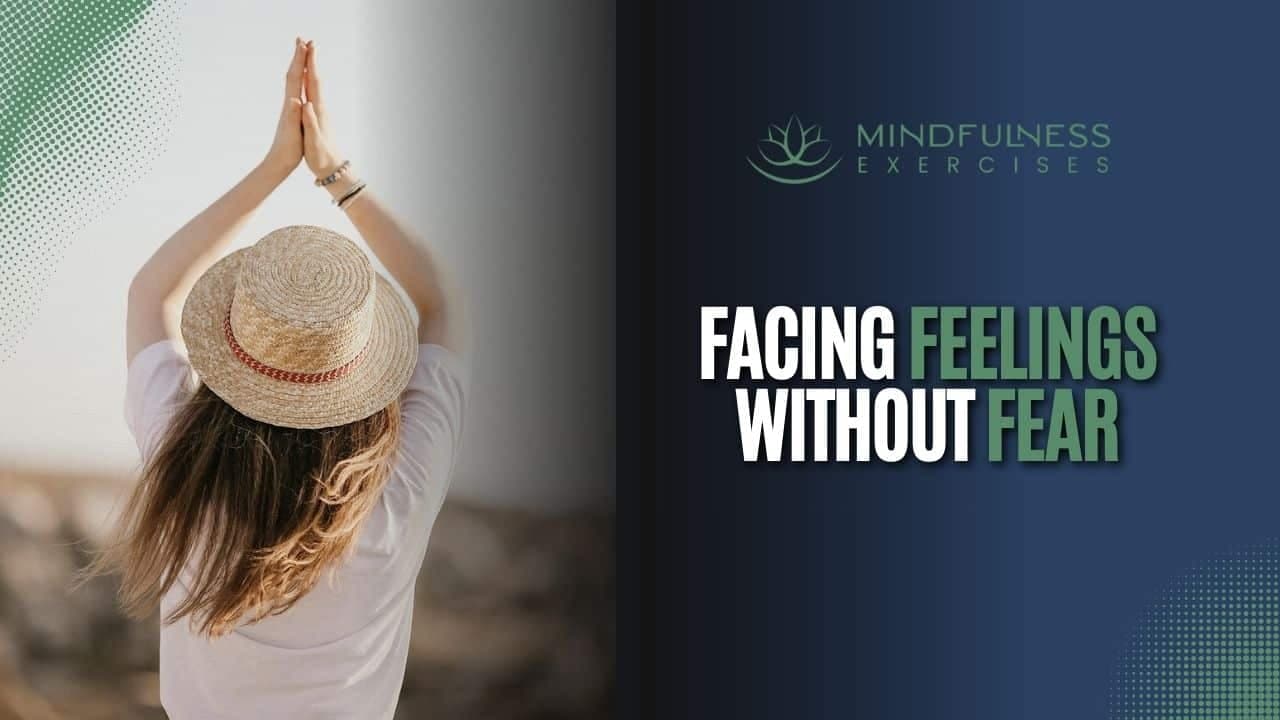
    Facing Feelings Without Fear

    SF
    Sean FargoPublished January 30, 2026 · Updated February 4, 2026 · 5 min read
    Facing Feelings Without Fear

    Listen to this episode

    Mindfulness Exercises Podcast

    Enjoying the episode?

    Follow the show in your podcast app. If this conversation supports your practice, a rating or review helps more listeners find it.

    There’s a subtle kind of pressure many of us carry—especially in wellness, spiritual, or self-help spaces—to stay calm, grateful, and positive no matter what. We’re encouraged to “raise our vibration,” “choose peace,” or “let it go” before we’ve actually had a chance to feel what’s here.

    And while those ideas may sound supportive on the surface, they can quietly lead to something else entirely: spiritual bypass—the habit of using positivity to avoid discomfort.

    If you’ve ever tried to think your way out of anger, rush past grief, or shame yourself for feeling impatient, anxious, or resentful, you’re not failing at mindfulness. You’re being human.

    In this episode of Mindfulness Exercises, we explore what it really means to face feelings without fear—not by indulging them or suppressing them, but by meeting them with curiosity, embodiment, and care. The result isn’t emotional overwhelm or wallowing. It’s clarity, integration, and wise action.

    Sponsored by our Mindfulness Meditation Teacher Certification Program MindfulnessExercises.com/Certify

    Episode Overview:

    In This Episode, We Explore:

    • Why “good vibes only” can increase emotional stress
    • How spiritual bypass shows up in everyday life
    • The somatic truth behind “what we resist persists”
    • Why judgment and shame keep emotions stuck
    • How anger, impatience, and grief carry valuable information
    • The difference between processing emotion and performing calm
    • A simple mindfulness flow for working with difficult feelings
    • How to resource yourself when emotions feel intense
    • Using mindfulness to move toward clarity and wise action

    Key Takeaway:This practice isn’t about wallowing or fixing yourself. It’s about learning to feel safely, listen deeply, and respond with integrity.

    Show Notes:

    When Positivity Becomes Avoidance

    Spiritual bypass often shows up disguised as maturity or self-awareness. It might sound like:

    • “I should be more accepting.”
    • “I don’t want to give this energy.”
    • “Other people have it worse.”
    • “I just need to calm down.”

    But underneath these well-intentioned thoughts is often a quieter message: This feeling isn’t allowed.

    The trouble is, emotions don’t disappear just because we ignore them. When they’re judged, minimized, or rushed away, they tend to stick—showing up later as tension, irritability, exhaustion, or emotional numbness.

    Mindfulness doesn’t ask us to perform calm. It asks us to tell the truth about what’s here.

    Why Judgment Makes Emotions Stronger

    One of the core insights we explore in this episode is simple but powerful:Judgment amplifies emotion.

    When we label feelings as “bad,” “wrong,” or “a problem,” we add a second layer of resistance. Now it’s not just anger—it’s anger plus shame. Not just sadness—it’s sadness plus frustration.

    From a somatic perspective, this matters. What we resist doesn’t just persist as an idea—it tightens in the body. Muscles brace. Breath shortens. The nervous system stays on alert.

    Mindfulness works not because it fixes emotions, but because it softens our relationship to them.

    Emotions as Information, Not Enemies

    Rather than dividing feelings into good and bad, mindfulness invites us to listen for what emotions are pointing toward.

    • Anger may signal a threatened value or a crossed boundary
    • Impatience may point to an unmet need or lack of support
    • Sadness may reflect something meaningful that was lost
    • Anxiety may be the nervous system asking for safety or clarity

    When emotions are met with presence instead of resistance, they often begin to shift on their own—not because we forced them to, but because they were finally allowed to move.

    This is where the familiar phrase “what we resist persists” becomes less of a quote and more of a lived, embodied reality.

    Processing vs. Performing Calm

    There’s an important difference between processing emotion and performing calm.

    Performing calm looks regulated on the outside, but often comes with internal tension, shallow breathing, or emotional shutdown. Processing emotion, on the other hand, may feel messier—but it leads to genuine settling.

    This episode reframes the old “two wolves” story not as a battle between good and bad parts of us, but as an invitation to bring compassion to all inner experiences. Nothing needs to be defeated for healing to happen.

    A Practical Mindfulness Flow for Difficult Emotions

    Rather than abstract advice, this episode offers a grounded, repeatable flow you can use in real life—whether you’re dealing with irritation at work, grief at home, or emotional overload in relationships.

    1. Notice What’s Here

    Pause and name the experience without analysis. “There’s anger here.”“I’m feeling tight and rushed.”

    2. Sense It in the Body

    Where do you feel it most clearly? Chest, throat, jaw, belly? Let attention rest there gently.

    3. Breathe With It

    No special technique required. Simply allow the breath to move while staying present with sensation. Longer exhales can help signal safety.

    4. Gauge the Intensity

    Ask quietly: Is this softening, staying the same, or increasing?

    • If it softens, you may naturally move toward insight—updating beliefs, clarifying boundaries, or choosing action aligned with your values.
    • If it intensifies, that’s not failure. It’s information.
    5. Bookmark and Resource

    When emotions spike, it may be a sign you need more time, support, or safety. Bookmark the experience and return when you’re resourced—through rest, connection, movement, or guided support.

    This approach honors both capacity and compassion.

    Staying Present Without Getting Overwhelmed

    A key takeaway from this episode is that mindfulness isn’t about pushing through intensity. It’s about staying within a window of tolerance.

    Helpful resourcing cues include:

    • Slowing the exhale
    • Letting attention widen (not drilling into sensation)
    • Grounding through touch, sound, or orientation
    • Reaching out for support

    You’re allowed to tend to emotions gradually. Integration happens over time.

    From Feeling to Wise Action

    Facing feelings without fear doesn’t mean getting stuck in them. When emotions are met fully, they often reveal what matters most.

    From that place, action becomes clearer—not reactive, not forced, but aligned.

    This is mindfulness as integration: emotion, body, values, and behavior working together.

    Final Reflection

    Mindfulness doesn’t ask you to be positive. It asks you to be present.

    When we stop fearing our feelings, they stop running the show. They become guides—pointing us toward care, boundaries, meaning, and choice.

    And that’s where real freedom begins.

    Additional Resources:

    Transcript

    Show transcript· 8 min read

    Can you say more about spiritual bypass? Yeah, so a lot of and I'm I was guilty of this too. I don't mean to use the word guilty, but I did this for a long time. And and I still do it from time to time too. It's very common to kind of focus on the pleasantness of life, on the beauties and the wonders and the goodness of life. And, you know, that's that's beautiful and it feels good. And you know, it's fine to do that. There's nothing wrong with experiencing the joys of life, or to hang out with a sense of peace, or to, you know, work on acceptance and care and all these things that are quite pleasant and also true.

    What Spiritual Bypass Looks Like

    Unfortunately, you know, as human beings, we also experience stress, disappointments, sadness, sometimes anger. You know, there's a realm of emotions that are natural to all of us. I don't care who you are, like a hundred percent of us have these emotions naturally. And it's okay to have these emotions. So it's important not to sweep them under the rug or ignore them or resist them or exaggerate them, or to pretend that they're not there, or to think that we shouldn't feel them. You know, so a lot of us will judge these, say, unpleasant emotions, or what some people call negative emotions, as being bad or wrong. And usually that judgment is born out of a sense of shame. And so, therefore, like a lot of us will bypass those emotions or you know, ignore them, judge them. It's like I want to focus on the good instead. I want to focus on how I should be feeling, I want to focus on feeling better, I want to focus on getting over this, I want to focus on bypassing this. You know, I don't want to feel this. So whenever we bypass like this the natural tensions and stressors of life, that those energies will still live in the body. What we resist persists. What we ignore will usually come back to bite us 10 times harder later. It will usually lead to a breakdown because we're not open to being with the reality of these energies. One of the beauties of mindfulness is that we can notice the arising of, say, stress, the arising of sadness. We can sense the arising of anger, we can sense the arising of all these things in real time and allow them to come, but also like allow them to pass. We offer them the space to arise. We don't have to like act on them per se, but we can witness them with gentleness, saying, Oh, yes, this too is a part of this human experience. We can be with them without needing to resist them or escape them to in order to feel something else.

    Why Resisted Emotions Persist

    We can be with these emotions, these stressors of life, and allow them to go, allow them to be processed, and we can learn from them. Oh, yes, there's a little bit of anger here because I I want to act and protect this person, or because my values feel threatened. Oh, yes, okay. So how can I align with my values? Or, you know, this tension is arising because I have a fear that someone's walking all over me or taking an advantage of me, or maybe I need to drink more water, eat something, or I'm not feeling like I'm able to do all the things I wanted to do today. So I can understand what's happening and why it's coming up, but I can also like when I when I'm present with it, I'm allowing it to be here and then I'm allowing it to go. But if I bypass it, it usually stays stuck in here because we're inherently like resisting being with it. What we resist persists. And when we resist just being aware of something, it will stay there until we acknowledge it without judging it. So when we judge it to be bad or wrong, that's a form of resistance and it sticks around and usually it gets stronger. And you know, most of us do it a lot, it can be very subtle sometimes, but it's really important for us to notice when we're doing it. Because with mindfulness, we the the goal is really just to be present for all of life, not just like the fun stuff, but the fun stuff and the sticky stuff. But again, it's it's important to note that it's not about good or bad, right or wrong. That the more we get caught in this paradigm of you know everything being good or right, or it being bad or wrong, is usually an indication of how we feel about ourselves. And so it can, you know, start to point to like, is there a sense of shame that I'm masking or avoiding? And I know this is a really touchy topic, but it's really important and to allow ourselves to be with these underlying judgments, saying, okay, like what what's here? Like, why are there these forms of reactivity in a sense of like deeming things a certain way? And what does that speak to and relationship to how I feel about me? And with shame, like me being good or bad, as if we're one or the other, which is, I argue, not the case.

    Mindfulness As A Way To Feel And Release

    Like what feels real on a day-to-day? So we have these two wolves, the wolf of hate and the wolf of love. And I I don't think there's like people who are inherently say evil or bad people per se. I think we do have a sense of like goodness in all of us, but you know, we all have our tricky moments, our difficult sides, our patterns that we go into. And so can we meet ourselves with this sense of compassion for, you know, not being quote unquote perfect, whatever that is, or ideal. We're all human and it's a messy life, it's a messy world. And the more that we can embrace the messiness without judging it, the more we can connect with ourselves as loving, lovable people, and the more we can connect to others as you know, them being lovable people instead of you know deeming each person to be good or bad people. That's my take. Diana said, yes, it does. I'm judging my own anger today, my own impatience, wanting it to go away, and hearing these reminders is helpful. Yeah, it's okay to feel anger, and it's okay to feel impatient. That's okay. You know, if we can kind of sit with it, breathe with it, feel into it a little bit with gentleness. Oh yes, impatience is here, anger's here. Can I be with it with gentleness? Uh, Reiki Wellness says yes, that makes sense. I've just wondered if using tools that help quickly transform the old reaction pattern, associated beliefs, feelings, etc., not suppress them is a bypass. It's important to act, it's important to cultivate, you know, behaviors and beliefs and you know, changing our state and you know, not succumbing to things or not feeling overwhelmed by things or not navel gazing, or you know, it's important to not get carried away with like just feeling everything all the time. The recommended steps are to like to to to notice it's here, to sense into it, to breathe with it. And you know, if if there is a reaction to like jump out of it and just do or get rid of it, notice the reactivity, the impatience, and to breathe a little bit more with it, and to kind of sense into like how reactive does this feel? And

    Values, Shame, And The Good–Bad Trap

    that will usually give you the indication for how long to stay with it. So if you're if you're able to like be with the stressors or the grief or the anger or whatever, and it starts to feel like it's kind of softening, subsiding, moving, you're able to breathe, you're able to kind of feel it with some form of spaciousness, some perspective, you can feel it without getting too riled up or too overwhelmed, you know, like if the energy of it is kind of dissipating over time, then you can kind of then segue into work with beliefs and actions and new patterns and things like that. But if you're if you kind of just barely touch the surface of the energy of it and it feels strong, you don't want to then bypass it or quickly move into something else. I mean, you can, but you can't get away with doing that very often. You're gonna want to find an appropriate time and an appropriate space and an appropriate place where you feel safe enough to then tend to it. So you don't always have to tend to it like right now, but you do want to make sure to like bookmark it and find the space and time to tend to it with gentleness and tend to the you know intensity of it with gentleness until it doesn't feel as intense. You don't want to like quickly get through it, you just want to like offer it some space and time for you to kind of feel it, breathe with it and investigate it and explore it and breathe and listen to it and accept it and feel it. And then when the energy isn't as asn't intense, isn't as intense, then you know, I think it's safer to then work with states and patterns and behaviors and beliefs. So I hope that's helpful.

    Share

    Continue reading

    • Grounding Through Anxiety With Senses

      Grounding Through Anxiety With Senses

      Read
    • Shamatha Vipassana Explained For Modern Minds

      Shamatha Vipassana Explained For Modern Minds

      Read
    • How To Stop Believing You Are Not Enough

      How To Stop Believing You Are Not Enough

      Read

    Professional training

    Accredited mindfulness teacher certification

    Trusted by teachers in 100+ countries

    Structured training, CE credits for eligible pay-in-full registrants, and support for teaching without self-doubt — after you have explored this episode.