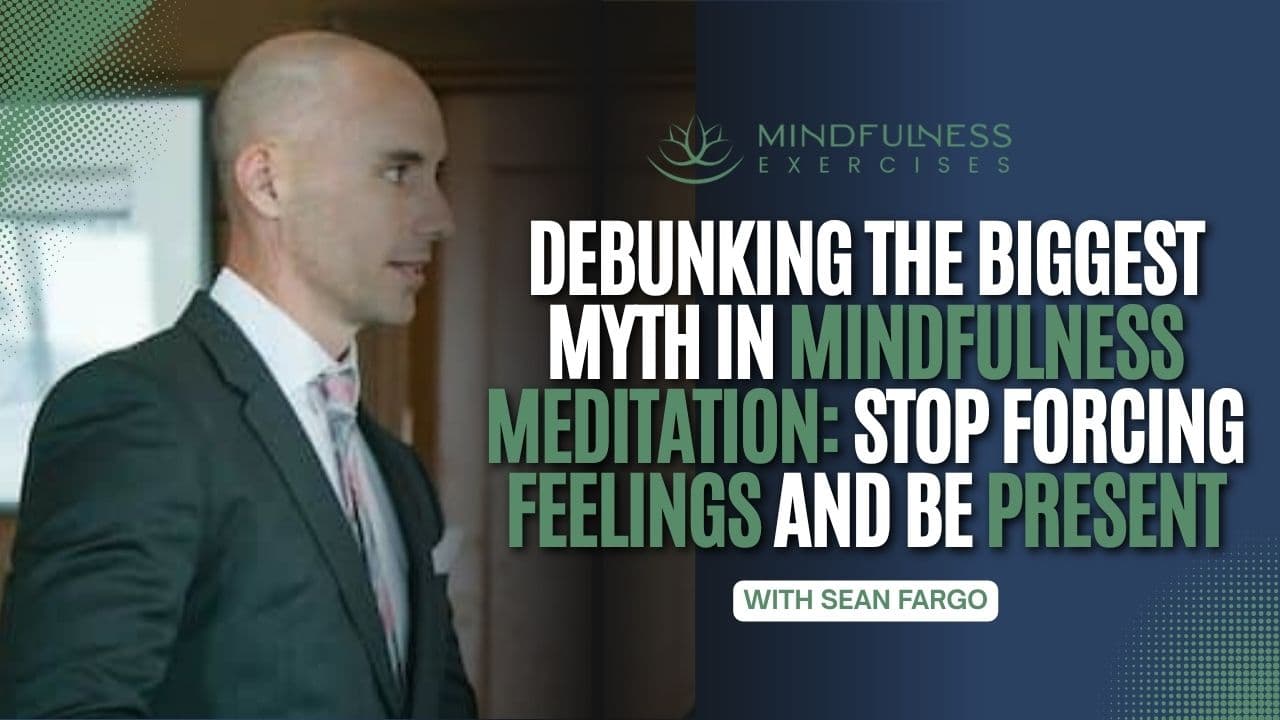
Can we be with the unexpected and to notice the judgments of good or bad right or wrong? And one of the reasons why I led this meditation outside is because there's often distractions of dogs barking, trains going by, planes going overhead, and that when we're practicing mindfulness meditations, all of that is okay. Hope you're doing well. Uh today I'm in my backyard outside with my puppy and the birds, and I thought I'd just take a moment to record this video that I've been thinking about making uh about dispelling the most common myth around leading mindfulness meditations. I've been working with thousands of new mindfulness and meditation teachers over the past 10 years, uh, supporting them in teaching mindfulness and therapy and life coaching and yoga teaching and helping them to integrate mindfulness teaching into whatever their career is. And um I see this common myth come up over and over and over again, which affects the quality of their guided meditations and therefore the quality of um the impact that they're wanting to make on the people around them. Um, you know, the hope is that we're helping people be present and self-compassionate and resilient, but this common myth around leading meditations often gets in the way of that. Uh so I'll be talking about what the myth is. I'll be clarifying um the essence of leading mindfulness meditations, which uh really clarifies the myth. I'll be sharing a real life story of my own uh journey and how I realized um that I had misbelieved this myth. Um I'll be addressing the common fears a lot of mindfulness meditation teachers have, um sharing the key takeaway, and then I'll be offering a guided um experiential practice for us to give us a felt sense for what I'm going to talk about. So um again, my name is Sean Fargo. I have a puppy who lives next door to a couple dogs, and um, I was a Buddhist monk for a couple years in the Thai Theravada tradition. I worked at Spirit Rock's Meditation Center with Jack Cornfield for five years. And um I'm a mindfulness instructor for the program born at Google, and help a lot of people to um bring these practices of mindfulness and meditation to others in professional settings now. So, you know, over the years, the common misconception around leading meditations is that you know, we really want people to feel a certain way during the meditation. A lot of new mindfulness um teachers are trying to force an outcome. Of course, we would like people to feel calm and loving and uh balanced, but far too often I see new um mindfulness teachers leading meditations in a way that's trying to force that outcome or assume that outcome or visualize that outcome, trying to force it to be here now, rather than guide people through what the practice of mindfulness actually is, which is being present for whatever's here, including the recycle trucks outside and the train rolling by or the airplanes going above us that might distract us or lead to reactions. Mindfulness is about being present for whatever's here and noticing how this experience is for us, whether we like it or not. Um, guiding meditations isn't about forcing a sense of calm or acceptance or bliss. Um, if those things happen, that's great. But the meditation itself is about inviting people to notice what's here. So, with mindfulness of breathing, when we're inviting people to notice um their inhales and exhales, we're inviting them to notice how these sensations feel in the body, in the belly, the chest, the nose, or the mouth. How does it feel to be breathing in and out? If we're guiding a body scan meditation, what are these sensations in my toes and feet and ankles and legs and pelvic area and belly and back and chest and shoulders, head, arms, hands. We're not trying to force a sense of calm, but rather invite a sense of noticing uh for loving-kindness practice. You know, for a long time I thought that loving kindness practice was about trying to feel loving and kind of forcing a sense of care. In fact, uh when I left the monastery and I was leading uh one of my first meditations, I thought I would lead in loving kindness practice, and I was leading it in a way where I was kind of implying that we were all feeling loving during the practice, and that kind of that we should be feeling loving during this practice. Now, the practice of loving-kindness is about inviting the heart to come out and to care and to connect, but oftentimes resistance comes up, and even anger or hatred or skepticism comes up. And so the practice is to sense into the heart and notice the resistance, to notice what comes up that gets in the way of loving kindness, and that's the practice. We can invite the heart to come out, but we can't force it, and we can't assume that it's going to be caring when we're leading this meditation, which really impacted the quality of my uh ability to help people during that meditation. And so, whenever we're leading meditations, we're inviting people to notice what's here, and that takes a sense of courage when you know oftentimes we're feeling stressed or anxious or uh distracted or fearful. It takes a sense of courage to meet what's here if it's unpleasant. And so part of our role as mindfulness and meditation teachers is to encourage courage, to encourage people to have the courage to meet whatever's here and to simply notice it without judging it to be good or bad, without judging it to be right or wrong, without trying to change it, manipulate it, force it to be different. We're inviting people to be with whatever's here, to allow these feelings and sensations to be here however they are. And through that process of honoring what's here and being with what's here and allowing what's here to be here, then that energy usually changes, and it usually turns into a sense of calm and well-being and care. In other words, when we allow what's here to be here, we usually get to the outcomes that we're hoping for. But if we try to force the outcomes and say, you know, now we need to feel a sense of calm in the body, calm in the breath, love in the heart, it usually doesn't end up coming. We can't force a certain feeling, we can't control our experience as much as a lot of people try. It's scary to invite people to notice whatever's here because we don't want people to feel stressed or anxious or distracted, and um, it's okay if they do feel those ways, but our role as meditation teachers is to invite them to notice it and to not resist what they're feeling, to let them know that it's okay to feel what they feel. And that by softening around that resistance and by allowing themselves to feel what they feel, they usually feel better, even though it's scary and difficult at first. And so one of the key takeaways here when we're leading mindfulness meditations is that it's more important to be present than perfect, whatever perfect means. It's much more important to invite presence than perfection. It's more important to invite people to notice what's here rather than force an outcome. I hope that resonates with you. And now I'd like to invite us to practice together to give us a felt sense for what I'm talking about. So I'll be leading a brief guided meditation that illustrates this point of encourage, encourage, and softly inviting you to notice what's here, and that if other things come up, like stress or distraction or fear or skepticism, that that's okay. And that we can be with that. We can be with whatever's here, including the stress. Feel free to close your eyes or look downward to limit visual distractions, but you can keep your eyes open if you prefer. Um, but sometimes it's helpful to take a few deep breaths. Sensing into the belly and the body. Maybe feeling the feet on the ground or the body on the seat. Simply noticing any predominant sensations we can feel in the body. Remembering that it's okay to feel whatever we feel. It's okay if we're feeling a little stress or anxiety or fear. Or contentment or joy. Simply noticing that the mind has wandered. Maybe noting what the energy is what we're feeling the energy of the thought the emotion. Allowing ourselves to feel what we feel as we breathe. Right or wrong. Not trying to feel a certain way. Maybe taking another deep breath or two. Feeling the feet on the ground or the body on the seat. Yeah, you're wiggling your fingers or toes. Slowly opening the eyes whenever you're ready. So during that meditation, the invitation is to simply notice what's here. Uh, it wasn't about trying to force a sense of calm or care, but rather bring the courage to be with whatever's here. And to see if we can soften any judgments of it being right or wrong, good or bad. Just be curious about how this experience is showing up. And so when you're leading mindfulness meditations for others, it's important to notice if we're holding a strong agenda for what's coming up. And one of the reasons why I led this meditation outside is because there's often distractions of dogs barking, trains going by, um, planes going overhead, and that when we're practicing mindfulness meditations, all of that is okay. Can we be with the unexpected? And to notice judgments of good or bad, right or wrong. All of those, say, distractions that I just mentioned are part of our unfolding experience of life. And it's an opportunity for notice. How do we respond? Can we be present for these things? Can we notice these stimuli, these sensations of sound as they arise and as they pass away? And can we be with them as they happen without disconnecting through forms of judgment? And so, you know, when we're leading a mindfulness meditation, we can utilize the stimuli of our environment as part of the practice itself. And it illustrates that we don't have a tight agenda for an outcome. If we did, we'd probably get angry at the dog's barking or feel embarrassed about the you know, unexpected. The practice is to notice what's here, whatever happens, whether it's internal or external, and to invite this continued gentle awareness of whatever's here. I um want to thank you for wanting to lead meditations for others. I'd love to hear what you think. I'd love to hear what came up for you or how your journey has been through kind of realizing that the practice is about being with whatever's here rather than trying to force the outcome. If you'd like more uh resources or trainings around leading meditations or teaching mindfulness, you can check out our mindfulness meditation teacher certification at mindfulnessercises.com. I will have a link in the description field here where you can certify to lead meditations and teach mindfulness in professional settings affordably and simply. And uh regardless, thank you for wanting to help others be present. Thank you for your compassionate service in the world, and um thank you for joining me today. I hope this has been helpful. Thank you and take good care. Bye.