
TuneIn
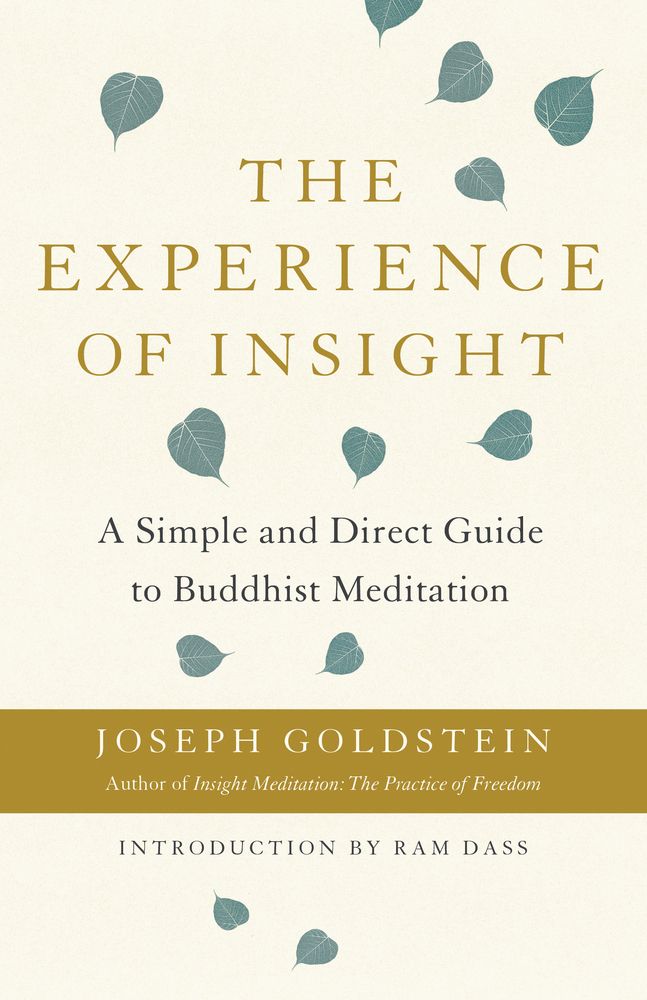
This episode is a two-host audio discussion of The Experience of Insight, the book by Joseph Goldstein, a co-founder of the Insight Meditation Society who has led insight and lovingkindness retreats since 1974. The hosts describe the book as a manual for mental training drawn from long silent retreats, from 10 days up to three months, and pick out its essential concepts and practices. The book is The Experience of Insight
They cover the preconditions for practice (the Three Refuges and the five precepts), bare attention, two ways to anchor on the breath, walking and eating meditation, noticing intention, the Noble Eightfold Path, the Five Hindrances, and how to keep practicing in daily life. The notes below follow the discussion in order.
Sponsored by the Mindfulness Meditation Teacher Certification MindfulnessExercises.com/Certification
Episode Overview:
- Introduces Joseph Goldstein’s practical approach to training the mind, drawn from The Experience of Insight.
- Looks at the book as a manual for mental training built on simple, repeatable skills.
- Breaks down the mental frameworks that stabilize practice, including the Three Refuges and basic ethical precepts.
- Explains bare attention as the core method of mindfulness: observing without judging, comparing, evaluating, or projecting hopes and fears.
- Describes two breath anchors (abdomen and nostrils), neither of which involves controlling the breath.
- Extends mindfulness into movement, with walking meditation and mindful eating.
- Highlights noticing intention, the small gap before action that the hosts call a moment of choice.
- Covers the Noble Eightfold Path and how “right effort” mirrors the balance of a guitar string, neither too tight nor too loose.
- Outlines the Five Hindrances and how to meet each one with immediate awareness rather than resistance.
- Touches on ultimate realities, the nature of mind and matter, and the limitations of conceptual thinking.
- Offers practical integration tips: a daily sitting practice, one silent meal a day, and remembering the breath in moments of stress.
- Mentions keeping the awareness of death as an advisor, which the hosts say loosens the grip on trivial things.
- Ends with the monkey trap metaphor, illustrating how letting go opens the path to freedom.
Show Notes:
The Mental Frame That Steadies the Mind
Before attention sharpens, the hosts say, Goldstein describes preconditions: the right mindset and a proper frame, symbolized by taking the three refuges.
1. The Three Refuges as Psychological Anchors
The hosts describe the Three Refuges as psychological anchors rather than a religious conversion:
- Buddha: acknowledging the potential for freedom, the seed of awakening in everyone.
- Dharma: surrendering to the way things are, which the hosts describe as no longer fighting reality and trusting the process.
- Sangha: taking support from everyone on the path, past and present.
These set the mental stage before the work begins.
2. Ethical Precepts Clear the Noise
The hosts call the precepts (not killing, not stealing, sexual misconduct, false speech, and intoxicants) pragmatic. Guilt and anxiety from unskillful acts come up as soon as you sit down to be quiet, so clean conduct gives the mind a stronger base for concentration.
Bare Attention: The Engine of Practice
Goldstein describes bare attention as observation stripped bare: seeing things as they are, with no judging, comparing, or evaluating, and no projecting of hopes or fears onto the experience. A pure, non-reactive witness.
The hosts illustrate it with the haiku of the old pond, a frog jumping in, and the sound of the water: no story, only the raw data of the senses.
Two Breath Anchors
The episode describes two ways to anchor attention. Pick one and stay with it:
- The abdomen: watching the rise and fall of the belly
- The nostrils: feeling the in and out breath at the tip of the nose
For both, the instruction is not to control the breath. The hosts say controlling it mixes ego into the practice, and that soft mental notes such as “rising, falling” or “in, out” help keep the mind from wandering.
Mindfulness in Motion: Walking and Eating
Goldstein’s approach pulls awareness into movement and daily life.
Walking Meditation
In walking meditation the goal is careful awareness, not getting anywhere:
- Break the movement of the foot into three parts: lifting, forward, placing
- Feel the pressure, heat, and movement rather than the look of the foot
- Notice the intention before each step
Mindful Eating
In eating meditation you notice every step: seeing the food, the intention to move the hand, the movement itself, tasting, chewing. Goldstein notes that finishing one mouthful completely before reaching for the next makes it hard to overeat.
This is where practice leaves the retreat hall and enters daily life.
The Power of Intention: The Quiet Gap Before Action
The hosts call noticing intention the most subtle part of daily practice.
There is a mental impulse before you stand up, turn your head, or swallow. When you catch the intention before you act, you create a tiny gap.
The hosts call that gap a moment of freedom and a moment of choice. They add that seeing it shows an impersonal process: an intention arises and action follows, cause and effect.
The Noble Eightfold Path: Effort Like a Guitar String
The hosts touch on right understanding (the law of karma, then the direct experience of impermanence), right thought, and right mindfulness.
The book calls right effort the most important practical step. The image is a guitar string: too tight and it snaps, which is restlessness; too loose and there is no sound, which is sloth and torpor. The aim is balanced, persistent energy.
Impermanence: The Shift from “I Am” to “This Is”
The hosts describe impermanence as something experienced directly rather than only understood:
- sensations arise and vanish,
- thoughts and feelings come and go,
- you notice you are a process, a rapid flow,
- and nothing is solid enough to call “me” or “mine.”
They say that when mind and body are seen as an impersonal flowing process, the mind stops grasping and lets go of the burden of protecting a self that was never solid.
The Five Hindrances: The Visitors Who Arrive for Everyone
Every practitioner meets the same inner obstacles:
- Sense desire
- Aversion
- Sloth & torpor
- Restlessness & worry
- Doubt
The hosts say the main antidote is immediate mindfulness. If you can see desire arise, feel it, and not identify with it, it loses its power; suppressing it only makes it stronger.
Ultimate Realities and the Limits of Concept
The episode touches on the four ultimate realities in Buddhist teaching:
- Material qualities (hardness, heat, movement, cohesion)
- Consciousness
- Mental factors
- The unconditioned (nirvana)
Drawing on Plato’s allegory of the cave, the hosts say concepts such as time, ownership, and a solid, permanent self are useful conventions but not the ultimate truth of immediate experience. Their example: “floor” is a concept, while the hardness and coldness under your feet can be known directly.
Integration: Where Practice Becomes Life
The hosts say the practice cannot end when the retreat does and that continuity is everything. They close with practical advice.
A Daily Sit That Actually Happens
Make a daily sitting practice a high priority; the hosts mention an hour or more, twice a day.
A Silent Meal Once a Day or Week
Eating one meal a day in silence is the suggestion in the discussion.
Breath as a Returning Point in Stress
Remembering the breath in moments of stress, the hosts say, restores balance.
Remembering Death as an Advisor
The hosts describe keeping the awareness of death as an advisor, not in a morbid way. Remembering that life is fragile loosens the grip on trivial things.
The Monkey Trap Metaphor
A monkey reaches into a coconut for food, but its clenched fist will not fit back out through the hole. The hosts offer this as a summary of attachment: if it opened its hand, it would be free.
Why This Teaching Still Matters
The hosts end by saying that bringing this awareness into daily life, and into relationships, takes sustained effort, humility, and love.
They close with a question from the allegory of Mount Analog: when the clarity of the summit fades, what is your strategy for keeping the memory of it?
Additional Resources:
- Free Training with Sean Fargo: How to Teach Mindfulness With Confidence & Credibility
- Certification: Mindfulness Meditation Teacher Certification
- Blog: 100 Positive Affirmations for Women: Journey to Self-Empowerment
- Blog: 100+ Empowering Self Love Affirmations for Boosting Confidence and Self-Esteem