Listen now


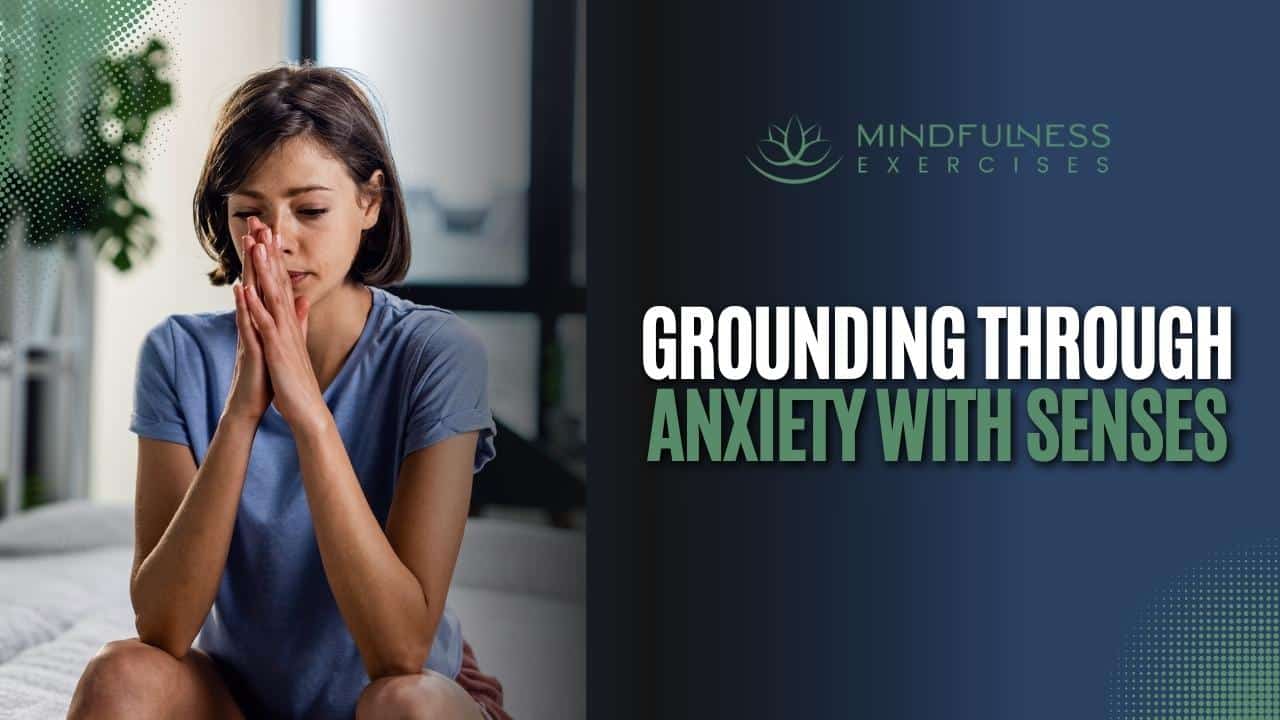
There are moments when anxiety does not simply feel like worry. It feels consuming. The mind races ahead into imagined futures, the body tightens, and the present moment becomes difficult to access. Sometimes overwhelm becomes so intense that we disconnect entirely, drifting into numbness, confusion, or dissociation.
In these moments, mindfulness is often misunderstood as something we must “do correctly.” Many people believe they need to calm down immediately, stop their thoughts, or force themselves to relax. But true mindfulness offers something softer and far more healing.
Instead of forcing ourselves out of anxiety, mindfulness invites us to gently return to safety through the senses.
This practice of grounding through sensory awareness can help us reconnect with the body, regulate the nervous system, and find stability in moments that feel emotionally chaotic. By turning toward simple anchors like sound, touch, breath, or movement, we begin creating what mindfulness teachers often call a “safe harbor” for awareness.
This is not about perfection. It is about presence.
Sponsored by our Mindfulness Meditation Teacher Certification Program
certify.mindfulnessexercises.com
In This Episode
- How mindfulness helps us meet anxiety without force
- Building a safe harbor for awareness
- Working compassionately with dissociation
- Finding grounding through sensory anchors
- Using sound as a mindfulness practice
- Walking mindfulness and movement-based grounding
- Exploring anxiety through body sensations and inquiry
- Expanding emotional vocabulary for self-awareness
- Practicing self-compassion during difficult moments
- Beginning mindfulness gently and safely
Key Takeaways
- Anxiety often pulls us away from the present moment
- Sensory grounding helps regulate the nervous system
- There is no single “correct” mindfulness anchor
- Self-compassion is an essential part of healing
- Mindfulness can begin with very small moments of awareness
Resources Mentioned
Show Notes:
Why Grounding Matters During Anxiety
Anxiety often pulls attention away from the present moment. The mind loops through future scenarios, worst-case outcomes, or unresolved fears. At the same time, the nervous system shifts into survival mode.
When this happens, it can become difficult to think clearly, stay connected to others, or feel safe within ourselves.
Grounding practices help interrupt this cycle by gently reconnecting us with immediate sensory experience.
Instead of getting lost in thoughts, grounding invites awareness into:
- The feeling of feet against the floor
- The sound of breathing
- The sensation of holding a warm mug
- The rhythm of walking
- The feeling of air moving across the skin
These sensory experiences remind the nervous system that, in this moment, we are here.
And often, here is safer than the anxious mind believes.
Creating a Safe Harbor for Awareness
One of the most compassionate ways to approach mindfulness is to stop treating awareness like a battlefield.
You do not need to fight your anxiety to heal it.
A gentle mindfulness approach begins by creating a sense of internal safety. This means choosing practices that feel supportive rather than overwhelming.
For some people, closing the eyes and focusing on the breath may feel calming. For others, it may intensify discomfort. This is why grounding through the senses is deeply personal.
The goal is not to choose the “best” mindfulness practice. The goal is to find what feels safe enough.
Safe enough may include:
- Listening to ambient sounds
- Holding a soft blanket
- Walking slowly outdoors
- Repeating calming words
- Focusing on visual objects in the room
- Feeling the support of a chair beneath the body
Mindfulness becomes more sustainable when we stop forcing ourselves into practices that do not feel emotionally accessible.
Using the Senses as Anchors
Sensory anchors provide the mind with something tangible to return to when anxiety becomes overwhelming.
These anchors act as grounding points that help stabilize attention and reconnect us with the present moment.
Sound as a Grounding Practice
Sound can be especially supportive for anxious or dissociative states because it allows awareness to stay open rather than inwardly pressured.
Some grounding sound practices include:
- Listening to the sound of a meditation bell
- Noticing the silence after a sound fades
- Hearing birds, traffic, wind, or distant voices
- Following the sound of your own breathing
- Repeating calming words like “love,” “safe,” or “here”
When anxiety escalates, simple repetition can soothe the nervous system.
You might softly repeat:
- “I am here.”
- “This moment is enough.”
- “Safety is available now.”
- “I can move gently.”
These phrases are not meant to erase anxiety. They offer steadiness while anxiety moves through.
Touch and Physical Sensation
Touch can help bring awareness back into the body when thoughts become overwhelming.
Try noticing:
- The texture of clothing against the skin
- The weight of your body in a chair
- The temperature of your hands
- The feeling of water while washing dishes
- The sensation of holding an object
Sometimes grounding can be as simple as placing a hand over the heart and feeling the warmth beneath the palm.
Small sensory moments matter.
Breath as a Gentle Companion
Breath awareness is one of the most common mindfulness tools, but it should always be approached with kindness.
If deep breathing feels stressful, there is no need to force it.
Instead, begin simply by noticing:
- Is the breath shallow or deep?
- Fast or slow?
- Smooth or uneven?
The purpose is not to control the breath immediately. It is to reconnect with it gently.
Over time, awareness itself often allows the body to soften naturally.
Walking Mindfulness for Anxiety Relief
When anxiety creates restlessness, sitting still may feel impossible.
Walking mindfulness offers an alternative.
Mindful walking combines movement with awareness, helping regulate excess nervous system energy while grounding attention in the body.
During a walking practice, you might notice:
- The sensation of feet touching the ground
- The shifting balance of the body
- Sounds around you
- Air on the skin
- The pace of movement
You do not need to walk slowly to practice mindfulness. The key is awareness.
Even a short mindful walk around your home, neighborhood, or workplace can create emotional space and clarity.
Understanding Anxiety Through Curious Inquiry
Mindfulness also teaches us to become curious observers of our experience rather than fearful judges of it.
Instead of asking:
“What is wrong with me?”
We begin asking:
“What is happening right now?”
This shift changes everything.
When anxiety arises, gentle inquiry can help uncover what the mind and body are communicating.
You might explore:
- Is my mind focused on the future or the past?
- Where do I feel anxiety in my body?
- What sensations are present?
- How intense does this feel right now?
- What emotion may exist beneath the anxiety?
Curiosity creates room for awareness without shame.
Expanding Emotional Vocabulary
Many people struggle to identify emotions because they were never taught emotional language.
We often default to broad terms like:
- Stressed
- Fine
- Overwhelmed
- Anxious
But emotional awareness deepens when we learn more precise language.
Over time, it can help to explore lists of emotions and body sensations.
Instead of simply saying “anxious,” you may notice:
- Uneasy
- Restless
- Vulnerable
- Uncertain
- Anticipatory
- Exposed
- Hypervigilant
Similarly, physical sensations may include:
- Tightness in the chest
- Heat in the face
- Tingling in the arms
- Pressure in the stomach
- Shallow breathing
Naming experience clearly often reduces its intensity.
Awareness brings understanding, and understanding creates space for compassion.
Meeting Dissociation With Compassion
Dissociation can feel frightening, especially when we suddenly feel disconnected from ourselves or the environment.
But dissociation is not failure.
Often, it is the nervous system’s attempt to protect us from overwhelm.
Rather than forcing ourselves to “snap out of it,” mindfulness encourages gentle curiosity.
You might ask:
- Do I feel safe right now?
- What would help me feel more supported?
- What sensory anchor feels accessible?
- What does my body need in this moment?
These questions shift the focus from judgment to care.
Sometimes the most healing thing we can do is stop demanding immediate recovery from ourselves.
Self-Compassion as a Grounding Practice
Anxiety frequently becomes more painful because of self-criticism.
We tell ourselves:
- “I should be handling this better.”
- “Why am I like this?”
- “I need to calm down.”
But mindfulness paired with self-compassion creates a different inner environment.
Instead of punishment, we offer understanding.
One powerful question to explore during difficult moments is:
“What would I like for myself right now?”
The answer may be:
- Rest
- Support
- Quiet
- Reassurance
- Connection
- Water
- Fresh air
- Permission to slow down
Self-compassion is not self-indulgence. It is nervous system care.
And often, healing begins when we stop treating ourselves like a problem to fix.
Start Softly Before Going Deep
Many people approach mindfulness expecting immediate emotional excavation. But diving too deeply too quickly can feel destabilizing.
A gentler approach often works better.
Before exploring painful emotions, begin with practices that cultivate:
- Comfort
- Gratitude
- Safety
- Calm connection
You might:
- Think of someone who makes you feel safe
- Recall a peaceful memory
- Notice something beautiful nearby
- Wrap yourself in a blanket
- Listen to calming sounds
Starting softly creates emotional stability before deeper inner work unfolds.
This is not avoidance. It is pacing.
And pacing matters in healing.
A Simple Grounding Practice for Anxiety
Here is a gentle mindfulness exercise you can try anytime anxiety arises:
1. Pause
Stop for a moment without trying to fix anything.
2. Notice Your Environment
Look around and identify:
- 5 things you can see
- 4 things you can feel
- 3 things you can hear
- 2 things you can smell
- 1 thing you can taste
3. Choose One Safe Anchor
Focus on one grounding sensation:
- Your breath
- A sound
- Your feet on the floor
- A calming word
4. Ask Kindly
“What would support me right now?”
5. Stay for One Breath
Not forever. Just one breath at a time.
Final Thoughts
Grounding through anxiety with senses is not about eliminating discomfort instantly. It is about building a compassionate relationship with your inner experience.
Mindfulness teaches us that healing often begins with very small moments of presence:
- One conscious breath
- One steady sound
- One mindful step
- One compassionate question
Over time, these moments become anchors.
And those anchors help us remember that even during anxiety, overwhelm, or dissociation, we can still return to ourselves gently.
Not through force.
But through presence.