There’s a quiet fear many people carry when they begin a mindfulness practice:
“If I become calm… will I lose what makes me feel alive?”
It’s an honest concern. After all, so much of what we call passion—creativity, love, ambition, even joy—can feel intense, electric, and sometimes chaotic. We often associate calm with flatness, with dullness, with a life stripped of its color.
But what if that understanding is incomplete?
What if calm isn’t the absence of intensity—but the capacity to hold it?
Sponsored by our Mindfulness Meditation Teacher Certification Program
certify.mindfulnessexercises.com
Episode Overview:
Key Themes:
- Equanimity as a spacious, caring capacity rather than emotional numbness
- Why calm is not the same as apathy or indifference
- The myth that calm removes passion or intensity from life
- Vedana (feeling tone) as the second foundation of mindfulness
- How noticing feeling tone creates space between stimulus and reaction
- Shifting from trying to control emotions to expanding emotional capacity
- Reducing internal friction and defensive energy in daily life
- A working definition of calm that includes recovery and resilience
- Recovery speed as a marker of emotional balance and stability
Takeaway Insight:
Calm doesn’t take away your passion—it gives it room to breathe, grow, and become more sustainable.
Show Notes:
Rethinking Calm: It’s Not What You Think
In mindfulness traditions, the word often used instead of “calm” is equanimity.
Equanimity isn’t about shutting down or numbing out. It’s not indifference. It’s not apathy. And it certainly isn’t boredom.
Instead, equanimity is a kind of spacious awareness—a steady presence that allows you to experience life fully without being overwhelmed by it.
It means:
- Feeling deeply without being consumed
- Caring fully without clinging
- Staying present without resisting
Rather than dulling your experience, equanimity actually expands your capacity to experience life.
The Myth: Calm Cancels Passion
One of the most persistent myths is that calm and passion exist on opposite ends of a spectrum.
But in reality, they’re not opposites—they’re partners.
Without calm:
- Passion can become reactive or overwhelming
- Emotions can spiral into stress or burnout
- Energy gets tangled in resistance and defensiveness
With calm:
- Passion becomes more sustainable
- Emotions move more freely
- You can stay engaged without losing yourself
Calm doesn’t take away your fire—it gives it direction.
Vedana: The Hidden Key to Emotional Balance
A powerful way to understand this is through the concept of Vedana, often translated as feeling tone.
In mindfulness, Vedana refers to the immediate, subtle quality of any experience:
- Pleasant
- Unpleasant
- Neutral
This might sound simple, but it’s profound.
Before thoughts, before stories, before reactions—there’s always a feeling tone.
And when we begin to notice it, something shifts.
Noticing Feeling Tone Creates Space
Imagine this:
You receive a message. Instantly, your body reacts—tightness, warmth, discomfort. That’s Vedana.
Normally, we skip over this moment and jump straight into reaction:
- “Why did they say that?”
- “I don’t like this.”
- “I need to fix it.”
But when you pause and notice the feeling tone:
- “This feels unpleasant.”
- “This feels good.”
- “This feels neutral.”
You create a small but powerful space.
And in that space, you’re no longer driven by automatic reactions.
You’re choosing your response.
From Controlling Emotions to Expanding Capacity
Many people approach mindfulness as a way to control emotions—to calm down, to get rid of discomfort, to feel better.
But equanimity invites a different shift:
👉 Instead of trying to reduce emotions, we increase our capacity to hold them.
This changes everything.
You don’t have to:
- Suppress excitement to stay grounded
- Avoid discomfort to feel safe
- Chase pleasure to feel fulfilled
You can hold it all—joy, grief, passion, uncertainty—without losing your center.
What a “Frictionless” Experience Feels Like
As this capacity grows, something subtle but powerful happens:
Life begins to feel more frictionless.
Not because challenges disappear—but because:
- There’s less resistance
- Less defensiveness
- Less internal struggle
Energy that was once spent pushing away or clinging now becomes available for:
- Creativity
- Presence
- Connection
You’re no longer fighting your experience—you’re moving with it.
A New Definition of Calm
Let’s redefine calm in a way that actually reflects lived experience:
Calm is not the absence of intensity—it’s the ability to recover quickly and stay open within it.
This brings us to an important insight:
Recovery speed is a sign of true balance
It’s not about never getting triggered.
It’s about:
- How quickly you return to center
- How gently you can stay with what arises
- How fully you can re-engage with life
This is dynamic balance—not rigid stillness.
How Your Passion Actually Deepens
When you stop fearing calm, something beautiful happens:
Your passion doesn’t fade—it matures.
It becomes:
- Less reactive, more intentional
- Less draining, more energizing
- Less chaotic, more creative
You’re no longer riding emotional highs and lows.
You’re inhabiting your life more fully.
And paradoxically, this grounded presence often makes joy feel richer, love feel deeper, and purpose feel clearer.
A Simple Practice: Noticing Vedana in Daily Life
You don’t need a long meditation session to begin experiencing this shift.
Try this throughout your day:
- Pause briefly when something catches your attention
- Ask yourself: Is this pleasant, unpleasant, or neutral?
- Notice where you feel it in your body
- Take one slow breath
- Allow the experience to be just as it is
That’s it.
This small practice builds awareness, space, and resilience over time.
Final Reflection
Calm isn’t the end of your aliveness—it’s the foundation for it.
It’s what allows you to:
- Feel deeply without drowning
- Love fully without clinging
- Engage passionately without burning out
So if part of you has been holding back from stillness, from mindfulness, from calm…
You don’t have to choose between peace and passion.
You were never meant to.
You can have both.
And when you do, life doesn’t become quieter—it becomes clearer, richer, and more fully yours.
Recommended Reading & Resources
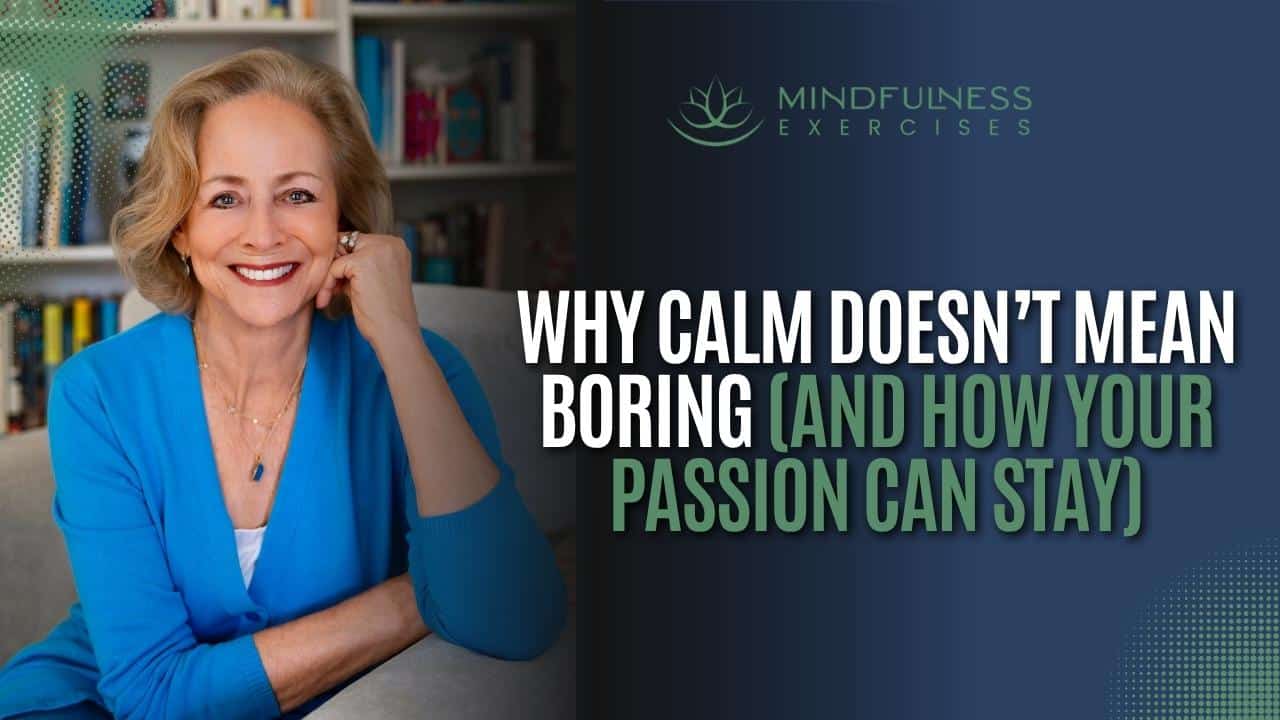
If you’d like to go deeper into the themes explored in this episode, here are some powerful resources from Margaret Cullen:
📘 Book:Quiet Strength: Find Peace, Feel Alive, And Love Boundlessly With The Power Of Equanimity
🌐 Website: Margaret Cullen
https://margaretcullen.com
These resources expand on the practice of equanimity and offer practical ways to integrate mindfulness into everyday emotional experience.
Additional Resources:
- Free Training with Sean Fargo: How to Teach Mindfulness With Confidence & Credibility
- Certification: Mindfulness Meditation Teacher Certification Program
- Blog: 200+ Heart Chakra Affirmations: A Path to Emotional Healing and Love
- Blog: How to Teach Meditation for Restorative Sleep and Deep Rest