When most people begin meditation, they’re told to “be mindful.” But what does that actually mean—and how is it different from awareness?
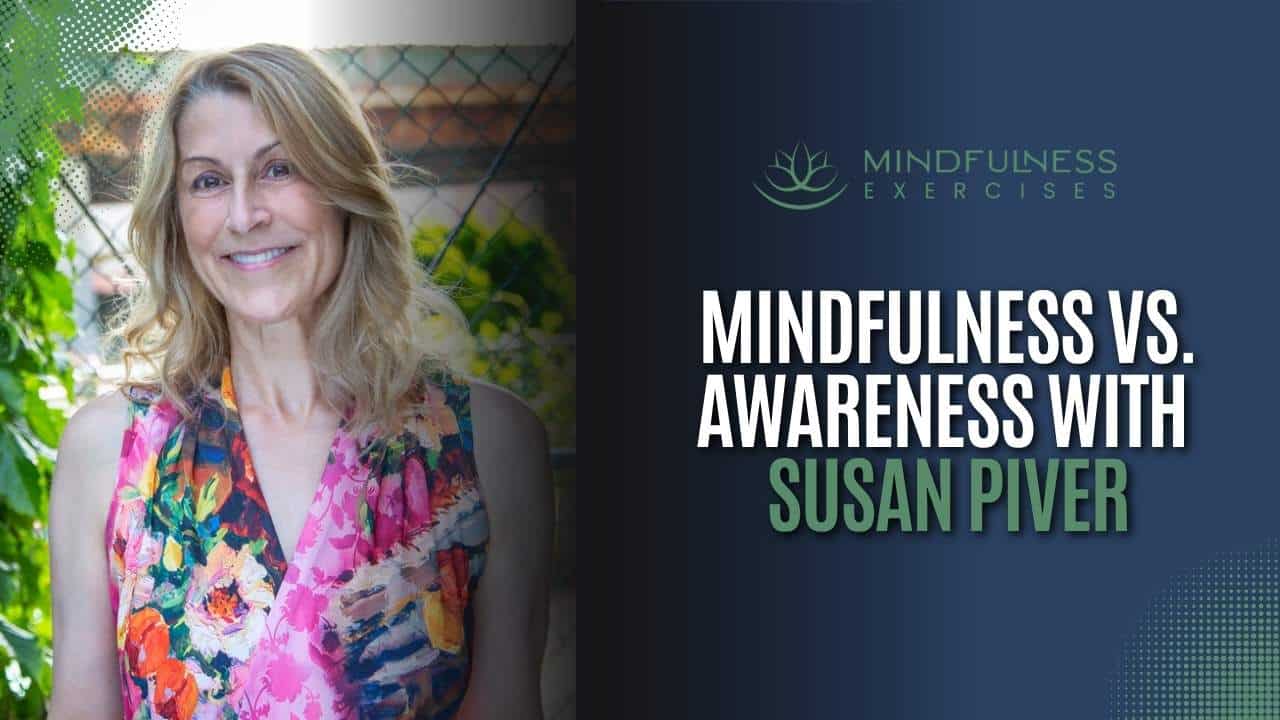
In a thoughtful conversation with meditation teacher Susan Piver, we’re invited to look more closely at these two often-confused concepts. What emerges is both simpler and more profound than expected:
- Mindfulness trains attention.
- Awareness reveals insight.
This subtle distinction can completely change how you relate to your practice—and to your own mind.
Sponsored by our Mindfulness Meditation Teacher Certification Program
certify.mindfulnessexercises.com
Episode Overview:
Key Topics Covered:
- Mindfulness as attention training and awareness as insight
- Why awareness expands through receptivity, not effort
- Letting go of the need to stop thinking
- Meditation as more than self-help
- How practice softens emotional defenses
- The importance of consistency over duration
- A simple approach: posture, breath, and mind
- Using silence and pacing in teaching
- Eyes-open meditation for daily life
- Attention as an expression of love
- Structuring a meditation class effectively
Show Notes:
What Mindfulness Trains vs. What Awareness Reveals
Mindfulness is often described as paying attention to the present moment. But in practice, it’s a training—a deliberate returning of attention, again and again, to something simple like the breath.
Awareness, on the other hand, isn’t something you do. It’s something that naturally opens.
Instead of effort, awareness grows through receptivity. It’s what allows you to notice patterns, emotional reactions, and deeper truths—not because you forced them, but because you made space for them to appear.
This shift alone can take a lot of pressure off meditation. You’re not trying to “achieve” awareness—you’re allowing it.
You Don’t Need to Stop Thinking
One of the most freeing takeaways from this conversation is this:
Meditation is not about stopping your thoughts.
Trying to eliminate thinking often leads to frustration and self-judgment. But thinking is not a failure—it’s part of the process.
Instead, mindfulness teaches you to:
- Notice when the mind wanders
- Gently return attention
- Let thoughts come and go without resistance
Over time, this builds a healthier relationship with your inner world—one rooted in curiosity rather than control.
Meditation Is Bigger Than Self-Help
Many people approach meditation as a tool for stress relief or productivity. And while it can certainly help with those things, its scope is much wider.
Meditation:
- Amplifies your inner state
- Softens emotional defenses
- Opens the heart to deeper connection
It’s less about fixing yourself and more about discovering what’s already there.
Why Simplicity Works Best
There’s a tendency to overcomplicate meditation with techniques, rules, and expectations. But as Susan emphasizes, simplicity is key.
A grounded practice often comes down to just three elements:
- Posture (sit upright, supported)
- Breath (natural, unforced)
- Mind (resting attention gently)
That’s it.
The real transformation happens not through complexity, but through consistency.
Consistency Over Duration
You don’t need long, perfect sessions to benefit from meditation.
In fact:
- Practicing regularly matters more than practicing for long periods
- Short sessions done consistently build stronger habits
- “Quick fixes” (like 90-second resets) have limits
Meditation is less about intensity and more about showing up.
Eyes-Open Meditation and Daily Life Integration
One powerful idea shared in this conversation is practicing with eyes open.
Why?
Because it helps bridge the gap between meditation and real life.
Instead of isolating your practice, you begin to:
- Stay present in everyday moments
- Bring awareness into conversations, work, and movement
- Experience wakefulness beyond the cushion
Meditation becomes less of a separate activity—and more of a way of living.
Attention as the Most Basic Form of Love
Perhaps the most moving insight is this:
Attention is the most basic form of love.
When you give your attention fully—to your breath, your thoughts, another person—you’re offering something deeply meaningful.
This reframes mindfulness from a task into a relationship:
- A relationship with your mind
- A relationship with others
- A relationship with life itself
Teaching, Silence, and the Human Experience
For those guiding others in meditation, there are valuable insights here too.
Effective teaching often includes:
- Using silence intentionally
- Slowing pacing to allow experience
- Creating space for discovery instead of instruction overload
Meditation isn’t about delivering information—it’s about facilitating experience.
About Susan Piver’s Work and Services
If you’re interested in going deeper, Susan Piver offers a wide range of resources through the Open Heart Project.
The Open Heart Project
The Open Heart Project is an online meditation community designed to make practice accessible, sustainable, and meaningful.
Through the platform, you’ll find:
- Live and on-demand meditation sessions
- Structured courses for beginners and experienced practitioners
- Dharma talks and teachings
- A supportive global community
What Makes Her Approach Unique
Susan’s teaching style focuses on:
- Simplicity over perfection
- Emotional honesty over performance
- Real-life integration over idealized practice
Her work emphasizes that meditation isn’t about becoming someone else—it’s about becoming more fully yourself.
Free Resources
You can also sign up for her newsletter through the Open Heart Project to receive:
- Weekly insights
- Practice guidance
- Reflections on mindfulness and awareness
A Simpler Way to Practice
If there’s one thing to take away, it’s this:
You don’t need to force awareness.
You don’t need to eliminate thoughts.
You don’t need to perfect your practice.
Just sit.
Pay attention.
And allow what unfolds.
That’s where both mindfulness and awareness begin—and where they quietly transform everything.
Additional Resources:
- Free Training with Sean Fargo: How to Teach Mindfulness With Confidence & Credibility
- Certification: Mindfulness Meditation Teacher Certification Program
- Blog: 200+ Heart Chakra Affirmations: A Path to Emotional Healing and Love
- Blog: How to Teach Meditation for Restorative Sleep and Deep Rest