
Listen now


Trauma reshapes the nervous system. It changes how we respond to stress, how we inhabit our bodies, and how we relate to others. Post-Traumatic Stress Disorder (PTSD) is not a sign of weakness but the natural imprint of overwhelming experience. Healing, therefore, isn’t about “pushing through” — it’s about meeting ourselves with awareness, compassion, and supportive tools, moment by moment.
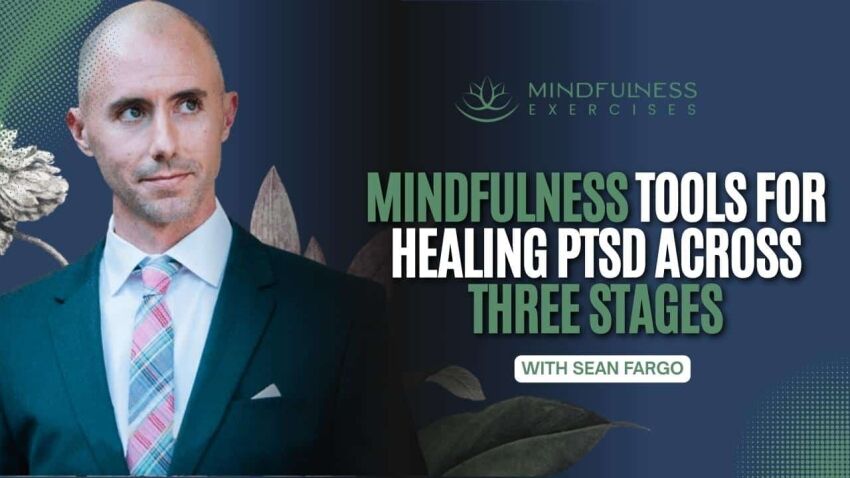
In this powerful episode of the Mindfulness Exercises podcast, we explore a three-stage trauma-sensitive approach to mindfulness for PTSD. This framework honors the complexity of trauma while offering grounding, accessible tools that help individuals reconnect with stability and inner safety.
Below, we expand upon the episode’s insights, offering additional context, nuance, and guidance to support your healing journey or the journey of those you serve.
Sponsored by our Mindfulness Meditation Teacher Certification Program
certify.mindfulnessexercises.com
Episode Overview:
- A trauma-sensitive, three-stage framework for applying mindfulness to PTSD
- Immediate self-soothing and grounding tools
- Reconnecting with emotions at a safe and manageable pace
- Long-term integration through mindfulness, compassion, and choice
- Guided breath and softening cues
- How to set healthy safety boundaries and when to pause
- Rebuilding confidence, empowerment, and relationships through awareness
Show Notes:
Understanding the Three-Stage Mindfulness Approach to PTSD
Trauma healing unfolds in phases. Mindfulness, when applied skillfully, can support each stage while respecting the body’s natural pace and boundaries.
Many trauma experts and mindfulness teachers emphasize that mindfulness for PTSD should never be forced. It works best when grounded in choice, titration, and safety.
The three stages explored in the episode include:
- Immediate Self-Soothing & Stabilization
- Reconnecting With Emotions — Carefully & Courageously
- Long-Term Integration & Rebuilding Confidence
Let’s take a deeper look at each stage.
Stage One: Immediate Self-Soothing and Grounding
In the immediate aftermath of trauma or during a flare-up of symptoms (such as overwhelm, panic, or dissociation), the nervous system needs simple, steady, sensory tools to return to a sense of now.
Mindfulness can play a crucial role — but only when approached gently.
Why Self-Soothing Matters
PTSD symptoms often arise because the body is caught in survival mode. Mindfulness helps create a small opening of ease, enough for breath to deepen and tension to release.
Self-Soothing Practices Highlighted in the Episode
- Anchoring attention in the breath, without forcing a particular pace
- Grounding through touch, such as feeling your feet on the floor
- Softening cues like unclenching the jaw or loosening the shoulders
- Orienting to the environment: looking around the room slowly, noticing colors or shapes
- Hand-to-heart touch for reassurance and safety
- Co-regulation, when available, through connection with a trusted person
These practices help calm the body before asking it to explore anything deeper. They restore a sense of agency — a key factor in trauma healing.
Stage Two: Reconnecting With Emotions With Courage and Choice
Once immediate dysregulation settles, the second stage involves gradually reconnecting with emotional experience — not all at once, not intensely, and never without choice.
Why This Stage Is Important
Trauma often disconnects us from our emotional landscape. This disconnection once served a protective purpose, but over time, it can limit healing, expression, and relationships.
Mindfulness helps us approach our inner world with curiosity rather than fear.
Trauma-Sensitive Emotional Mindfulness Practices
- Noticing an emotion in the body without diving into the story
- Labeling feelings softly: “sadness,” “anger,” “tightness,” “fear”
- Welcoming emotions in small doses (a practice known as titration)
- Staying anchored in breath or body sensations while observing emotion
- Practicing courage through choice — stepping back anytime sensations increase
This phase isn’t about reliving trauma. Instead, it’s about building capacity to feel again, at a pace that feels safe.
Stage Three: Long-Term Integration and Transformation
Long-term integration is where mindfulness supports ongoing growth and reclaiming of life after trauma.
This stage isn’t linear — it ebbs and flows over weeks, months, or years. The goal is not perfection, but integration, where past wounds no longer define the present.
Long-Term Mindfulness Tools for Integration
- Daily grounding rituals such as breathwork, mindful walking, or journaling
- Gentle compassion practices to soften inner criticism
- Reconnecting with meaningful relationships
- Rebuilding confidence through small successes and mindful self-support
- Tracking triggers with curiosity rather than judgment
- Mindful communication to strengthen interpersonal trust
Mindfulness becomes a companion — not a technique you “do,” but a way of relating to your own life.
Guided Breath & Body Softening Practice
- Find your anchor — maybe your breath, feet, or hands.
- Let your breath settle naturally, without shaping it.
- Feel the support under you, allowing the body to lean slightly into it.
- Softly scan the body: jaw, shoulders, belly, hands.
- Each exhale becomes an invitation:
“You can soften… just a little.” - If anything feels too intense, return immediately to your anchor.
- Keep your awareness wide, spacious, and friendly.
Honoring Safety Boundaries
One of the most important themes in the episode is safety. Trauma-sensitive mindfulness emphasizes:
- Pausing at any moment something feels too strong
- Opening your eyes or shifting posture whenever needed
- Seeking professional support when symptoms escalate
- Avoiding prolonged focus on distressing emotions or memories
- Practicing with a teacher skilled in trauma-sensitive mindfulness, when possible
If you or someone you know is experiencing a psychiatric emergency, please contact your doctor or call 911 immediately.
Rebuilding Confidence, Self-Esteem, and Relationships
Trauma can fracture our sense of self and belonging. Mindfulness, over time, helps us:
- Trust our bodies again
- Reconnect with loved ones
- Notice moments of safety and joy
- Build self-esteem through small victories
- Strengthen emotional resilience
These subtle changes, practiced consistently, become the foundation of post-traumatic growth.
Final Thoughts
Mindfulness is not a replacement for therapy, but it is a deeply supportive companion in healing PTSD. By respecting the three-stage process — self-soothing, reconnection, and long-term integration — mindfulness becomes a pathway toward reclaiming ease, empowerment, and inner stability.
Wherever you are in your healing journey, may these practices offer grounding, clarity, and compassion.
If you’d like more guidance, explore the compassionate library of practices at MindfulnessExercises.com, created to support every stage of your wellbeing.
