Mindfulness Teaching Skills
Teaching Mindfulness in the Classroom: Simple Ways to Help Students Refocus
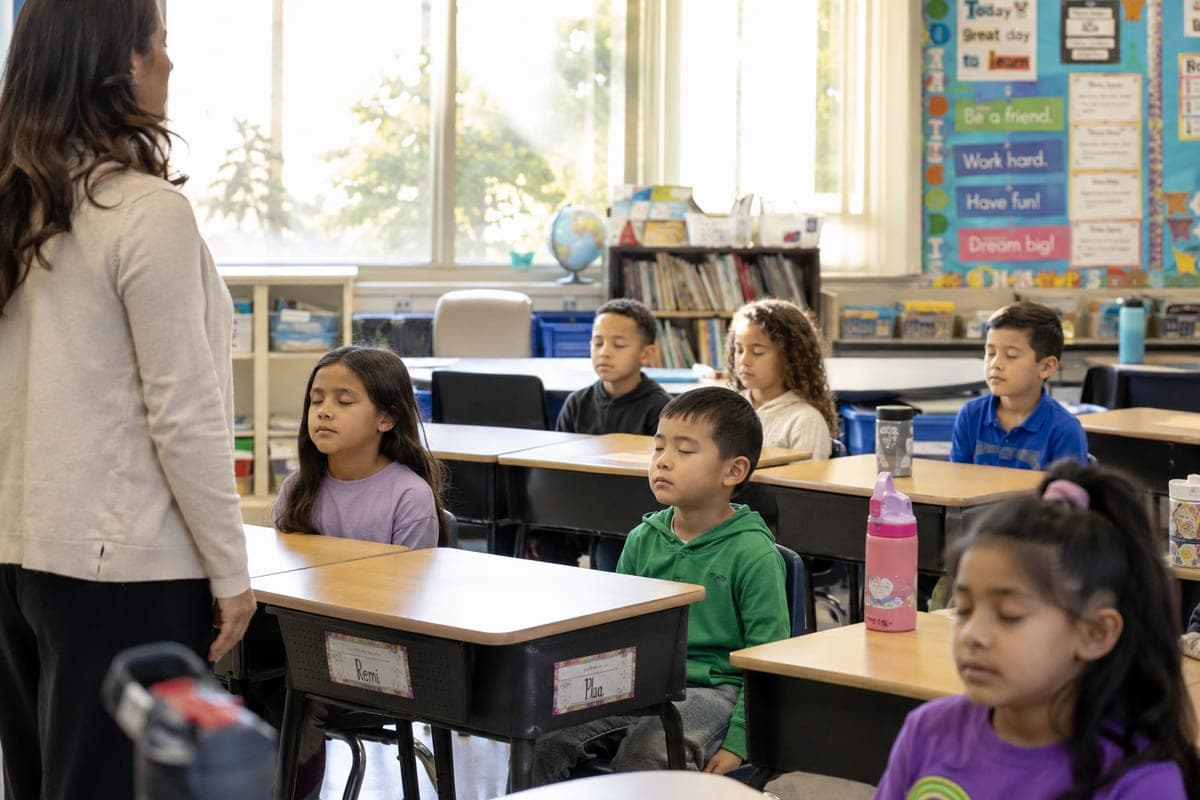
Students do not leave their stress at the classroom door. Some come in worried about a test, upset about a friendship, tired from a long night, or distracted by something that happened before school. Mindfulness gives them a simple way to pause, notice what is going on, and come back to the lesson in front of them.
That matters right now. CDC data shows that many children and teens are dealing with anxiety, depression, and behavior-related concerns. Research reviews on school mindfulness programs suggest that steady practice may help with attention, emotional regulation, self-awareness, and stress management.
This guide covers what mindfulness looks like in a classroom and how teachers can use short, age-appropriate practices during the school day.
What Is Mindfulness in the Classroom?
Mindfulness in the classroom means helping students pay attention to what is happening in the moment. That might include their breathing, thoughts, emotions, body signals, or the sounds around them.
For students, this can be very practical. They may notice that they feel nervous before presenting, frustrated during a difficult task, or distracted during a lesson. Mindfulness is not about clearing the mind. It is about noticing what is happening and returning attention with patience.
This connects closely with social and emotional learning and many of the skills of mindfulness for students. Students practice self-awareness and self-management by learning to pause before reacting. If you are gathering ideas to bring back to your room, these resources for teaching mindfulness to children are a helpful starting point.
Why Teach Mindfulness to Students?
Students need more than academic skills to get through a school day. They shift between subjects, manage friendships, recover from mistakes, follow directions, and try to stay focused when they feel tired, worried, or frustrated.
Mindfulness gives them a practical pause. Before reacting, a student can notice what is happening: tension in the body, a worried thought, a strong emotion, or attention drifting away from the lesson.
That pause can support focus, behavior, relationships, and stress management. With practice, students learn a skill they can use both in class and outside school.
Classroom Mindfulness Activities for Students by Moment of the Day
Mindfulness does not need its own block on the schedule. Teachers can use it during the small pauses that already exist in a school day, such as before a lesson, after recess, or before dismissal.
The activities below show how that can look in practice.
Morning Arrival: One-Minute Breathing
Use this as students settle into their seats at the start of the day. It gives the class a brief reset before instruction begins.
Ask students to place both feet on the floor and take three slow breaths. They do not need to change anything. They are simply noticing the breath.
Teacher script:
“Feel your feet on the floor. Take one slow breath in and one slow breath out. Let your attention come back to the room.”
This takes less than a minute and can become part of the morning routine.
Before a Lesson: Five Senses Grounding
Use this when students need help shifting into the next activity. Ask them to quietly notice:
- Five things they see
- Four things they feel
- Three things they hear
- Two things they smell
- One slow breath
This works well before reading, writing, tests, or independent work.
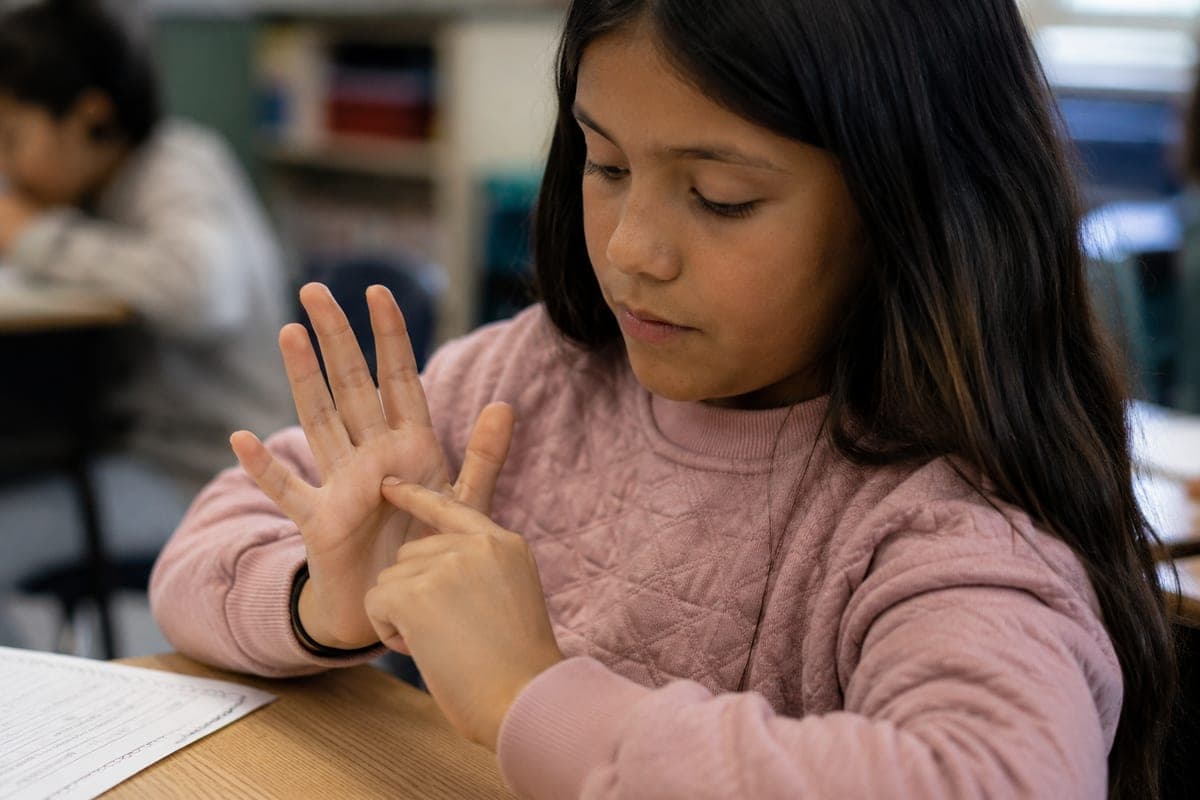
After Recess or Lunch: Hand-Tracing Breath
Transitions after recess and lunch can be challenging. Hand-tracing breath combines movement and breathing, giving students something simple to focus on.
Students hold one hand open and trace each finger with the pointer finger of the opposite hand. They breathe in while tracing up a finger and breathe out while tracing down.
Five fingers create five complete breaths. Teachers find this activity especially helpful after high-energy transitions.
Before a Test: Box Breathing
Tests and presentations can increase stress for many students. Box breathing helps students slow down and reconnect with their breathing before a challenging task.
Students follow a simple pattern:
- Breathe in for four counts
- Hold for four counts
- Breathe out for four counts
- Hold for four counts
Repeat the sequence three times.
Remind students that the goal is not to remove nervousness. The goal is to approach the task with greater steadiness and focus.
Mindful Listening
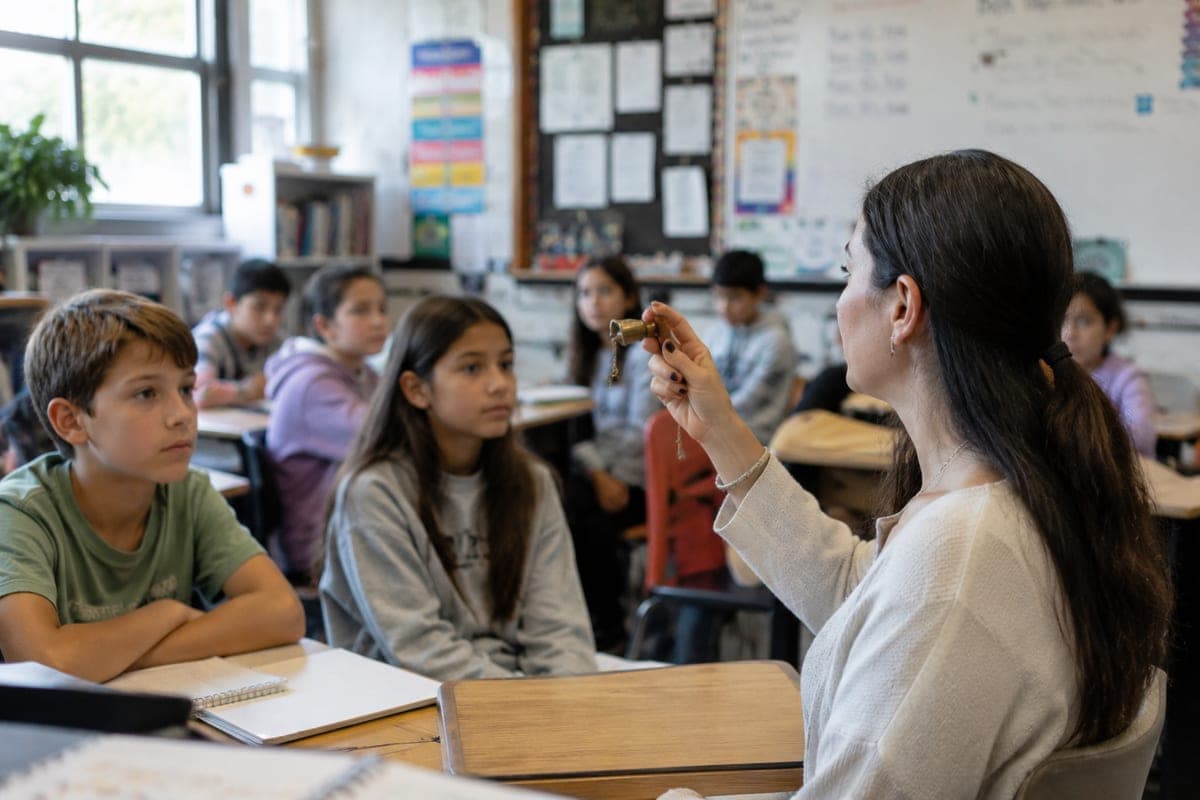
Listening is a skill that benefits every area of learning. This activity helps students practice sustained attention. Sound-based exercises are often one of the easiest ways to introduce mindfulness to children.
Ring a bell, chime, or play a soft sound. Ask students to listen carefully until the sound disappears completely. When they can no longer hear it, they quietly raise their hand.
Afterward, ask students what they noticed. Some may describe the sound. Others may notice how easily their attention drifted.
Mindful Walking
Some students respond better to movement than seated activities. Mindful walking encourages students to pay attention to physical sensations as they move.
Invite students to walk slowly and notice:
- Their feet touching the floor
- Changes in body movement
- Their breathing
- Sounds around them
This activity works well in hallways, outdoor spaces, or classrooms with enough room for movement.
Gratitude Reflection
Mindfulness can help students pay attention to positive experiences that might otherwise go unnoticed.
At the end of the day, ask students to write down:
- One thing they learned
- One positive interaction they had
- One thing they appreciate
The goal is not forced positivity. The goal is simply noticing experiences that mattered during the day.
End-of-Day Reflection
A short reflection can help students process the day’s experiences before leaving school.
Invite students to consider questions such as:
- What did I learn today?
- What challenged me today?
- What helped me succeed today?
- What would I like to improve tomorrow?
Students can write their responses, discuss them with a partner, or reflect silently.
A One-Week Starter Plan for the Classroom
If you are not sure where to begin, try one short practice each day for a week. Keep each one brief, use the same time slot so it becomes a routine, and repeat whatever lands well with your students.
| Day | When | Practice | Time |
|---|---|---|---|
| Monday | Morning arrival | One-minute breathing | ~1 min |
| Tuesday | Before a lesson | Five senses grounding | ~2 min |
| Wednesday | After recess or lunch | Hand-tracing breath | ~2 min |
| Thursday | Before a test or hard task | Box breathing | ~2 min |
| Friday | End of the day | Gratitude reflection | ~3 min |
By Friday, students will have tried breathing, grounding, movement, focus, and reflection — a small sampler that helps you see which practices fit your class best.
Teaching Mindfulness Across Different Age Groups
Mindfulness works best when the activity fits the students in front of you. Younger children often need movement, sound, and simple sensory cues. Older students usually respond better to practical tools they can connect to stress, focus, relationships, or schoolwork.
Mindfulness for Elementary Students
Elementary students usually need mindfulness to feel concrete. Instead of long silent practice, use activities they can see, touch, or move through. Try hand-tracing breath, listening for a bell to fade, noticing five things in the room, or naming one kind thing that happened that day.
Keep directions short. “Feel your feet on the floor” will usually work better than a long explanation about awareness. For younger students, one to three minutes is plenty.
Mindfulness for Middle School Students
Middle school students may be more self-conscious, so avoid activities that feel childish or performative. Present mindfulness as a skill for handling stress, conflict, focus, and strong emotions.
Box breathing, short journaling prompts, mindful listening, and quiet reflection can work well. Give students some privacy with their responses, and explain the purpose before starting so the activity does not feel random. Guided practices can help students feel more comfortable with these exercises.
Mindfulness for High School Students
High school students are more likely to engage when mindfulness connects to real situations, such as exams, presentations, sports, friendships, work, or sleep. Many of these approaches overlap with broader mindfulness practices for teenagers.
Try breathing before a test, short journaling, mindful walking, or a brief reset after a difficult discussion. Keep the tone practical and respectful, and explain how the skill can help outside class.
Final Thoughts
Mindfulness can fit into the school day in small ways. A few breaths, a grounding exercise, or a quiet reflection can help students pause and reset.
Teachers who want to go deeper into personal practice, facilitation skills, and professional training may choose to become a mindfulness teacher.
Start with one practice that feels easy to repeat. Used consistently, these small moments can support focus, emotional awareness, and self-regulation beyond the classroom.