
Trauma-Sensitive Mindfulness and Clinical Safety: Adverse Effects, Serious Illness, and Chronic Pain
Adverse effects, trauma-informed adaptation, and high-acuity populations
The advanced clinical competencies required to teach and apply mindfulness safely with vulnerable populations — adverse effects, trauma adaptation, serious illness, and chronic pain.
Taught by Willoughby Britton, PhDDavid Treleaven, PhDSusan Bauer-Wu, PhD, RNVidyamala Burch, OBEOren Jay Sofer
- 11.5
- CE contact hours
- Self-paced
- Format
- Intermediate
- Level
- Same day
- Certificate
All 6 module videos, the assessments, the course evaluation, and your certificate of completion — issued the day you finish and stored in your account.
Instant access · Lifetime
Psychologists: see CE details. Nurses: CA BRN CEP17985. Other boards vary — confirm with yours; if the hours don’t qualify, swap free to an equal-value program.
Continuing Education is sponsored by Mindful CECs.
About this pathway
This course develops the advanced clinical competencies required to teach and apply mindfulness safely with complex and vulnerable populations. Beginning with Britton's examination of adverse effects of mindfulness, the pathway moves into Treleaven's in-depth two-part training on trauma-informed adaptation of contemplative practice. It then extends those safety sensitivities to three additional high-acuity populations: people with serious illness and end-of-life concerns (Bauer-Wu), people living with chronic pain through a phenomenological and practice-based lens (Burch), and people with chronic pain in clinical settings through an evidence-informed practitioner framework (Sofer). Together these six programs equip clinicians with a comprehensive, population-specific toolkit for mindfulness-based work at the highest levels of clinical complexity.
Who this program is for
This intermediate-level program is designed for licensed and license-eligible mental health and healthcare professionals, including psychologists, social workers (LCSW, LSW), counselors (LPC, LCPC, LMHC), marriage and family therapists, nurses (RN, NP), and other healthcare professionals seeking continuing education in trauma-sensitive mindfulness, adverse effects of meditation practice, mindfulness for serious illness and chronic pain, and communication skills for clinical settings.
Format & schedule
Self-paced homestudy (asynchronous recorded video). Online at learn.mindfulnessexercises.com — begin any time; there are no live session dates.
Completion requirements: Completion requires watching all module videos and passing each module assessment with a score of at least 75%. Up to 3 attempts are allowed per assessment. A course evaluation is requested from all participants. Certificates of completion are issued immediately upon completion and stored in your account.
This pathway covers:
- Identifying and responding to meditation-related harm
- Modifying practice to fit a range of nervous system responses
- Skills for staying regulated while guiding others through dysregulation
- Adaptations for illness, fatigue, and physical constraint
- Working with pain without adding to it
- A spectrum of practices, from calming the system to facing pain head-on
The 6 sessions · 11.5 CE contact hours
Each session is a recorded video with an assessment. The filed learning objectives are listed under every module.
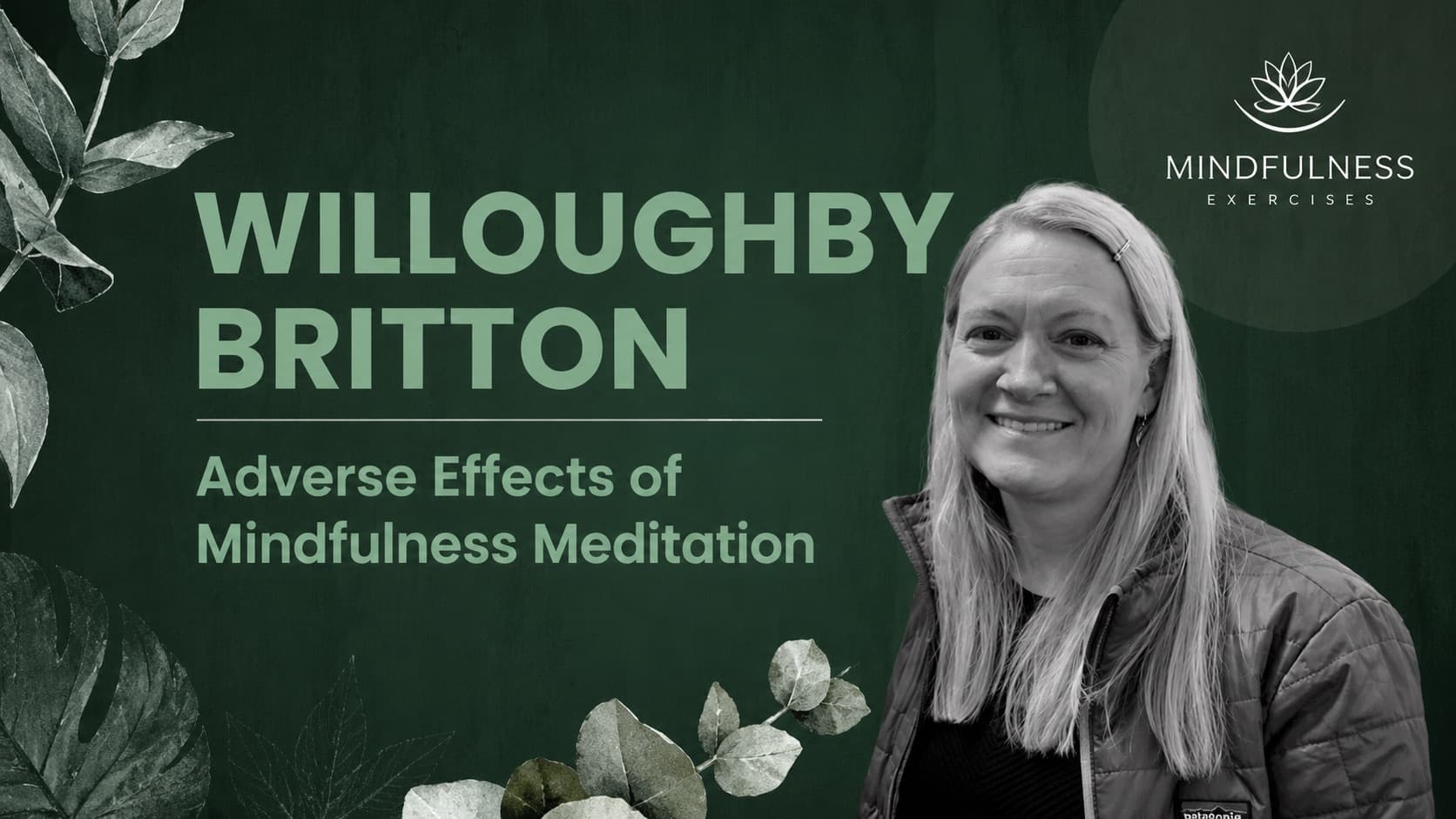
Adverse Effects of Mindfulness Meditation: Identification, Assessment, and Clinical Response
Britton's research on the prevalence, phenomenology, and predictors of meditation-related harm; informed consent and skillful response to disclosures.
Learning objectives
- Identify the prevalence, phenomenology, and risk factors associated with meditation-related adverse effects in mindfulness-based programs.
- Apply trauma-informed strategies for modifying mindfulness practices to reduce the likelihood of adverse effects and respond therapeutically to client disclosures of meditation-related harm.
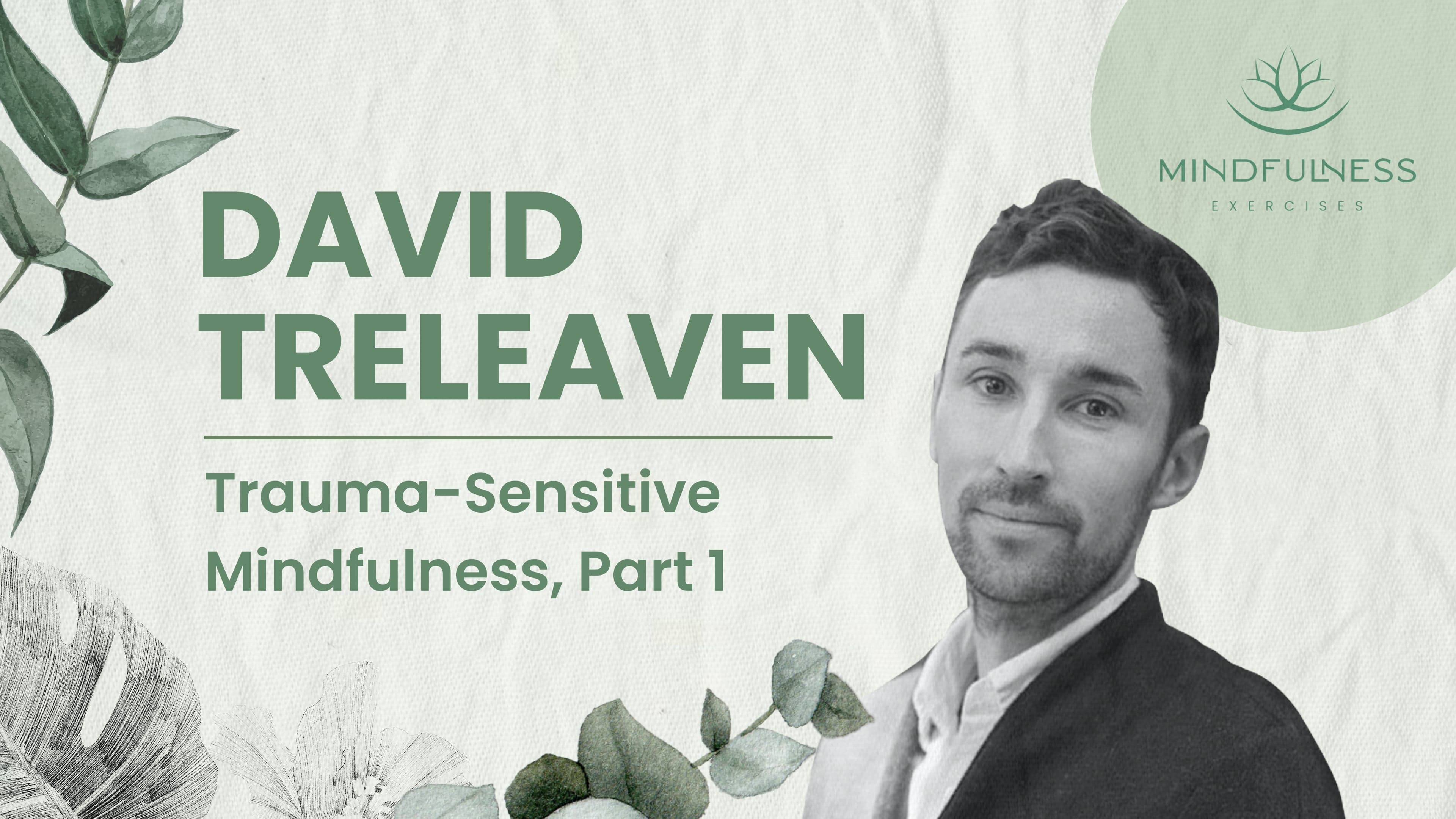
Trauma-Sensitive Mindfulness, Part 1: Understanding Trauma Responses and Adapting Contemplative Practices
The trauma spectrum, the Four Rs framework, and why the same instruction that stabilizes one student can destabilize another.
Learning objectives
- Explain how trauma affects attention and arousal, and why mindfulness meditation may support regulation for some individuals while increasing dysregulation for others.
- Apply trauma-sensitive modifications to mindfulness instruction — including alternative attentional anchors, posture flexibility, and explicit permission strategies — to support safety and nervous system regulation in clinical contexts.
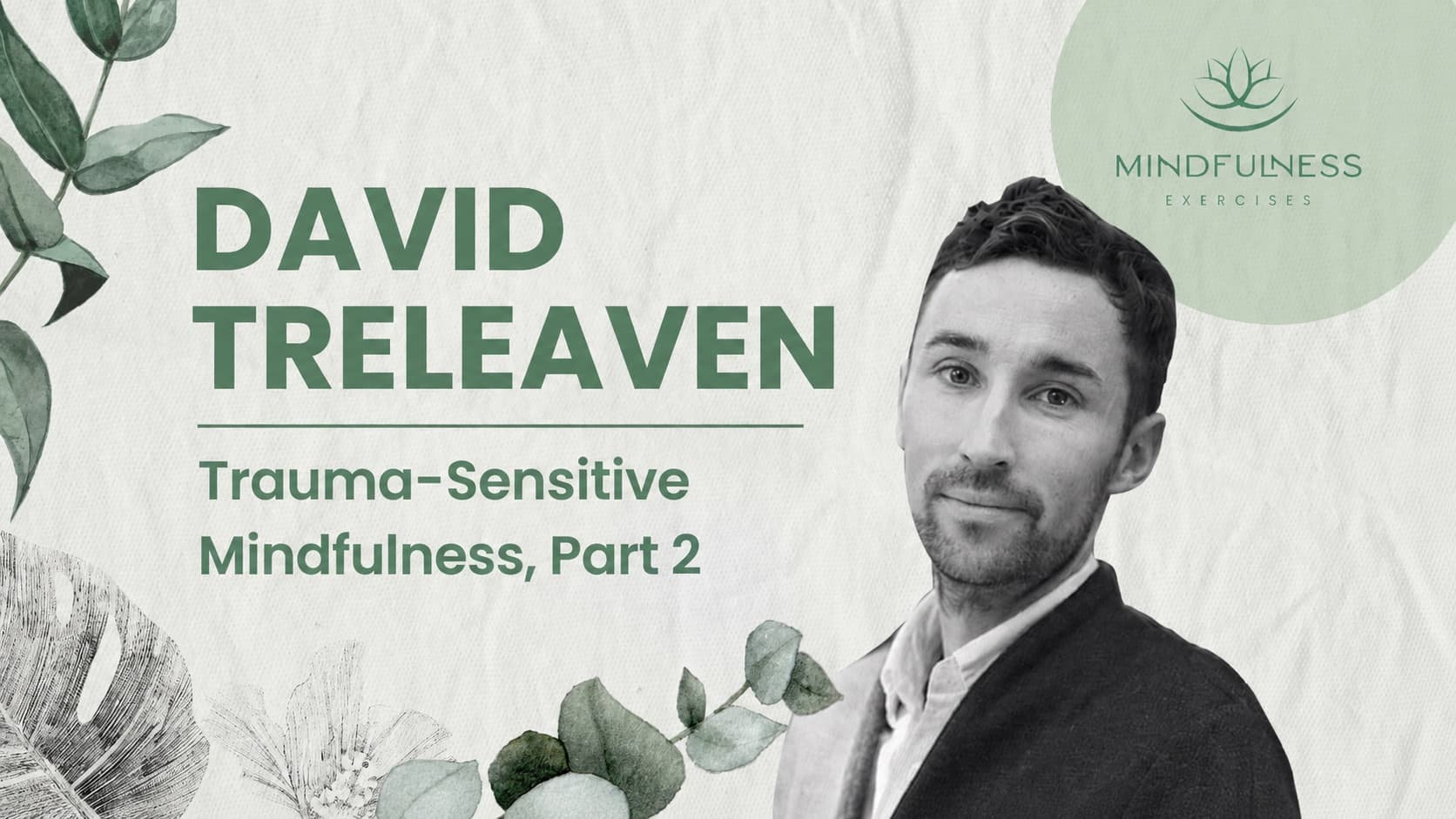
Trauma-Sensitive Mindfulness, Part 2: Self-Regulation, Resourcing, and Skillful Practice Tools
Window of tolerance, resourcing as self-regulation, the volume knob framework, and stepwise introduction of trauma-informed content in group settings.
Learning objectives
- Apply the window of tolerance framework to assess and respond to signs of dysregulated arousal in individual and group mindfulness teaching contexts.
- Describe resourcing as a self-regulation strategy in mindfulness practice and explain how it supports nervous system stabilization.
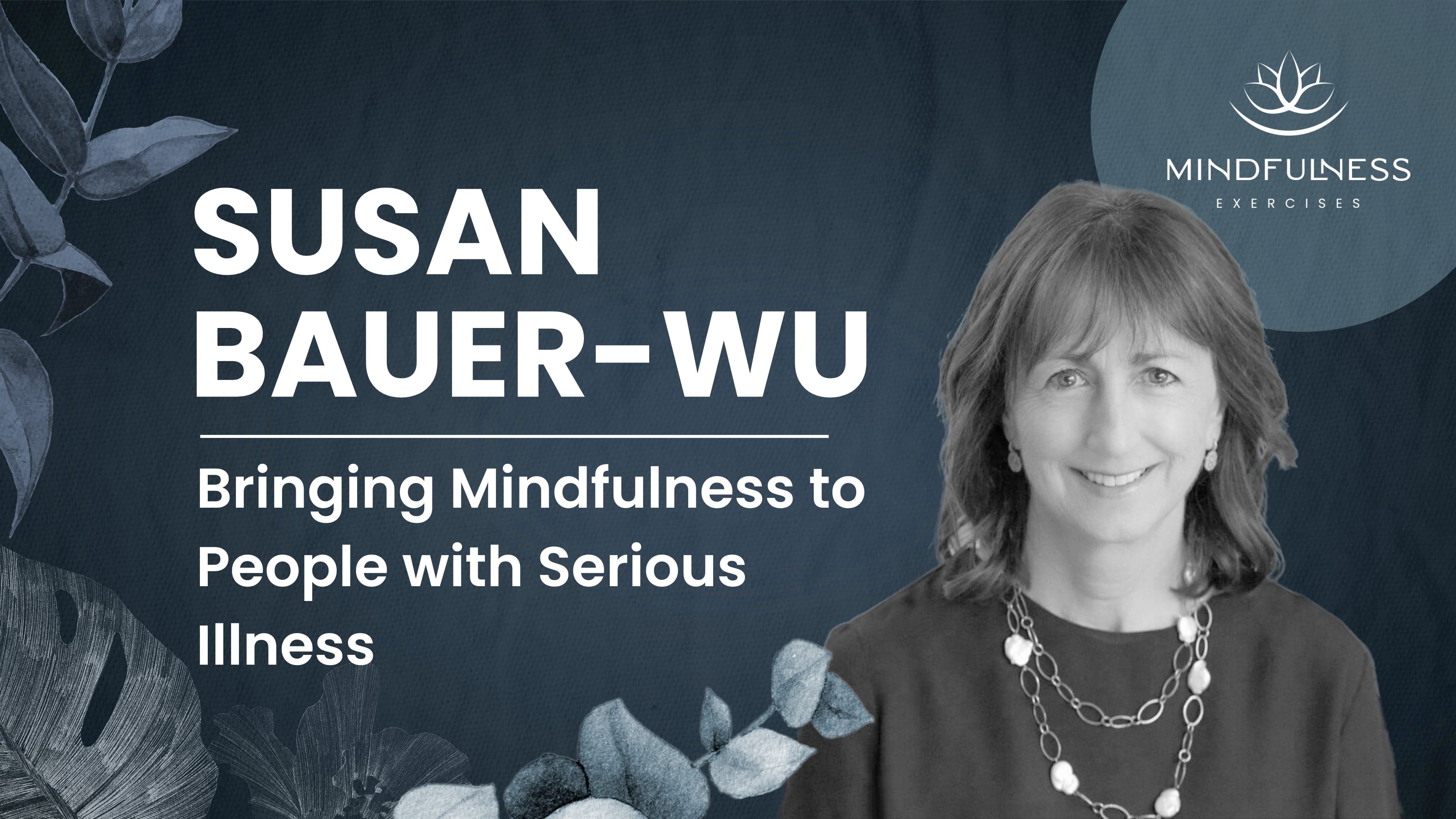 04· Susan Bauer-Wu, PhD, RN
Teaching Mindfulness to People with Serious Illness: Ethics, Adaptations, and Compassionate Care
Adaptations for physical limitations, fatigue, and pain; managing distressing thoughts; restoring agency at end of life.
Learning objectives
- Describe the cycle of suffering in serious illness, including how physical symptoms may trigger mental interpretations, emotional responses, and physiological reactions that can intensify distress.
- Identify at least three adaptations of standard mindfulness practices for individuals with physical limitations, including alternatives to breath-focused awareness, modified body scan approaches, and sensory grounding techniques.
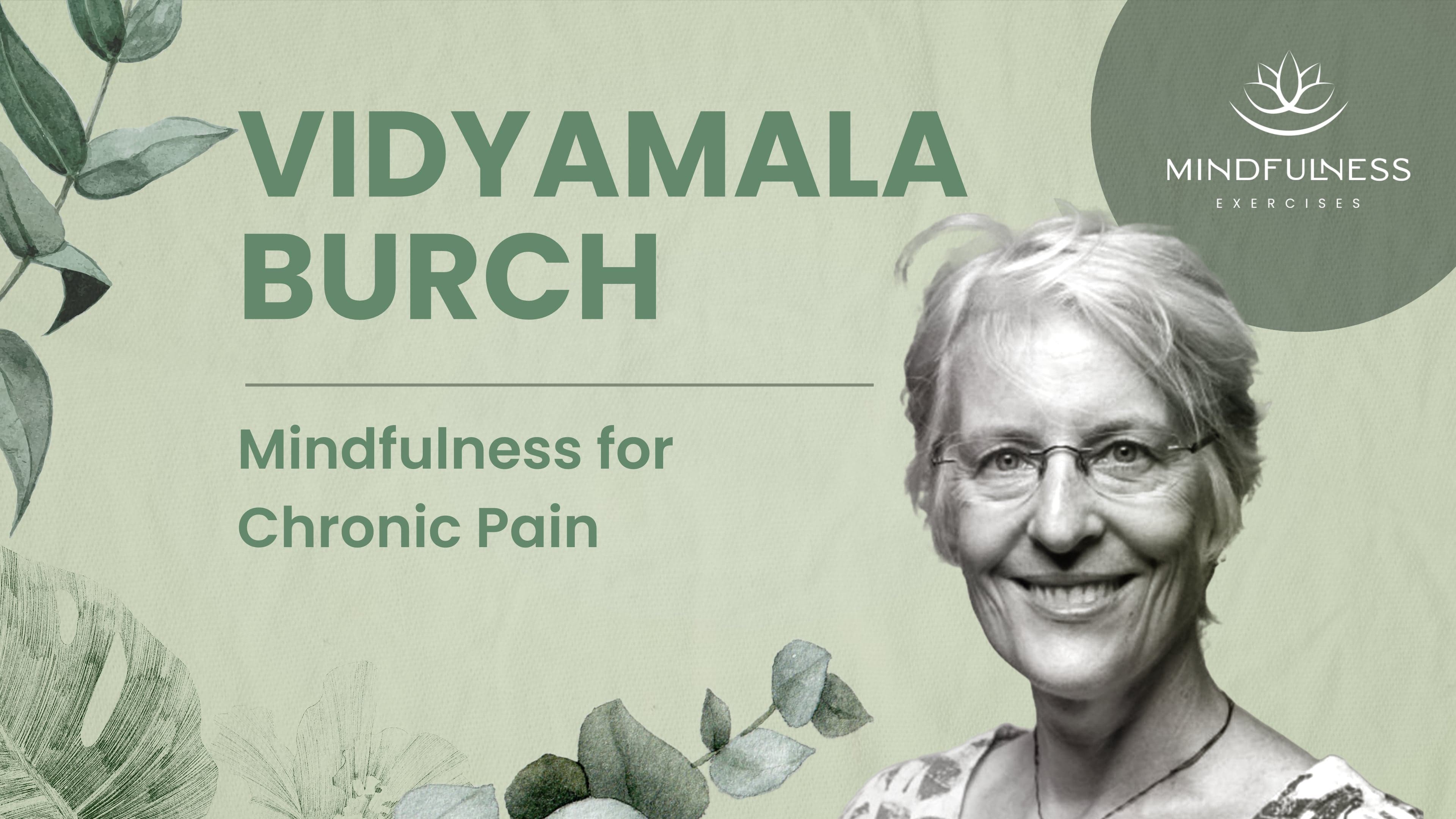 05· Vidyamala Burch, OBE
From Resistance to Resilience: Mindfulness-Based Approaches to Chronic Pain and Illness
Primary vs. secondary suffering; the four diaphragms and Five B's of breath; releasing chronic tension patterns.
Learning objectives
- Describe the primary and secondary suffering models of chronic pain and explain how mindfulness-based attentional strategies can interrupt habitual resistance responses to reduce pain-related psychological distress.
- Apply whole-body breath awareness techniques, including diaphragmatic breathing and somatic grounding practices, to support physiological regulation in clinical and patient-facing contexts.
- 06· Oren Jay Sofer
Working with Chronic Pain: A Mindfulness-Based Framework for Mental Health and Healthcare Practitioners
The spectrum from indirect (regulation) to direct (investigation) practices; self-compassion as the clinical bridge; introducing mindfulness to skeptical clients.
Learning objectives
- Describe the distinction between pain and suffering, and explain the role self-compassion plays as the clinical bridge that enables direct mindfulness-based engagement with painful experience.
- Identify a spectrum of mindfulness-based practices for supporting people with chronic pain, from indirect approaches that support nervous system regulation to direct approaches that cultivate mindful awareness of painful sensations.
What you receive
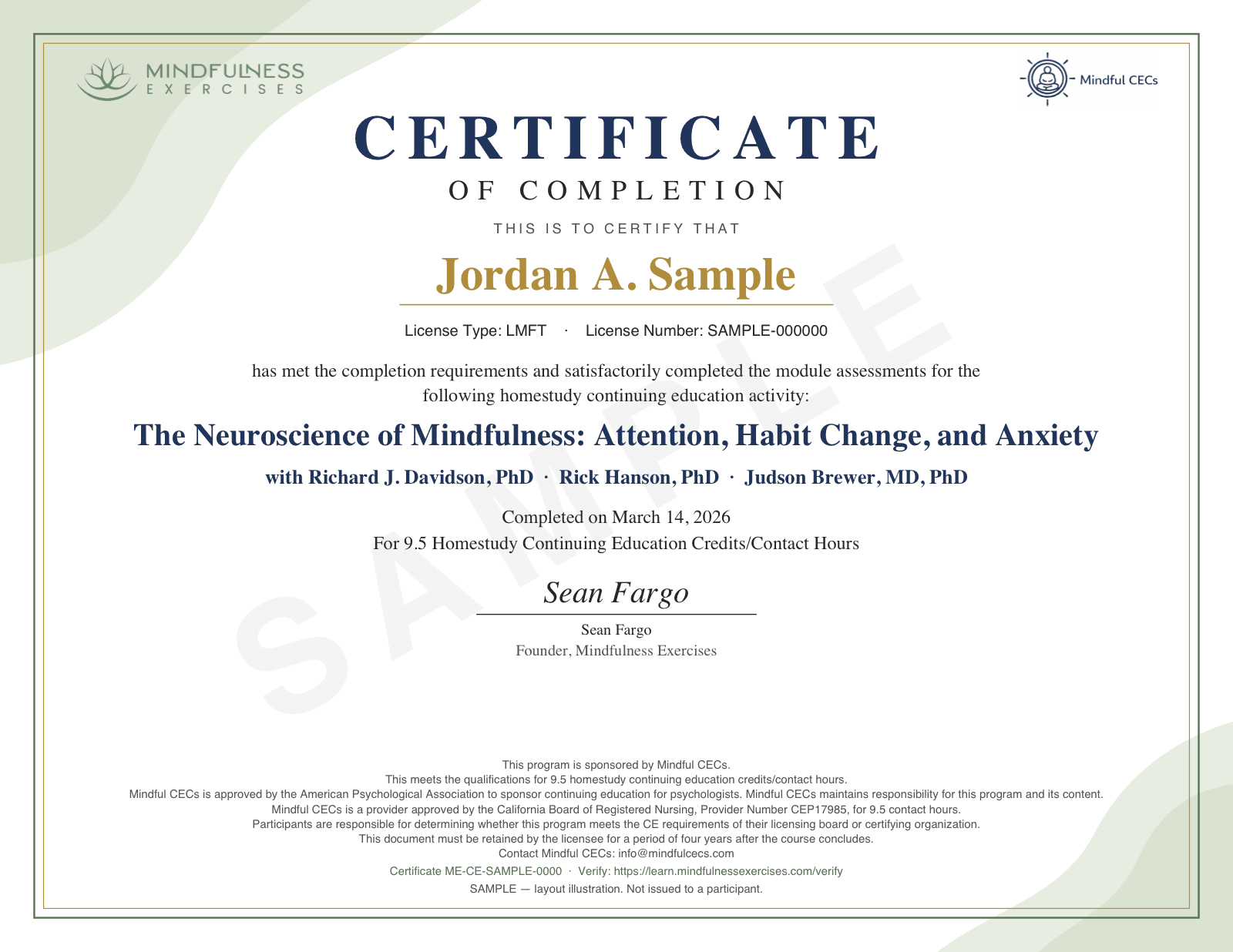
Your certificate is issued the day you finish
Complete all modules and pass each assessment, and your certificate is generated immediately — with your name, license type, the exact program title, the 11.5 CE contact hours, and the Mindful CECs sponsor statement your board looks for. It stays in your account, so a re-download years from now takes one click.
No waiting on a batch email, no PDF to chase down at renewal time.
“I am always grateful to work with Sean Fargo. I find him an unusual combination of great emotional intelligence and the diligence and perseverance to get any job done. His caring and kindness are exemplary, as is his clarity and awareness.”
 Sharon SalzbergWorld-renowned mindfulness meditation teacher
Real continuing education continues the practice — not just the credential.
Your instructors
Willoughby Britton
PhDProfile & practicesDavid Treleaven
PhDProfile & practicesSusan Bauer-Wu
PhD, RNVidyamala Burch
OBEOren Jay Sofer
Profile & practices
Full instructor credentials and biographies are included with each module inside the program, and on the CE information page.
Questions clinicians ask
Will these CE hours count toward my license renewal?
Mindful CECs is approved by the American Psychological Association to sponsor continuing education for psychologists. Mindful CECs maintains responsibility for this program and its content. Provider approved by the California Board of Registered Nursing, Provider Number CEP17985, for 11.5 contact hours. Participants are responsible for determining whether this program meets the CE requirements of their licensing board or certifying organization.
Is this live or recorded?
Self-paced homestudy (asynchronous recorded video). Online at learn.mindfulnessexercises.com — begin any time; there are no live session dates.
How long do I have to finish it?
There is no deadline. Registration is open year-round, access begins immediately after checkout, and your access does not expire — you can work through the modules over a weekend or across several months.
How and when do I get my certificate?
Completion requires watching all module videos and passing each module assessment with a score of at least 75%. Up to 3 attempts are allowed per assessment. A course evaluation is requested from all participants. Certificates of completion are issued immediately upon completion and stored in your account.
What does Pathway IV cost, and what if it isn't the right fit?
Pathway IV is $227 — one payment, roughly $20 per CE hour, with no subscription. All four pathways together are $497 for 37.5 CE contact hours, which saves $227 versus enrolling separately. Because your CE certificate is issued the moment you complete a pathway, enrollments are non-refundable. If a pathway turns out not to be the right fit, contact us before you complete it and we will switch you to a different pathway.
Do I need to be licensed to enroll?
This intermediate-level program is designed for licensed and license-eligible mental health and healthcare professionals, including psychologists, social workers (LCSW, LSW), counselors (LPC, LCPC, LMHC), marriage and family therapists, nurses (RN, NP), and other healthcare professionals seeking continuing education in trauma-sensitive mindfulness, adverse effects of meditation practice, mindfulness for serious illness and chronic pain, and communication skills for clinical settings. Enrollment is not restricted — anyone may take the program — but CE contact hours are relevant to licensed and license-eligible professionals.
Pathway IV
Enroll in Pathway IV
Trauma-Sensitive Mindfulness and Clinical Safety: Adverse Effects, Serious Illness, and Chronic Pain
$227 · 11.5 CE contact hours · ≈ $20 per CE hour
Instant access · Lifetime · Certificate issued the day you finish
Continuing education details
- Continuing Education is sponsored by Mindful CECs.
- Mindful CECs is approved by the American Psychological Association to sponsor continuing education for psychologists. Mindful CECs maintains responsibility for this program and its content.
- Provider approved by the California Board of Registered Nursing, Provider Number CEP17985, for 11.5 contact hours.
- Potential Conflict of Interest Statement: These instructors may have authored publications relevant to the subjects covered in this course, and may teach additional programs. The instructors might reference these publications and programs during the course, and the instructor may receive financial compensation if participants choose to purchase them.
- Commercial Support: This program received no commercial support.
- Participants are responsible for determining whether this program meets the CE requirements of their licensing board or certifying organization.
- Because your CE certificate is issued the moment you complete a pathway, enrollments are non-refundable. If a pathway turns out not to be the right fit, contact us before you complete it and we will switch you to a different pathway. Registration is open year-round; access begins immediately after checkout.
- Questions, grievances, or ADA accommodation requests: info@mindfulcecs.com · support@mindfulnessexercises.com
The other pathways in this curriculum
- Pathway IThe Neuroscience of Mindfulness: Attention, Habit Change, and Anxiety9.5 CE contact hours · 5 sessionsRichard J. Davidson, PhD · Rick Hanson, PhD · Judson Brewer, MD, PhD$179
- Pathway IIGuiding and Teaching Mindfulness: Ethics, Skill, and Adaptations for Adults and Children8 CE contact hours · 4 sessionsJames Baraz, MA · Donald Rothberg, PhD · Susan Kaiser Greenland, JD · Rick Hanson, PhD$149
- Pathway IIIWorking with Shame and Grief: Self-Compassion and Emotional Resilience in Clinical Practice8.5 CE contact hours · 4 sessionsChristopher Germer, PhD · Francis Weller, MFT · Myra Walden, MA · Bob Wentworth, PhD · Fiona Brandon, MPS, MA, LMFT$169
Taking all four? The complete bundle covers 37.5 CE contact hours and saves $227 versus enrolling separately.