Listen now


There’s a version of joy we’re sold almost everywhere: bright, effortless, and dependent on everything going right. But what happens when life doesn’t cooperate? When identity fractures, plans collapse, or fear quietly takes over?
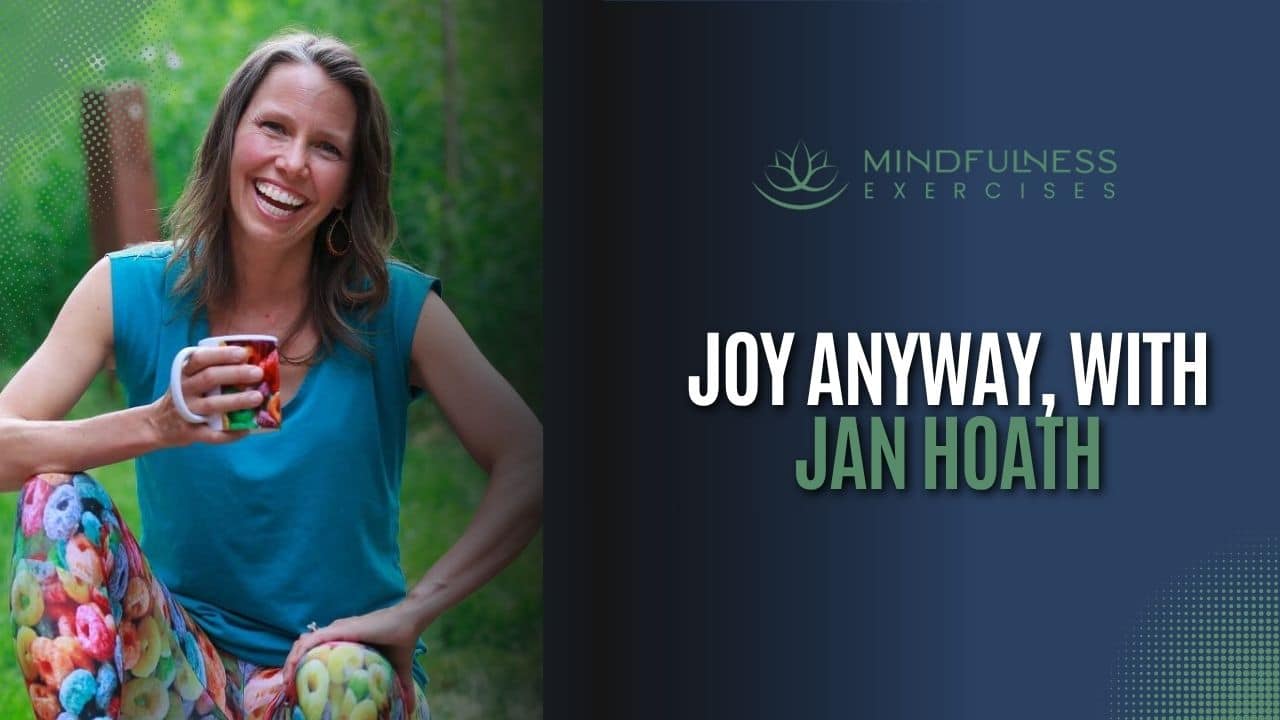
In this powerful conversation, mindfulness teacher Sean Fargo sits down with leadership coach and author Jan Hoath to explore a radically different idea—joy anyway.
This isn’t about pretending everything is fine. It’s about discovering a deeper, steadier form of joy that can coexist with grief, uncertainty, and even pain.
Sponsored by our Mindfulness Meditation Teacher Certification Program
certify.mindfulnessexercises.com
Episode Overview:
Key Topics Discussed:
- The difference between happiness and true joy
- How to access joy during difficult life transitions
- Jan’s personal journey through identity loss and depression
- The role of mindfulness in cultivating resilience
- Practical “micro joy” habits
- The “Fruit Loop moment” and what it teaches about presence
- Recognizing and avoiding toxic positivity
- Joy as a tool for leadership and emotional intelligence
Resources & Links:
- Visit Jan Hoath’s website: Jan Joy Mentor
- Book: Joy Anyway
Show Notes:
What “Joy Anyway” Really Means
At its core, “joy anyway” is not about chasing happiness—it’s about cultivating a resilient inner state.
Jan Hoath draws a clear distinction:
- Happiness is often conditional and fleeting
- Joy is stable, grounded, and inclusive of all emotions
This means joy doesn’t disappear when things get hard. Instead, it becomes a container—wide enough to hold sadness, anger, and fear without being overwhelmed by them.
That shift alone changes everything.
When Identity Breaks: A Turning Point
Jan’s journey into joy wasn’t linear or easy.
As a teenager, she faced deep depression after an injury abruptly ended her identity as a swimmer. For many, losing a defining part of themselves can feel like losing everything.
But in that moment of collapse, something unexpected happened:
an opportunity—bold and seemingly out of reach—opened a new path forward.
It wasn’t instant transformation. It was the beginning of a different relationship with life, one that allowed both loss and possibility to coexist.
Mindfulness: The Gateway to Joy
If joy is a steady state, how do we access it?
Jan points to mindfulness as the essential starting point.
Mindfulness creates space between:
- what we’re experiencing
- and how we respond to it
Without that space, we react automatically—often reinforcing stress, avoidance, or emotional suppression.
With mindfulness, we begin to:
- Notice emotions without judgment
- Stay present with discomfort
- Reconnect with what’s real, not what we wish were true
This is where authentic joy begins—not by escaping life, but by meeting it fully.
The Power of “Micro Joy”
One of the most practical takeaways from this conversation is the idea of micro joy.
These are small, intentional moments that gently reconnect us to presence and possibility.
They’re not grand gestures. They’re simple, repeatable, and accessible—even on hard days.
Examples of micro joy:
- Feeling the warmth of sunlight on your skin
- Savoring your first sip of coffee
- Taking three slow, conscious breaths
- Noticing something beautiful in your environment
Over time, these moments accumulate. They begin to rewire your attention, shifting your baseline from stress to awareness.
The “Fruit Loop Moment”: A Lesson in Resilience
One of the most memorable stories Jan shares is what she calls her “Fruit Loop moment,” which took place in a children’s hospital.
In a setting filled with uncertainty and hardship, something unexpectedly playful and joyful emerged—a moment that didn’t erase the pain, but existed alongside it.
That moment became a blueprint:
Joy doesn’t require perfect circumstances. It requires presence.
And more importantly—it can be practiced.
Letting Go of Toxic Positivity
A key part of accessing real joy is confronting something many of us have internalized: toxic positivity.
This shows up as:
- Forcing a smile when you’re struggling
- Dismissing difficult emotions
- Believing you “should” feel happy
Ironically, this blocks joy.
Why? Because joy thrives in authenticity—not avoidance.
Sometimes the fastest path back to joy is:
- Allowing yourself to feel sadness fully
- Sitting with discomfort without fixing it
- Acknowledging what’s true in the moment
When you stop resisting your experience, something softens. And in that openness, joy can re-enter naturally.
Joy as a Leadership Superpower
For entrepreneurs, leaders, therapists, and creatives, joy isn’t just personal—it’s powerful.
Jan reframes joy as a leadership advantage:
- It enhances creativity
- Improves decision-making
- Strengthens team culture
- Builds emotional resilience
This isn’t about being cheerful all the time. It’s about cultivating a grounded presence that others can trust and feel.
When leaders operate from joy—not pressure or fear—they create environments where people thrive.
Finding Joy After Life Transitions
Many people lose touch with joy during major life changes:
- Divorce
- Job loss
- Burnout
- Retirement
- Health challenges
If you’re in one of these seasons, you’re not alone—and you’re not stuck.
The path back to joy isn’t about “fixing” everything. It’s about:
- Reconnecting with the present moment
- Allowing space for both grief and possibility
- Taking small, consistent steps toward awareness
Joy doesn’t arrive all at once. It builds—quietly, steadily.
Final Reflection
Joy isn’t something you earn when life finally settles down.
It’s something you practice—right in the middle of the mess.
“Joy anyway” is an invitation:
to stay present,
to stay open,
and to trust that even here, something meaningful is possible.