Listen now


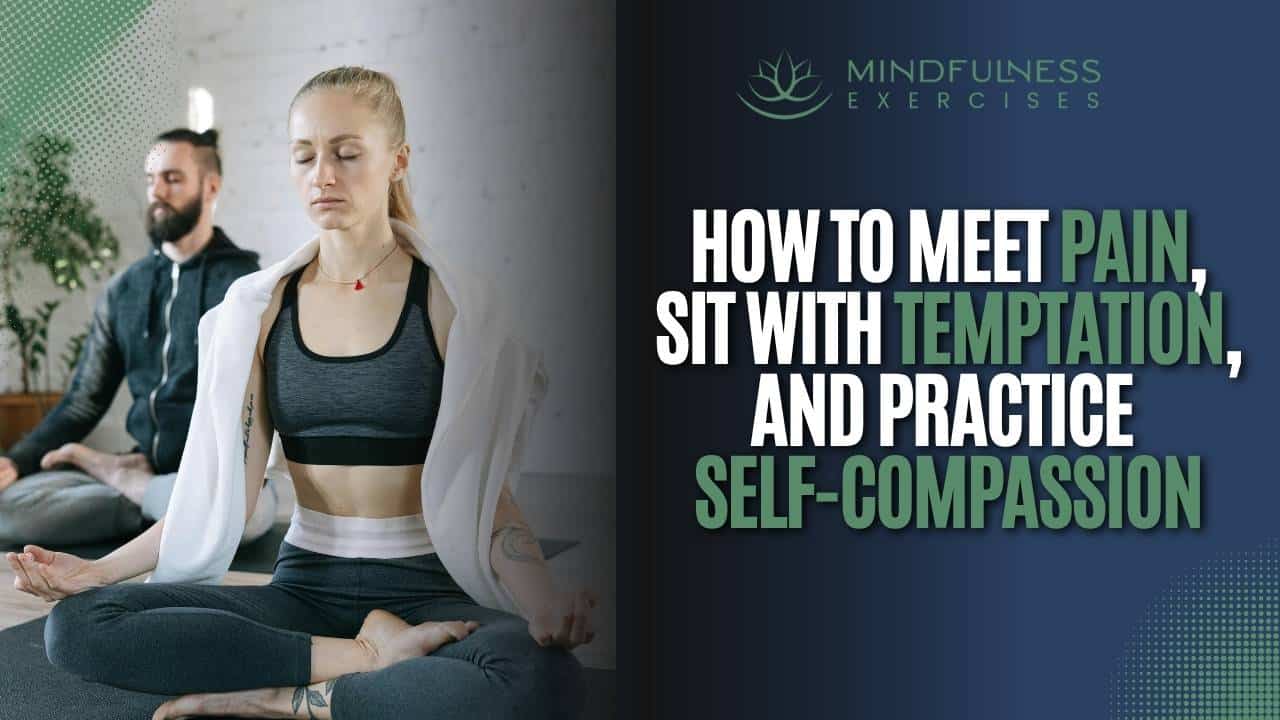
There are moments in life when discomfort feels unavoidable—whether it shows up as physical pain, emotional tension, or the quiet pull of temptation. Our instinct is often to escape, fix, or distract ourselves. But what if the path forward isn’t about getting rid of discomfort… but learning how to be with it?
This is the heart of mindfulness practice: meeting our experience with awareness, curiosity, and compassion.
In this exploration, we’ll walk through practical ways to meet pain, sit with temptation, and develop a kinder relationship with ourselves—without forcing or avoiding. Instead, we discover a middle way: a gentle, sustainable approach to being human.
Sponsored by our Mindfulness Meditation Teacher Certification Program
certify.mindfulnessexercises.com
Episode Overview:
Key Themes:
- Meeting discomfort with awareness instead of resistance
- Naming sensations rather than labeling “pain”
- Using breath to create space in the body
- Recognizing feeling tones (pleasant, unpleasant, neutral)
- Understanding the wave-like nature of discomfort
- Practicing mindful posture adjustments
- Bringing mindfulness into eating habits
- Reflecting on outcomes to shift behavior patterns
- Finding moderation without feeding compulsion
- Using progressive muscle relaxation for embodied ease
- Cultivating wise effort: balanced and sustainable
- Teaching and living with presence, warmth, and curiosity
Show Notes:
The Subtle Shift: From “Pain” to Sensation
One of the most transformative practices is surprisingly simple: changing how we relate to discomfort.
Instead of immediately labeling something as “pain,” try naming the raw sensations:
- Tightness
- Heat
- Pressure
- Tingling
- Pulsing
This shift moves us out of storytelling (“This is bad, I can’t handle this”) and into direct experience.
When we stay with sensation, we begin to notice something important: everything is changing. Even discomfort moves, expands, contracts, and fades.
Breathing Into Difficulty: A Whole-Body Practice
When discomfort arises, our body often contracts around it. The breath becomes shallow, and resistance builds.
A simple but powerful practice:
- Breathe gently into the area of discomfort
- Imagine the breath spreading through the whole body
- Allow space instead of tightening
This isn’t about forcing relaxation. It’s about making room.
Over time, this practice softens our relationship with pain—not by removing it, but by changing how we hold it.
Understanding Feeling Tones
In mindfulness, every experience carries a feeling tone:
- Pleasant
- Unpleasant
- Neutral
Temptation often arises from this:
- We chase the pleasant
- We avoid the unpleasant
- We ignore the neutral
By noticing these tones in real time, we interrupt automatic reactions.
For example:
- Craving something? Notice: pleasant anticipation
- Avoiding a task? Notice: unpleasant resistance
This awareness creates a pause—and in that pause, there’s choice.
Riding the Waves of Discomfort
Discomfort often feels solid and permanent. But when we observe closely, we see it behaves more like a wave.
It builds.
It peaks.
It passes.
When we sit with discomfort—even briefly—we begin to trust this rhythm.
This is where growth happens.
Not in eliminating discomfort, but in learning:
“I can stay.”
Mindful Posture: Adjusting Without Avoiding
Mindfulness isn’t about enduring pain at all costs.
Sometimes the most skillful response is to change posture mindfully:
- Slowly
- With awareness
- Without urgency or aversion
This teaches us balance:
- Not suppressing discomfort
- Not reacting impulsively
Just responding with care.
Mindful Eating at Home: Small Rituals, Big Shifts
Temptation shows up strongly around food. But mindful eating doesn’t require strict rules—it invites gentle awareness.
Try this:
- Pause before eating
- Take one conscious breath
- Notice the look, smell, and texture of your food
During eating:
- Slow down the first few bites
- Notice taste and sensation
- Check in: Am I still hungry?
After eating:
- Reflect briefly: How do I feel now?
This outcome reflection helps interrupt automatic habits and builds awareness over time.
Moderation Without Deprivation
One of the biggest challenges is finding balance without swinging between extremes.
Mindfulness offers a middle path:
- Not overindulging
- Not restricting harshly
Instead:
- Allow enjoyment
- Stay aware of limits
- Notice when “enough” arises
This approach reduces guilt and builds a more sustainable relationship with pleasure.
Progressive Muscle Relaxation: Learning Ease
Sometimes, we don’t realize how much tension we’re holding until we consciously release it.
A simple practice:
- Gently tense a muscle group (like your shoulders)
- Hold for a few seconds
- Slowly release
Move through the body:
- Face
- Neck
- Arms
- Chest
- Legs
This helps the body learn the difference between tension and ease—and reminds us that relaxation is a skill we can practice.
Wise Effort: Not Too Tight, Not Too Loose
A key insight in mindfulness is the idea of wise effort.
Too tight:
- Forcing
- Controlling
- Striving
Too loose:
- Avoiding
- Disconnecting
- Giving up
The middle way:
- Gentle consistency
- Curious attention
- Compassionate discipline
This balance allows practice to feel sustainable, not exhausting.
Teaching and Living From Presence
Whether we’re guiding others or simply navigating our own lives, the quality of our presence matters.
Mindfulness invites us to show up with:
- Warmth
- Curiosity
- Patience
Not as someone who has it all figured out—but as someone willing to stay present with what’s here.
A Gentle Closing Reflection
Pain, temptation, and tension are part of being human. They aren’t signs that something is wrong—they’re invitations.
Invitations to pause.
To feel.
To soften.
And most importantly, to meet ourselves with compassion.
You don’t have to get it perfect. You don’t have to eliminate discomfort.
You only have to begin where you are:
One breath. One moment. One kind awareness at a time.