Listen now


There’s a particular feeling when a yoga class truly lands.The room softens. The breath becomes audible. Movement continues, yet effort quiets. Attention steadies—not because it’s forced, but because it’s held with care.
This shift isn’t accidental, and it certainly isn’t mystical.It’s the result of thoughtful structure, intentional cueing, and a willingness to let mindfulness live inside the movement rather than framing it neatly at the beginning and end.
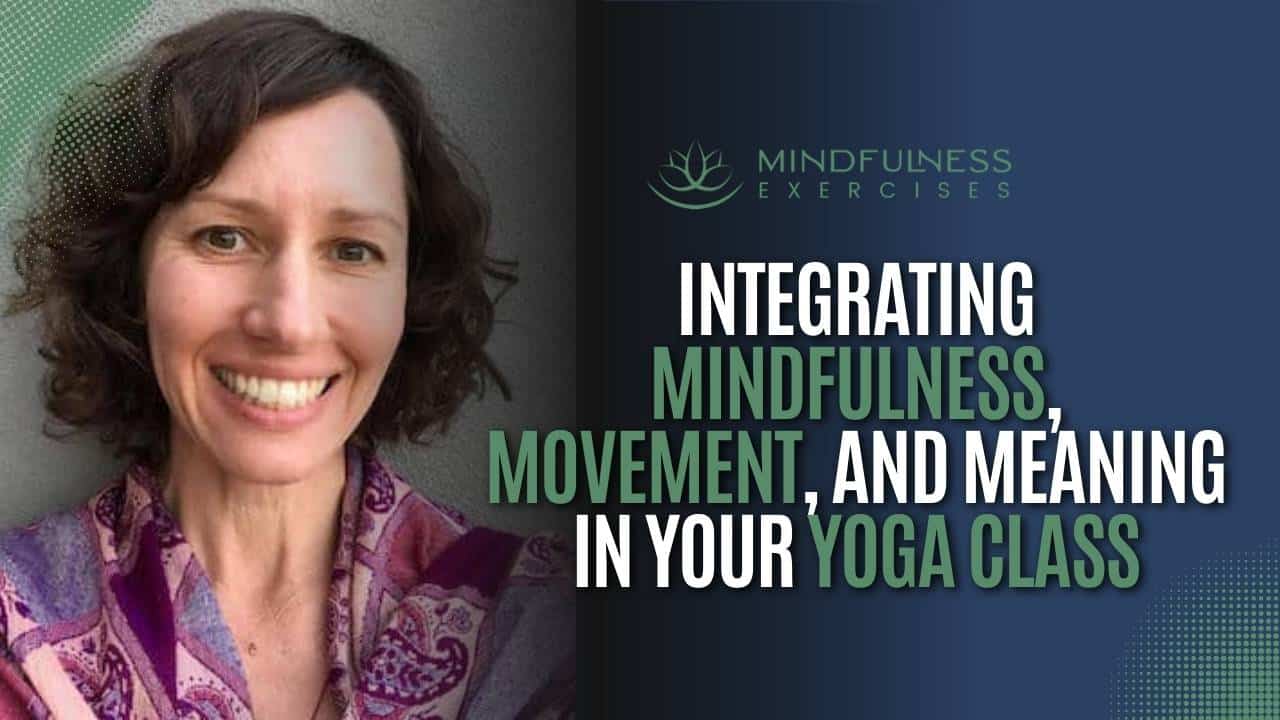
In this episode of the Mindfulness Exercises Podcast, we sit down with senior yoga teacher and writer Sara-Mai Conway to explore how mindfulness, movement, and meaning can become one continuous thread throughout a yoga class—rather than three separate experiences competing for attention.
What follows is a practical, grounded approach to teaching (and practicing) yoga as a living meditation.
Sponsored by our Mindfulness Meditation Teacher Certification Program
certify.mindfulnessexercises.com
Episode Overview:
- Structuring classes around a single intention
- Using repetition and breath to anchor awareness
- Embodying values like gratitude, grounding, and compassion
- Teaching silence as a safe and supportive presence
- Placing meditation naturally within movement
- Reclaiming savasana as true stillness
- Closing practice with dedication and meaning
Show Notes:
Redefining Yoga: One Practice, Many Doorways
Rather than treating yoga, mindfulness, and meditation as separate disciplines, Sara-Mai invites us to return to a more integrated understanding of yoga itself.
Yoga, at its heart, is skillful energy movement—guided through both outer and inner methods:
- Ethics and values reduce mental friction and inner conflict
- Asana prepares the body for steadiness and comfort
- Pranayama bridges body and mind through breath
- Focused attention matures into insight
- And at times, practice opens into deep stillness or samadhi
Seen this way, a yoga class doesn’t lead to meditation.
It is meditation—expressed through changing shapes, sensations, and states of attention.
Teaching a Yoga Class Like a Guided Sit
One of the most helpful reframes in this conversation is the idea of building a yoga class the way you’d guide a seated meditation.
That begins with a clear intention.
An intention isn’t a theme layered on top of movement; it’s the organizing principle beneath every choice. Once named, it informs:
- Which poses you select
- How long you stay
- What you emphasize in cues
- When you invite silence
- Where effort gives way to observation
Every instruction, ideally, points students back to the same inner thread.
Using Breath to Unify Movement and Attention
Breath-focused flows are one of the most accessible ways to integrate mindfulness into movement—when they’re used intentionally.
Rather than constantly changing sequences, Sara-Mai suggests allowing repetition and fluidity to do the teaching. When movements repeat, attention naturally shifts from “what’s next?” to how this feels right now.
Simple cues can re-anchor awareness:
- Noticing the texture of the inhale
- Feeling the pause after the exhale
- Tracking where breath meets resistance or ease
In this way, breath becomes less of a technique and more of a companion—steady, responsive, and alive.
Letting Meaning Live in the Body
Meaning doesn’t have to be explained at length.
Often, it’s felt most clearly when it’s embodied.
In the episode, Sara-Mai shares how intentions can take physical form:
- Gratitude expressed through bows and forward folds
- Grounding emphasized by contact with the earth
- Stability explored through slow transitions and held shapes
When values show up somatically, students don’t just understand them—they recognize them.
Practicing Non-Harming and Self-Compassion on the Mat
One powerful example explored is weaving non-harming (ahimsa) directly into challenging postures.
Rather than avoiding difficulty, teachers can invite students to notice:
- The tone of inner self-talk
- The impulse to push, perform, or compare
- The moment when effort crosses into strain
Naming these experiences gently helps transform challenge into awareness. The pose becomes a mirror—not something to conquer, but something to learn from.
Silence as a Teacher, Not an Absence
Silence can feel risky—for teachers and students alike.
But when framed clearly, it becomes one of the most effective tools for cultivating mindfulness.
Silence works best when it is:
- Intentional (students know why it’s there)
- Time-bound (they know it will end)
- Supported (with a question or anchor to explore)
A simple embodied inquiry—What’s most alive right now?—can shift practice from effort to curiosity.
Integrating Formal Meditation Into Movement
Rather than reserving meditation for the end of class, this approach allows moments of stillness to appear within the flow.
That might look like:
- Pausing in a grounded shape to feel breath and sensation
- Sitting briefly mid-class to track internal experience
- Letting a familiar pose become a place of quiet observation
Meditation becomes less about posture and more about quality of attention.
Reclaiming Savasana as True Stillness
When mindfulness is woven throughout the class, savasana no longer needs distraction.
Music fades. Guidance softens. Stillness takes center stage.
This final rest becomes a space where practice settles—where effort dissolves and integration happens naturally.
Closing with a brief dedication of practice—for oneself or others—helps carry the benefits beyond the mat and into daily life.
Teaching with Authenticity and Trust
Throughout the conversation, Sara-Mai emphasizes trusting students with depth.
There’s no need for a “spiritual sandwich,” where mindfulness appears only at the beginning and end. When presence is threaded throughout, less explanation is required—and more can be felt.
Teaching becomes an act of listening as much as leading.
A Gentle Invitation
If you’ve ever wondered how to keep mindfulness alive between the opening sit and the final rest, this episode offers:
- Clear structure
- Real-world cues
- Permission to do less so students can feel more
It’s a reminder that when movement, breath, and meaning align, practice becomes something students don’t just do—but something they inhabit