Teach mindfulness with confidence and credibility Learn More →

    Pleasant vs Unpleasant

    SC
    Sara-Mai ConwayPublished April 28, 2020 · Updated October 22, 2026 · 1 min read

    Guided Script

    Pleasant vs Unpleasant

    PDF·191 KB

    Preview will load as you scroll…
    Previewing page 1Open full PDF in new tab

    Printable Worksheet

    Pleasant vs Unpleasant

    PDF·201 KB

    A mindful companion to this worksheet

    A mindful approach to pleasant vs unpleasant

    “Pleasant vs Unpleasant” is an invitation to slow down and meet your experience with curiosity, honesty, and kindness.

    How mindfulness can help

    Mindfulness offers a steady place to stand while you work with any topic. Instead of being carried along by reaction, we notice what is here, sensations, thoughts, and feelings, and respond from presence rather than pressure.

    Gentle steps to try

    1. Begin with the breath. You might take three slow breaths before opening the worksheet, and let the body arrive.
    2. Read with curiosity. Move through each prompt slowly. Notice which questions soften you and which ones tighten you.
    3. Write what is true now. There are no right answers, only honest ones. What is true at this moment is what the worksheet is asking for.
    4. Close with one breath. When you finish, pause. You might place a hand on your heart and thank yourself for showing up.

    Insight does not arrive on a schedule. Trust the practice of returning, and the honesty you bring each time you do.

    A note from Sean

    I steer away from good and bad, right and wrong, when we talk about what we feel. Pleasant isn’t necessarily good, and unpleasant isn’t necessarily bad. Mindfulness is opening to everything and being with it. We can also notice whether we automatically judge a pleasant feeling as good.

    Try this today. Set a timer for three minutes. Starting at your feet, notice one sensation at a time and label it pleasant, unpleasant, or neutral, as the worksheet does: “tight knee, unpleasant,” “rise and fall of the chest, pleasant.” Don’t linger. Afterward, write how often you said neutral, and whether the label came with the sensation or after it.

    This suits anyone ready to watch how the mind labels experience. If you live with pain or have a history of trauma, begin in a part of the body that feels neutral or safe. If anything becomes too much, go gently. Stop when you need to.
    Want to take this practice with you?

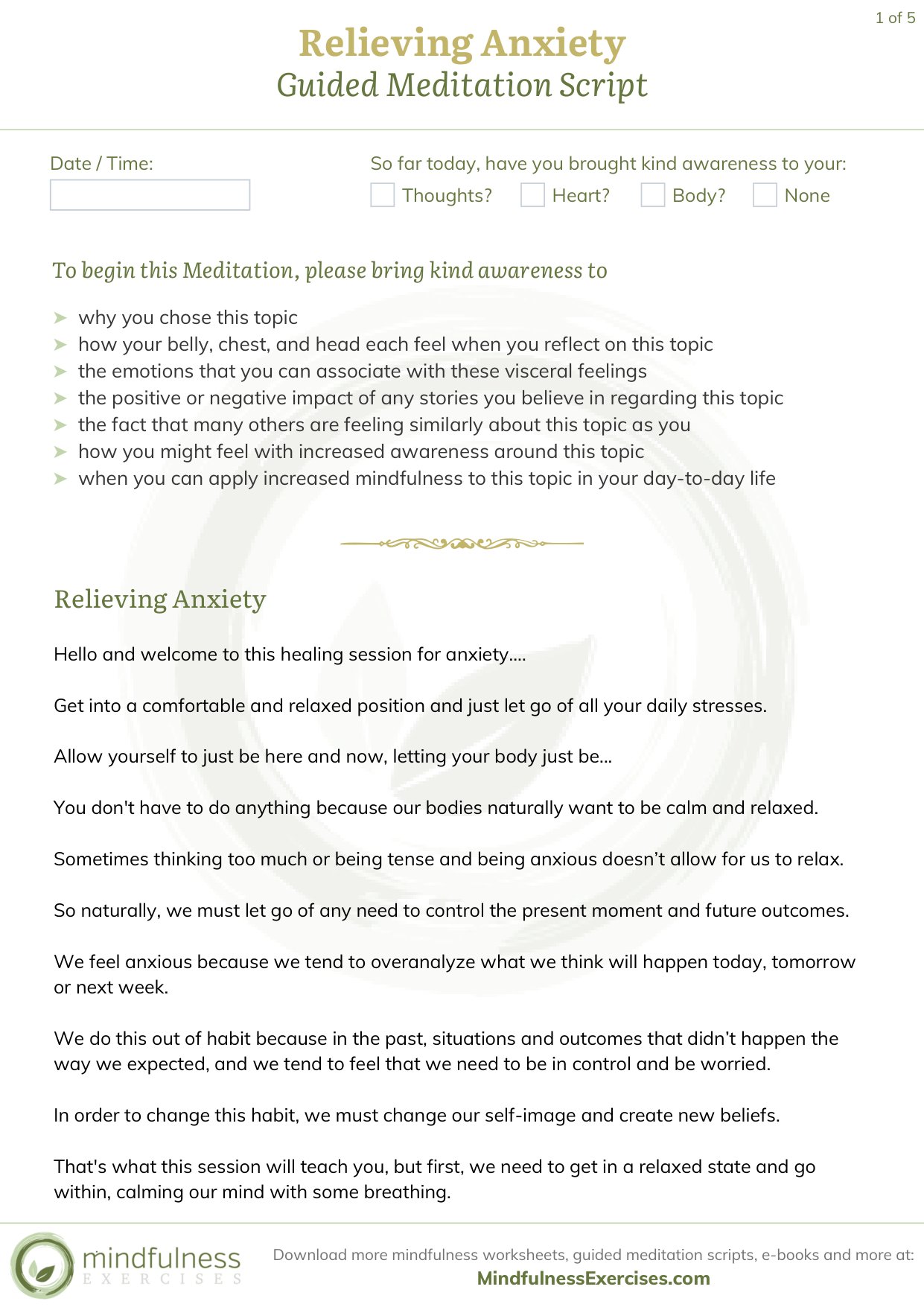
    Save the script as a PDF or print it for class — your browser's print dialog has a “Save as PDF” option on every device.

    Like this script? There are 200 more.

    This page shares one script. The complete library is a single organized download: every script, a master index, a video course on guiding, and two expert workshop recordings.

    • All 200 scripts in one organized download, with a master index
    • Commercial-use license — lead them in paid sessions and recordings
    • Video course on guiding · lifetime updates · 60-day refund
    See the full library — $97One-time payment · No subscription · 60-day refund

    For teachers, therapists & coaches

    Need a worksheet for a specific client?

    Describe your client and what you're working on together, and MindfulPro writes a client worksheet or handout for them.

    Write a worksheet for my client →

    14-day free trial, then $39/mo.

    Share

    Continue reading

    • assessing vs judging others

      Assessing vs Judging Others

      Read
    • How to Teach Meditation: Story, Teach, Tool

      How to Teach Meditation: Story, Teach, Tool

      Read