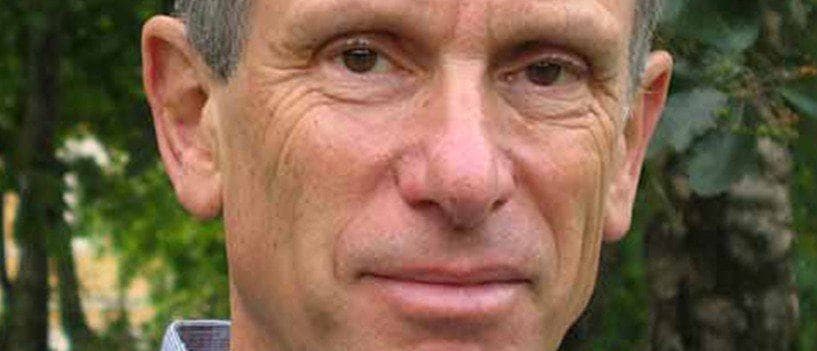
Unleashing your inner golden retriever by Jonathan Foust:
Last week, I went to buy some dog food and I went into the town and a sort of a high end place, sort of a day spa for dogs where I went to buy dog foods. I’m standing in line with this 40lbs of dog food. I heard this dog yapping in the background when the groomers are, and I looked in the window, and there he was. This magnificent looking golden retriever.
I’m not particularly fond, I love all dogs, but I’m not particularly fond with golden retrievers. They’re wonderful dogs. Maybe when you saw the cartoon of the shot of the happy golden retriever, angry golden retriever, depressed golden retriever, sad golden retriever, but they do have heart, and these are beautiful dogs. And you can tell, he’s been pampered his whole life, he’s probably there getting his teeth flossed, and his nails done, but he was sort of looking around, and suddenly, he saw me, and he locked in on me. This golden retriever love tracking beings.
And I speak dog, so we just went into this whole thing and he just had this, he just communicated in a sense that I have been waiting my whole life for this moment. Do you have any idea how awesome you are? It’s you, my God. I was completely, I had to turn my eyes away. This love trance, now that level of love might be a little be over the top, because you know, love without wisdom can be a little naïve. A little, you know, without bounce.
And dog love can be a little naïve as well. Maybe you know the cartoon of his dog is sitting in the back of the car in the driveway and talking to the dog next door, “Guess what, Ralph? I’m going to the vet to get tutored.”
What I’d like to talk about tonight is life love. The balance of that infinite capacity for compassion in love balanced with wisdom. And the title for this talk is “Unleashing Your Inner Golden Retriever.” Last night, Pat said that we were, that they just left the harbor. Now, tonight, I think, I can say we were officially at sea, not lost at sea, we’re just at sea, or we’re moving into the depth of the retreat now.
Tonight, I’d like to look about how you can view your experience as it arises, and how you can be with them. This is a transformational practice and there are four things I’d like to touch on tonight if I can. The first is a little bit on the practice of cultivating authentic friendliness. The second is on the possibility of feeling pain without suffering. The third is how you can transform to judging mind by calling on this quality of the compassionate witness, of the compassionate observer, and we’ll talk a little bit about the power of forgiveness, as a way to open ourselves up to this authentic heart.
Every Monday night I drive to my class in Arlington, Virginia. And there’s one intersection that is sort of worked by a couple of people who are there to ask for money and donations, they have signs sort of declaring their particular needs and so forth, and on the traffic stop, say, are the signs they kind of walk up and down. I noticed that every time I would come to that stop sign, I would have a sense of dread and I would do anything I could do to avoid making eye contact with these people as they would walk back and forth. Have you ever noticed that? When you see someone who’s in need or asking for something, you’ll do anything to not make eye contact, because if you were to make eye contact, you would have to make contact with that suffering.
You would have to see who’s there. It’s very common and it’s not a bad thing. We can have empathy overload, compassion, because it’s too much to take in. And I debated for myself, you know there’s who say, don’t give money directly to someone, because they’re just going to use it to reinforce their addiction or their hobby, you should give it to the organizations that support people.
And so, I’ve had this opportunity every Monday night to kind of experience this, and I made a conscious decision a while ago to make eye contact and to give something, just for my own experience. To sort of challenge my own privilege life. In that same way, when you are not willing to make contact with the suffering of others in order to not see it, if you are not willing to look at your own suffering that is a way of not acknowledging what is actually there. And this is a practice I’m looking.
—
If you liked this recording and would like to make a direct financial contribution to this teacher, please contact them here: http://jonathanfoust.com/
—
Material on this site is licensed under a Creative Commons Attribution-Noncommercial-No Derivative Works 3.0 License