
Listen now


There’s no shortage of mindfulness content in the world.
Apps, tracks, timers, playlists, scripts.
You can be guided through a body scan at any hour of the day or night.
And yet—many people still feel disconnected.
In this episode of Mindfulness Exercises, we ask a quietly radical question:
What if what people are really craving isn’t another guided meditation—but another human?
Not a guru.
Not a therapist.
Not a perfectly credentialed expert.
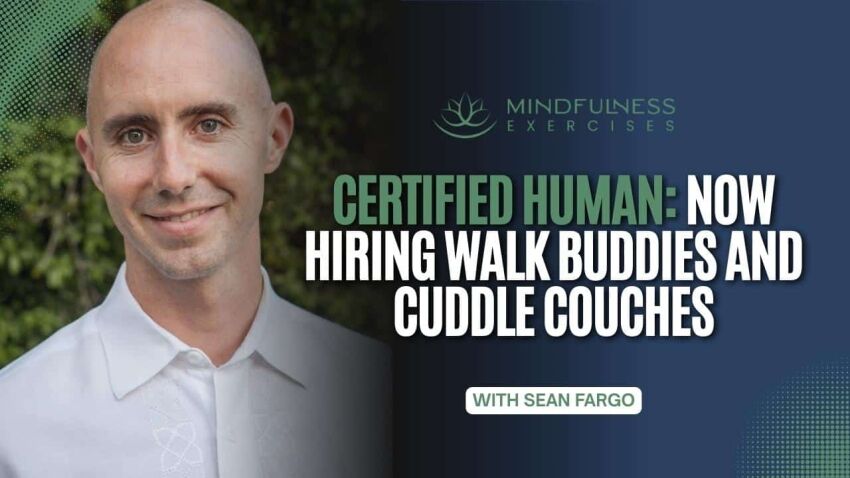
Just a certified human.
Someone who can walk beside them, sit with them, make eye contact, and share space without trying to fix anything. Someone who understands mindfulness not as a script, but as a lived, embodied experience.
This conversation explores why real human presence is becoming one of the most valuable—and overlooked—resources in modern mindfulness practice.
Sponsored by our Mindfulness Meditation Teacher Certification Program
certify.mindfulnessexercises.com
Episode Overview:
In This Episode:
- Why human presence matters more than endless guided tracks
- Embodiment as the missing link in mindfulness practice
- Rising demand for relational mindfulness guides
- Loneliness, paid companionship, and cultural signals
- Teaching through stories, eye contact, and authenticity
- Balancing head, heart, and whole-body awareness
- Simple practices for integrated attention
- Family intimacy, co-regulation, and the “cuddle couch”
- Global mental health trends and mindfulness recognition
- Encouragement for non-clinical mindfulness teachers
Show Notes:
When Mindfulness Becomes Disembodied
Mindfulness was never meant to live only in our heads.
Yet many modern approaches unintentionally pull us out of the body:
- Listening instead of sensing
- Following instructions instead of noticing
- Performing calm instead of experiencing what’s actually here
Guided practices can be helpful, especially when we’re learning. But when mindfulness becomes something we consume rather than inhabit, it loses its grounding power.
Embodiment changes that.
Embodied mindfulness invites us to feel:
- Feet on the floor
- Breath moving in the chest
- Subtle shifts in posture, tension, temperature
And often, it’s easier to stay embodied when we’re with someone else.
Why Human Presence Matters More Than Ever
Loneliness isn’t just a personal struggle—it’s a global one.
Across cultures and age groups, people report feeling more isolated even while being more digitally connected. This has led to unexpected trends: paid walking companions, professional cuddlers, and community spaces designed simply for shared presence.
These aren’t gimmicks.They’re signals.
They point to a rising, unmet need for:
- Co-regulation
- Safe, attuned attention
- Nervous systems settling together
Mindfulness, at its core, has always been relational. Long before apps existed, awareness was practiced in community—through shared silence, shared movement, shared life.
Teaching Mindfulness Through Presence, Not Performance
One of the most powerful moments in the episode is a reminder that mindfulness doesn’t require polished language or perfect delivery.
Sometimes, it’s taught through:
- A personal story
- A pause that isn’t rushed
- Eye contact that says, I’m here with you
When someone shares their lived experience—how mindfulness helped them through grief, overwhelm, or uncertainty—it lands differently. The listener isn’t just learning about mindfulness; they’re feeling what it’s like to be met with attention.
This kind of teaching can’t be automated.
Head, Heart, and Whole-Body Awareness
Many people unknowingly practice mindfulness from the neck up.
This episode invites a broader balance:
- Head: noticing thoughts and patterns
- Heart: sensing emotion, tenderness, resistance
- Body: feeling weight, movement, and breath
When these three work together, mindfulness becomes integrated rather than effortful. You don’t have to concentrate harder—you simply widen the field of attention.
A simple practice shared in the conversation:
- Notice what you’re thinking
- Sense what you’re feeling emotionally
- Feel one physical sensation in the body
- Let all three exist at once, without hierarchy
This is mindfulness as inhabiting yourself, not managing yourself.
The Cuddle Couch and the Science of Co-Regulation
The idea of a “cuddle couch” might sound playful—but it points to something deeply biological.
Humans regulate through proximity:
- Infants settle through touch
- Families bond through shared rest
- Adults soften when they feel safe nearby
Co-regulation isn’t weakness. It’s how nervous systems evolved.
Mindfulness that ignores this can unintentionally place the burden of regulation entirely on the individual. Mindfulness that includes relational safety—whether through family intimacy, community spaces, or simple togetherness—honors how humans actually work.
A Growing Global Recognition
This episode also touches on broader signals of change.
Organizations like the World Health Organization and the United Nations have increasingly highlighted:
- Rising mental health needs worldwide
- The importance of preventive, community-based support
- The role of mindfulness and awareness practices in public health
While data and research matter, the lived experience on the ground often speaks first. Communities are already responding—creating walking groups, listening circles, and shared mindfulness spaces that don’t require clinical labels.
You Don’t Need to Be a Therapist or Yogi
One of the most encouraging messages in this conversation is for aspiring mindfulness teachers.
You don’t need:
- A therapy license
- A yoga certification
- A perfectly curated brand
If you can:
- Be present
- Listen deeply
- Share honestly
- Hold space without fixing
You are already practicing something essential.
Mindfulness needs more humans, not more experts performing calm.
Coming Back to What’s Human
Mindfulness doesn’t have to be complicated.
Sometimes it looks like:
- Walking with someone
- Sitting quietly together
- Letting the body soften in shared space
In a world overflowing with content, presence is becoming the rarest offering of all.
And maybe the most meaningful qualification we can claim isn’t expert, certified, or enlightened—
but simply, human.
