Listen now

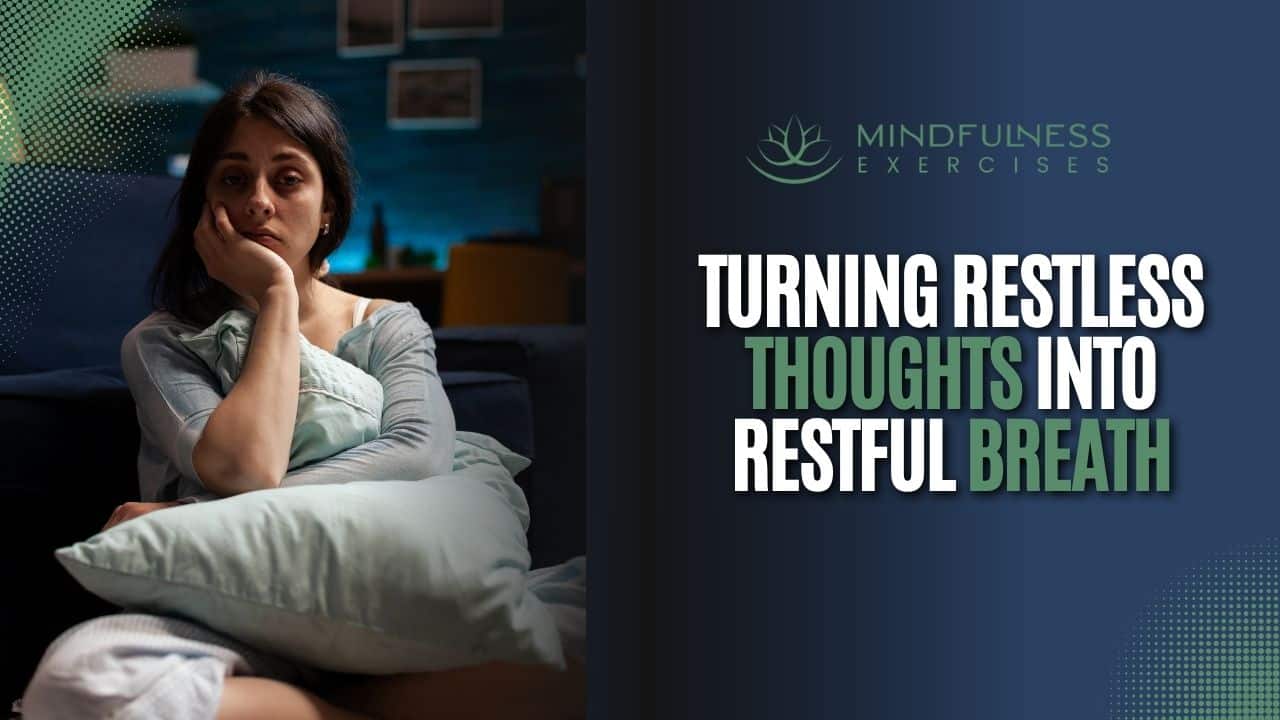
There’s a quiet moment many of us know well—the lights are off, the room is still, and yet the mind feels anything but calm. Thoughts begin to loop. Conversations replay. Tomorrow’s to-do list starts writing itself. And instead of drifting into sleep, we find ourselves caught in a current of restlessness.

If this feels familiar, you’re not alone.

Sleeplessness often doesn’t come from a lack of tiredness—it comes from an overactive mind. The body is ready for rest, but the nervous system is still in motion.

The good news? You don’t have to fight your thoughts to fall asleep. You can gently guide them into stillness.
Sponsored by our Mindfulness Meditation Teacher Certification Program
 certify.mindfulnessexercises.com

Episode Overview:

In This Episode, You’ll Learn:

  • Why racing thoughts intensify at bedtime
  • The three common mental patterns that disrupt sleep
  • How to use specific, felt gratitude as a calming anchor
  • A simple breath-based rhythm to ease the body
  • How to meet restless thoughts without resistance

Key Takeaways:

  • You don’t need to stop your thoughts to fall asleep
  • Gratitude works best when it’s specific and embodied
  • Breath can guide the nervous system into rest naturally
  • Gentle, repeatable rituals are more effective than force

Practice Highlight:
A short, compassionate bedtime ritual combining gratitude and breath to help transition from mental activity to restful sleep.

Show Notes:

Why the Mind Becomes Restless at Night

At the end of the day, the mind finally has space to process everything it didn’t have time for earlier. This often shows up in three common patterns:

  • Replaying the day – revisiting conversations or moments
  • Planning tomorrow – running through tasks and responsibilities
  • Feeling unfinished – a subtle sense that something still needs to be done

These mental habits signal alertness to the body. Instead of preparing for sleep, your system shifts into a state of problem-solving and vigilance.

Your body doesn’t know you’re lying in bed—it thinks you’re preparing for action.

A Softer Approach: Gratitude as an Anchor

Rather than trying to silence your thoughts, this practice invites you to redirect your attention—gently and intentionally.

Gratitude becomes your anchor.

Not a vague or forced kind of gratitude, but something real and specific. Something you can actually feel.

It might be:

  • The sound of laughter you shared earlier
  • A kind message from someone you love
  • The warmth of your blanket
  • The quiet presence of a pet nearby

Instead of scanning your mind for problems, you begin to rest your attention on something steady and safe.

Sensing Gratitude in the Body

Once you’ve chosen your anchor, the next step is to feel it fully.

Let yourself notice:

  • What did that moment look like?
  • How did it feel emotionally?
  • Where do you sense it in your body?

You might begin to notice subtle shifts:

  • Your jaw softens
  • Your shoulders release
  • Your breath becomes slower
  • A gentle warmth in your chest

These are signs that your nervous system is beginning to settle.

You’re not forcing relaxation—you’re allowing it.

Pairing Gratitude with Breath

Now, we gently introduce the breath.

There’s no need to count or control it. Instead, we use a simple rhythm:

  • Inhale: Welcome support
  • Exhale: Invite release

Let the breath move naturally, like a tide coming in and out.

As you breathe:

  • Imagine the inhale bringing in ease, steadiness, or comfort
  • Let the exhale carry away tension, effort, or lingering thoughts

If your mind wanders—and it will—simply return to your anchor and your breath.

No judgment. No pressure.

Just returning.

Meeting Restless Thoughts with Kindness

One of the most powerful parts of this practice is how it changes your relationship with your thoughts.

Instead of:

  • Fighting them
  • Analyzing them
  • Trying to “fix” them

You learn to let them pass without engagement.

Each time you return to your breath or your gratitude anchor, you’re gently reminding your mind:

For now, there’s nothing I need to solve.

For now, I’m safe to rest.

A Simple Bedtime Ritual You Can Return To

Here’s a short version of this practice you can use tonight:

  1. Lie comfortably and allow your body to settle
  2. Choose one thing you’re genuinely grateful for
  3. Visualize and feel it in as much detail as possible
  4. Notice where it shows up in your body
  5. Begin gentle breathing:
    • Inhale: welcome support
    • Exhale: release
  6. Return softly whenever the mind wanders

Stay here for a few minutes, or as long as it feels natural.

Let the practice be simple. Let it be enough.

Why This Practice Works

This approach works because it:

  • Shifts your focus away from problem-solving
  • Activates the body’s relaxation response
  • Grounds your awareness in the present moment
  • Builds a sense of safety and ease

Over time, your mind begins to associate bedtime with calm rather than activity.

Sleep becomes less of a struggle—and more of a natural transition.

When Sleep Still Feels Far Away

Some nights will still be harder than others. That’s part of being human.

On those nights, the goal isn’t perfect stillness—it’s gentle companionship with yourself.

Even if you’re awake, you’re resting your nervous system.
Even if your thoughts return, you’re learning how to meet them differently.

And that matters.

Final Thoughts

Turning restless thoughts into restful breath isn’t about control—it’s about care.

It’s a quiet shift from doing to allowing. From tension to trust.

Tonight, as you turn out the lights, you might try asking yourself:

What is one thing I can gently appreciate right now?

Let that be enough.
Let that guide you.

And let your breath carry you the rest of the way.

Additional Resources:

Related Episodes

Page 1 of 85
1 2 3 85
>