
Listen now


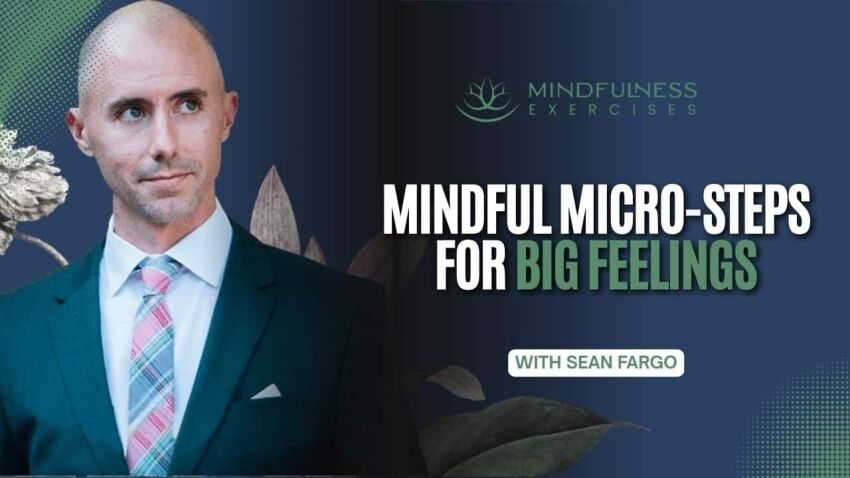
A gentle, step-by-step approach to building emotional capacity without overwhelm
Big feelings have a way of taking over—fear that tightens the chest, grief that suddenly knocks the breath out, anger that flares before we can stop it, or old hurts that resurface when we least expect them. Many of us were never taught how to be with these experiences safely. So we either suppress them, distract from them, or try to “power through” with sheer will.
But what if emotional resilience didn’t require white-knuckling your way through pain?
What if, instead of diving into the deep end, you could build capacity through small, mindful steps—ones that your nervous system can actually trust?
That’s the heart of this practice: mindful micro-steps for big feelings. A way to gently train your ability to feel what’s here without getting swept away.
Sponsored by our Mindfulness Meditation Teacher Certification Program
certify.mindfulnessexercises.com
Episode Overview:
In this episode, we explore:
- Why forcing emotional work can backfire
- How to safely build emotional capacity
- Using body-based awareness instead of analysis
- Creating an emotion inventory for visible progress
- When to practice solo—and when to seek support
- Applying mindfulness to both pain and joy
If this approach supports you, consider sharing the episode with someone who could use steadier ground—and leaving a brief review to help others find these tools.
Show Notes:
Why “Micro-Steps” Matter for Emotional Healing
When emotions feel overwhelming, it’s not because we’re broken or weak. It’s because our nervous system is doing exactly what it learned to do: protect us.
Trying to face intense feelings all at once can backfire. It often leads to shutdown, dissociation, rumination, or avoidance—the very patterns we’re trying to heal.
Mindful micro-steps work differently. They:
- Build emotional capacity gradually
- Teach the nervous system that feeling does not equal danger
- Replace avoidance with confidence and trust
- Create real, embodied resilience over time
Instead of asking, “Can I handle everything?
”We ask, “Can I be with this small piece, right now?”
Step One: Set a Safe Container
Before working with emotions, we begin by creating a container—a sense of physical and emotional safety.
This might include:
- A quiet space where you won’t be interrupted
- A stable, comfortable seat (feet on the floor, back supported)
- A few minutes to arrive with the breath and body
Let the body settle. Feel the contact points—feet, hips, hands. Notice the breath moving naturally, without forcing it. This isn’t about getting calm; it’s about getting present.
Safety isn’t something we assume. It’s something we establish.
Step Two: Choose a Manageable Emotion
Rather than starting with the most painful memory or deepest grief, we intentionally begin small.
Invite a mild, manageable memory or emotion—something in the 2–4 range on a 10-point intensity scale:
- A small disappointment
- A moment of frustration
- A flicker of sadness
- A minor social discomfort
This is crucial. We’re not avoiding hard things—we’re training for them.
Step Three: Shift from Fixing to Feeling
Once the emotion is present, notice the common urge to:
- Analyze it
- Explain it
- Fix it
- Push it away
Then gently redirect attention to direct sensation.
Ask:
- Where do I feel this in the body?
- Is it tight, warm, heavy, shaky, buzzing?
- Does it stay still or change?
This step helps move us out of the story about the feeling and into the felt experience itself—where healing actually happens.
The Core Practice Flow: Evoke, Feel, Notice, Soften
This simple arc becomes a repeatable process you can return to again and again:
- Evoke – Gently bring the emotion to mind
- Feel – Stay with the body sensations
- Notice – Observe thoughts, judgments, or stories without letting them drive
- Soften – Allow space, breath, and kindness around what’s here
Nothing needs to be forced. Nothing needs to be solved.
The goal is not relief—it’s capacity.
Making Progress Visible: The Emotion Inventory
To make growth tangible, this practice includes building an emotion inventory.
Here’s how it works:
- List emotions—both unpleasant and pleasant
- Rate each one from 1–10 in intensity
- Sort from least intense to most intense
- Practice with the lower-level emotions first
As the nervous system learns, “I can be with this,” confidence grows naturally. Over time, you may find yourself able to work with mid-range emotions that once felt overwhelming.
Don’t Skip the Pleasant Emotions
Many people are surprised to discover they also avoid good feelings.
Joy, love, ease, pride, or connection can feel vulnerable—especially if loss or disappointment has been part of your story.
The same mindful skills apply:
Feel pleasant sensations in the body
Notice the urge to brace or pull away
Let yourself receive what’s here
This isn’t indulgence. It’s resilience.
Knowing When to Seek Support
Some experiences deserve more than solo practice.
If emotions move into:
- Deep trauma
- Overwhelming grief
- Persistent panic or dissociation
It’s wise—not weak—to work with a therapist, guide, or healer. Emotional strength includes knowing when to bring in steady, skilled support.
Mindfulness is powerful, but it’s not meant to be practiced in isolation when the terrain is too steep.
A Framework You Can Trust
By practicing mindful micro-steps, you build:
- A safe setting
- A stepwise method
- A clear roadmap for emotional growth
Over time, the nervous system learns a new truth:
I can be with this.
I don’t have to run.
I’m capable.


