
Listen now


There’s something quietly radical about pausing on purpose.
Before the emails.
Before the conversation.
Before the next demand on your time.
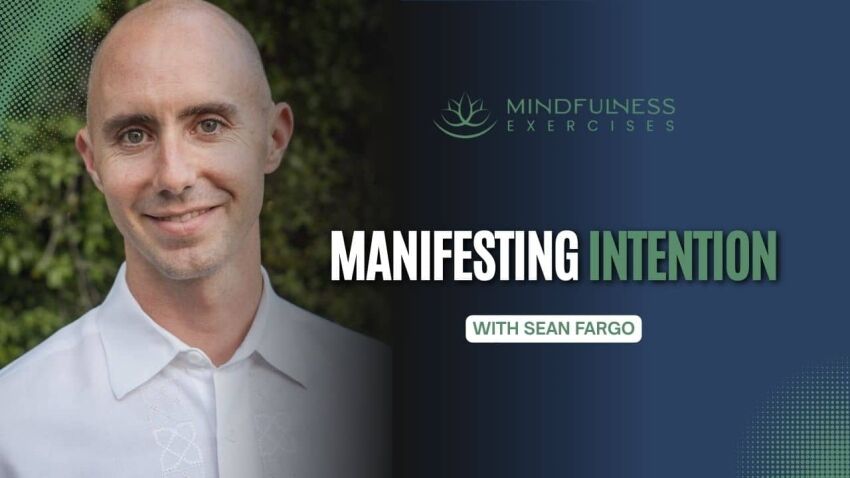
In a culture that often celebrates urgency, choosing to take just one conscious breath can feel like reclaiming something essential. In this short but powerful episode of Mindfulness Exercises with Sean Fargo, titled “Manifesting Intention,” you’re guided through a simple, one-minute intention-setting practice that helps you consciously choose how you want to show up in your day.
Not perfectly.
Not performatively.
But intentionally.
This practice isn’t about controlling outcomes. It’s about planting a seed — one of kindness, clarity, and presence — and allowing that seed to gently influence your thoughts, conversations, and actions.
Sponsored by our Mindfulness Meditation Teacher Certification Program
certify.mindfulnessexercises.com
Episode Overview:
Episodes include:
- Practical mindfulness and meditation teachings
- Conversations with respected meditation teachers, clinicians, authors, and researchers
- Real-world insights for therapists, coaches, yoga teachers, and educators
- Gentle reflections for navigating stress, grief, burnout, and change
- A guided, one-minute intention-setting practice
- How to consciously choose how you want to show up
- The difference between intention and expectation
- A gentle reset for busy, stressful, or emotionally demanding days
This Episode Is Perfect For:
- Morning grounding rituals
- Pre-meeting resets
- Therapists, coaches, educators, and caregivers
- Anyone navigating stress, anxiety, or burnout
- Deepening your mindfulness meditation for everyday life
Show Notes:
Why Intention Matters More Than We Think
Intention is often misunderstood as wishful thinking. But in mindfulness practice, intention is closer to orientation. It’s the direction we point our heart and attention.
When we don’t consciously set an intention, we tend to operate on habit:
- Reactivity instead of responsiveness
- Busyness instead of purpose
- Tension instead of presence
A one-minute intention-setting practice interrupts autopilot. It creates a micro-moment of awareness where we can ask:
- How do I want to show up today?
- What quality feels most needed right now?
- Can I bring even 1% more kindness into my interactions?
That small shift changes the tone of everything that follows.
The Power of a 60-Second Reset
You don’t need a long meditation session to reset your nervous system. Sometimes, one breath — taken consciously — is enough to change your trajectory.
This guided practice is designed to be:
- Short enough to fit into any schedule
- Grounded enough to feel real
- Gentle enough for difficult days
It’s ideal for:
- First thing in the morning
- Before a meeting or client session
- Before walking through your front door after work
- Anytime stress begins to build
In just 60 seconds, you pause, breathe, and name a quality you want to embody — perhaps patience, steadiness, compassion, courage, or curiosity.
You’re not forcing yourself to feel it.
You’re simply choosing to remember it.
How to Practice Manifesting Intention
You can follow along with the podcast episode, or try this adapted version now:
- Pause.
Stop what you’re doing, even if only briefly. - Take one slow breath.
Feel the inhale. Feel the exhale. - Notice your body.
Are you tense? Rushed? Distracted? Just observe. - Choose your intention.
Ask yourself: How do I want to show up right now?
Let a word or phrase arise naturally. - Plant the seed.
Silently repeat your intention once. Not as pressure — but as possibility.
That’s it.
No perfection required.
No special posture.
No dramatic transformation.
Just a subtle reorientation toward care and awareness.
Intention vs. Expectation
It’s important to distinguish intention from expectation.
Expectation sounds like:
- “Today needs to go smoothly.”
- “I have to stay calm no matter what.”
- “This meeting must succeed.”
Intention sounds like:
- “May I meet whatever happens with steadiness.”
- “May I bring kindness to this conversation.”
- “May I listen deeply.”
Expectations tighten.
Intentions soften.
One creates pressure.
The other creates alignment.
When we manifest intention in this way, we’re not demanding a specific outcome. We’re cultivating a quality of presence that supports us — regardless of what unfolds.
For Therapists, Coaches, and Caregivers
If you work in a helping profession, this one-minute intention-setting practice can be transformative.
Before seeing a client, you might pause and set the intention:
- To listen without fixing.
- To trust the process.
- To remain grounded and compassionate.
Over time, these micro-practices shape not only your day — but your professional presence.
They reduce burnout by bringing you back to why you began this work in the first place.
Trauma-Sensitive and Accessible
One of the strengths of this practice is its accessibility.
For individuals navigating anxiety, grief, trauma, or chronic stress, long meditations can sometimes feel overwhelming. A brief, structured pause offers a sense of agency without requiring extended stillness.
Because the practice is:
- Short
- Choice-based
- Non-demanding
…it respects each person’s capacity in the moment.
Even choosing “My intention is simply to get through this hour” is valid. Intention meets you where you are.
The Science Behind Intention-Setting
Research in psychology and neuroscience suggests that intentional focus can influence perception, behavior, and emotional regulation.
When you name a quality — such as compassion or patience — you prime your brain’s attentional networks to notice opportunities to express that quality. In other words, you begin to see the day through the lens you’ve chosen.
This isn’t magical thinking.
It’s mindful conditioning.
Repeated small moments of intention build neural pathways that support:
- Greater emotional regulation
- Reduced reactivity
- Increased resilience
- Clearer decision-making
One minute, repeated daily, compounds over time.
When You Forget
You will forget your intention.
That’s part of the practice.
Mindfulness isn’t about maintaining perfect awareness. It’s about remembering — again and again — and beginning anew without judgment.
Each time you return to your intention, even hours later, you strengthen the muscle of awareness.
You’re not behind.
You’re practicing.
A Final Invitation
Before you move on from this page, pause.
Take one breath.
And ask yourself:
How do I want to show up for the rest of today?
Let that be enough.


