
Listen now


What if discipline wasn’t something we do to students—but a skill we help them build?
For many educators, school leaders, and caregivers, discipline has long lived in the space between two unsatisfying extremes: punishment that creates fear and compliance without growth, or permissiveness that avoids harm but abandons boundaries. In this episode of the Mindfulness Exercises Podcast, we explore a third path—one that is grounded, relational, and deeply human.
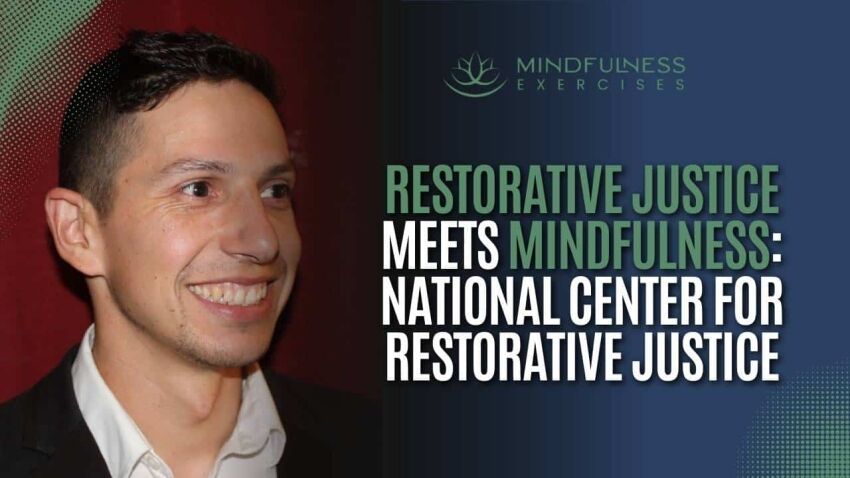
In a thoughtful conversation with Nicholas Bradford, founder of the National Center for Restorative Justice, we look at how mindfulness and restorative practices work together to turn everyday conflict into opportunities for accountability, dignity, and repair. From pre-K name-calling to incidents that shake an entire school community, Nicholas offers clear language and practical sequences that help adults respond wisely under pressure—without shaming kids or lowering expectations.
This approach doesn’t ask us to ignore harm. It asks us to meet it differently.
Sponsored by our Mindfulness Meditation Teacher Certification Program
certify.mindfulnessexercises.com
Episode Overview:
In This Episode, You’ll Learn:
- Why conflict is the gap between expectation and reality
- How mindfulness supports accountability under pressure
- The restorative sequence that avoids shame while maintaining boundaries
- Why “what were you trying to accomplish?” changes everything
- How meaningful repair helps students rebuild trust and dignity
- What reentry circles look like—and why they transform communities
- Why adults must go first when implementing restorative practices
- Training pathways that support sustainable school-wide change
Show Notes:
Reframing Conflict: The Gap Between Expectation and Reality
One of the most useful reframes Nicholas offers is deceptively simple:
Conflict is the gap between expectation and reality.
We expect safety, respect, and cooperation. Reality often delivers frustration, fear, impulsivity, and unmet needs. When we see conflict through this lens, it becomes easier to invite mindfulness into the heat of the moment—not as a calming technique alone, but as a way of seeing clearly.
Mindfulness helps both adults and students pause long enough to notice:
- What actually happened (without exaggeration or defensiveness)
- What expectations were present
- Where reality diverged from those expectations
This pause creates space for responsibility to emerge—rather than forcing it through punishment.
Staying Longer With “What Happened?”
In restorative justice, the first question isn’t “Why did you do it?” or “What’s your excuse?” Instead, it’s a grounded, present-moment inquiry:
What happened?
Nicholas explains why staying longer with this question matters. When students are invited to tell the story of what happened—without interruption, judgment, or immediate consequence—they begin to recognize impact. Not because they were told to feel bad, but because they were truly heard.
This mirrors mindfulness practice itself: staying with experience as it is, rather than rushing to fix, blame, or escape.
“What Were You Trying to Accomplish?”
Perhaps one of the most transformative questions in restorative practice is:
What were you trying to accomplish?
This question acknowledges a truth that traditional discipline often misses: behavior—even harmful behavior—usually points to a legitimate underlying need. Safety. Belonging. Respect. Power. Autonomy.
By naming the intention without excusing the harm, adults can:
- Validate the need
- Set clear boundaries around behavior
- Teach more skillful ways to meet that need in the future
This is accountability without humiliation—and it builds capacity instead of fear.
Building Empathy Through Impact: “Who Was Affected and How?”
Restorative justice places strong emphasis on understanding impact:
Who was impacted, and how?
This step shifts the focus away from rule-breaking and toward relationship repair. Students begin to see how their actions affected others—not as a lecture, but as a shared human reality.
Nicholas notes that this process often restores something deeper than compliance: status and dignity. Students move from being labeled as “the problem” to being recognized as someone capable of repair, contribution, and growth.
Repair That Actually Means Something
For significant harm, restorative justice doesn’t stop at apologies.
Repair must be active, meaningful, and proportional. This might include:
- Community work
- Mentorship or service
- Concrete contributions that rebuild trust
These actions allow students to rewrite their self-story—from “I’m a problem” to “I am a participant in this community.” Repair becomes a way back into belonging, rather than a sentence to endure.
Reentry Circles: Justice as Public Love
For students returning from suspension or expulsion, Nicholas describes reentry circles as one of the most powerful practices in restorative justice.
In these circles, students:
- Name what they did
- Share how they’re thinking differently now
- Articulate what they’re committed to repairing
Parents, teachers, and peers often witness something rare: accountability held in public, with compassion and clear boundaries. Nicholas describes this as justice as public love—truth, structure, and care working together.
And time and again, he emphasizes a key point for skeptics:
Experience changes minds faster than data.
Implementation Matters: Adults Go First
Restorative justice is not a script—it’s a culture.
Nicholas is clear that implementation works best when adults go first. Leaders model circles with staff. Teachers experience restorative processes themselves before facilitating them with students. This builds trust, skill, and shared language across the system.
The National Center for Restorative Justice offers multiple training pathways, including:
- Three-day intensives
- Facilitation add-ons
- Graduate-credit courses for educators and administrators
These structures help schools move beyond one-off practices toward durable, sustainable systems.
👉 Learn more at the National Center for Restorative Justice.
Why Mindfulness and Restorative Justice Belong Together
Mindfulness gives us the inner capacity to pause, notice, and respond rather than react. Restorative justice gives us the relational structure to turn that awareness into repair.
Together, they offer a practical, compassionate response to conflict—one that supports:
- School culture
- Educator wellbeing
- Youth agency
- Accountability without shame
This work matters not because it’s idealistic, but because it works—especially when things are hard.
A Question to Sit With
Where do expectations get in your way—and what kind of repair would move your community forward?
If this conversation resonated with you, consider sharing it with a colleague, subscribing to the podcast, or leaving a review. These are the conversations that quietly change culture—one pause, one repair, one human moment at a time.
