
Listen now


Happiness is one of those words we all use, but rarely pause to define. We say we want it, we wish it for others, and we often feel like we’re falling short of it. For many people, happiness can feel abstract or conditional—something that arrives only when circumstances finally line up or when life becomes less complicated.
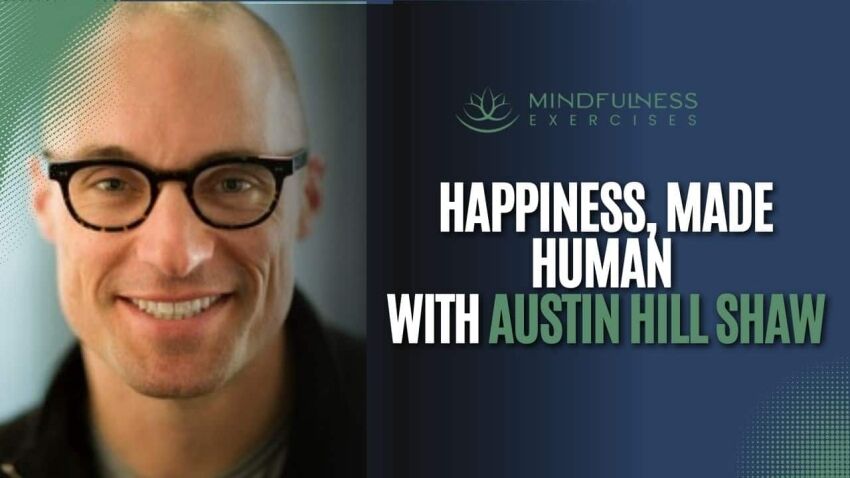
In this episode of the Mindfulness Exercises Podcast, we take a different approach. In conversation with Austin Hill Shaw, we explore happiness not as a fleeting emotional high, but as a deeply human experience—one that can be cultivated even in the middle of uncertainty, grief, or change.
Rather than chasing a mood, this conversation offers a simple, durable map for wellbeing built on three core human needs: connection, contribution, and meaning. Together, these pillars form a rhythm you can return to again and again—especially when life feels noisy or overwhelming.
What follows is a reflective companion to the episode, weaving together insights from the conversation with mindful practices you can carry into your daily life.
Sponsored by our Mindfulness Meditation Teacher Certification Program
certify.mindfulnessexercises.com
Episode Overview:
- Why happiness works better as a practice than a pursuit
- How connection brings us out of past and future thinking
- The role of contribution in feeling like we matter
- How to give generously without burning out
- Two forms of meaning: framework and mystery
- Inviting awe without forcing it
Key Takeaway: Happiness becomes more durable when it’s rooted in connection, contribution, and meaning—not perfect circumstances.
Show Notes:
Happiness as a Practice, Not a Destination
One of the central ideas in Happiness, Made Human is that happiness isn’t something we achieve once and then keep forever. It’s something we practice. It’s relational, contextual, and deeply embodied.
When happiness is treated as a destination, it often stays just out of reach. There’s always another goal, another benchmark, another version of ourselves we think we need to become. But when happiness is understood as a rhythm—something we return to through how we live, relate, and make meaning—it becomes far more accessible.
This is where the three pillars come in.
Pillar One: Connection
Connection is where happiness becomes real. It’s not just about social interaction or being around other people—it’s about relationship, presence, and belonging.
Connection With Yourself
The conversation begins with the most foundational relationship of all: the one you have with yourself. Many of us move through life in a constant state of internal pressure—judging, fixing, replaying the past, or rehearsing the future.
Our minds are excellent time travelers. They pull us backward into regret and forward into worry, often disconnecting us from the only place life is actually happening: the present moment.
Mindfulness offers a gentle return. Simple attention to the breath, the body, or the sensations of this moment helps soften self‑criticism and rebuild trust with yourself. This kind of connection doesn’t require perfection—it requires honesty and presence.
A simple practice:
- Pause and notice your breath without changing it
- Feel your feet on the ground or your body in the chair
- Ask yourself, What is it like to be me right now?
This small act of attention is a form of self‑connection.
Connection With Others
From there, connection expands outward—to loved ones, friends, and community. Genuine connection isn’t about constant availability or emotional intensity. It’s about showing up with care, listening deeply, and allowing yourself to be seen.
Even brief moments of presence—a thoughtful message, shared laughter, or quiet companionship—can strengthen the sense that you’re not navigating life alone.
Connection With the World Around You
Finally, connection includes our relationship with place and the natural world. Feeling part of something larger than yourself—your neighborhood, a forest trail, the changing sky—grounds happiness in belonging rather than achievement.
Nature doesn’t ask us to be productive or impressive. It simply invites us to notice.
Pillar Two: Contribution
If connection answers the question “Am I held?”, contribution answers “Do I matter?”
Contribution is the human desire to offer something meaningful—to use our strengths in service of real needs. This doesn’t require grand gestures or lifelong missions. In fact, the conversation emphasizes how small acts of contribution can change the shape of an entire day.
Matching Strengths to Needs
Contribution becomes sustainable when it’s aligned. When what you offer matches both your natural strengths and the needs in front of you, generosity feels enlivening rather than draining.
This could look like:
- Offering encouragement where you’re naturally empathetic
- Sharing knowledge you already have
- Helping in practical ways that fit your capacity
Protecting Contribution From Burnout
An important part of the discussion is the role of boundaries. Contribution without limits often leads to exhaustion or resentment. Mindful contribution respects pacing, seasonality, and rest.
Saying no at times isn’t a failure of generosity—it’s what allows generosity to last.
A reflective question:
What is one small, realistic way I can contribute today without overextending myself?
Pillar Three: Meaning
Meaning is perhaps the most nuanced pillar. It’s not something we can force or fully explain, yet it quietly shapes how life feels.
The conversation explores meaning in two complementary parts.
Meaning as a Framework
First, meaning can be a framework—a philosophy, spiritual path, or set of guiding principles that helps life make sense. This framework becomes especially important when circumstances are difficult or uncertain.
Meaning doesn’t eliminate pain, but it can help orient decisions, values, and priorities when the world feels loud or confusing.
Meaning as Mystery
The second aspect of meaning lives beyond language. These are the moments that stop us in our tracks:
- Birth and death
- Grief and love
- Awe in nature
- Music that cracks something open inside us
You can’t manufacture these moments, but you can make space for them. Slowing down, paying attention, and allowing yourself to be moved are all ways of inviting meaning without demanding it.
A Simple, Human Map for Wellbeing
By the end of the conversation, the model becomes beautifully clear:
- Connect with yourself, others, and the world
- Contribute in ways that are aligned and sustainable
- Cultivate meaning through both understanding and awe
This isn’t a checklist to complete—it’s a rhythm to return to.
On days when happiness feels far away, you don’t need to fix your entire life. You can ask a simpler question:
Which pillar needs a little attention right now?
Bringing It Into Your Life
If this conversation resonated with you, consider choosing one pillar to work with this week. Keep it simple. Let it be human.
And if you found this episode helpful, follow the podcast, share it with someone who could use a steadier map, and leave a review letting us know which pillar you’re focusing on next.
Happiness doesn’t have to be abstract. When it’s made human, it becomes something you can actually live.


