Listen now


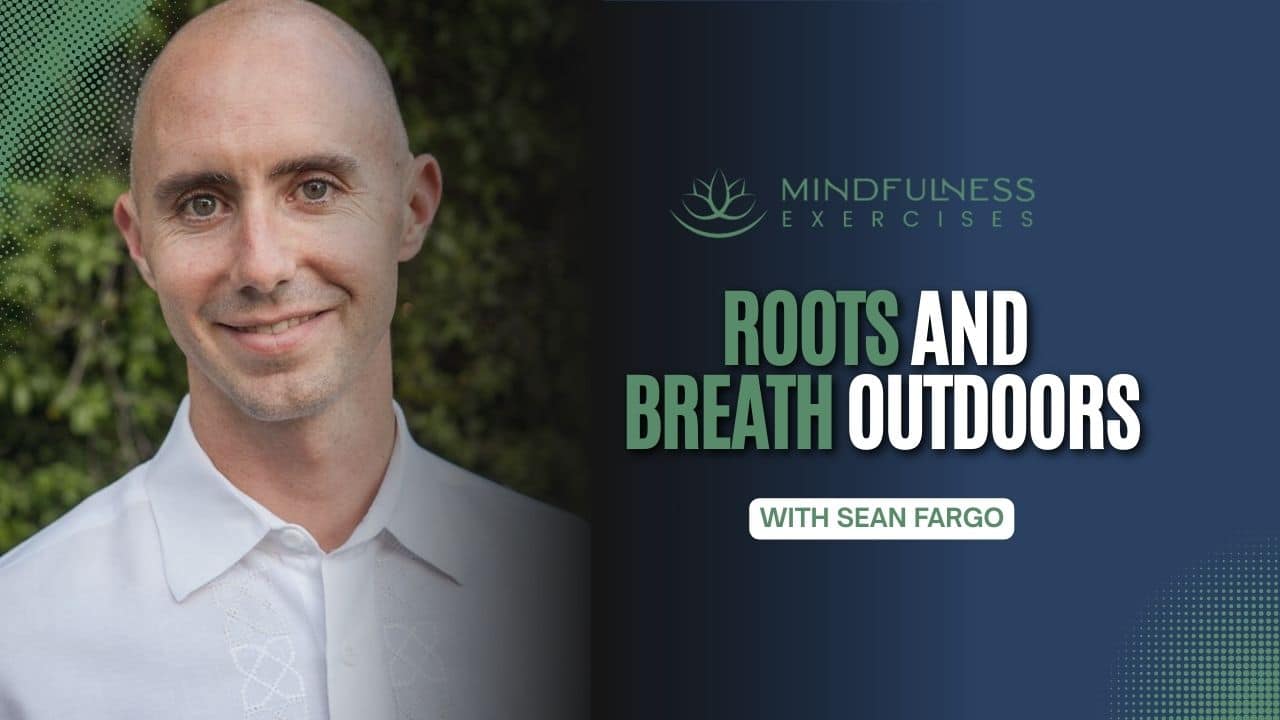
Sometimes mindfulness doesn’t begin on a cushion or in silence—but on a simple wooden bench beneath towering redwoods.
In this episode of Mindfulness Exercises, Sean Fargo invites us outside, tracing how years of monastic training ultimately distilled into something beautifully simple: sit at the base of a tree, feel the breath, and let nature lead the practice.
What unfolds is a grounded, accessible invitation to rediscover mindfulness where humans have always practiced it—outdoors, in direct relationship with the elements, the body, and the living world around us.
This conversation is especially resonant for anyone who feels stuck practicing indoors, distracted by screens, or unsure whether mindfulness can exist beyond controlled environments. The answer, as Sean gently shows, is that mindfulness not only survives outdoors—it thrives there.
Sponsored by our Mindfulness Meditation Teacher Certification Program
certify.mindfulnessexercises.com
Episode Overview:
Key Themes:
- Outdoor mindfulness practice
- Element-based awareness (earth, fire, air, water, space)
- Breath as an anchor in natural settings
- Walking meditation and sensory awareness
- Practicing in public without self-judgment
- Teaching mindfulness beyond indoor spaces
Key Takeaways:
- Nature naturally supports attention and presence
- Outdoor conditions are allies, not distractions
- Mindfulness becomes simpler and more embodied outside
- Practice can happen anywhere—no special setup required
Show Notes:
Why Practicing Mindfulness Outdoors Changes Everything
Practicing indoors often asks us to reduce stimulation. Outdoor mindfulness practice does the opposite—it teaches us how to relate skillfully to what’s already happening.
Fresh air, uneven ground, shifting light, distant sounds, and changing temperatures provide constant feedback. Instead of distractions, they become anchors for awareness.
Sean shares how practicing in Thai forests and later in his own Berkeley backyard revealed something essential:nature naturally supports attention.
When we sit outside, the mind doesn’t have to manufacture calm. The environment already invites it.
From Monastery to Backyard: A Practice That Travels
One of the most powerful insights from this conversation is how portable mindfulness becomes when rooted in nature.
You don’t need incense, perfect silence, or a formal meditation hall. You can practice:
- On a park bench
- At the base of a tree
- In your backyard
- On a trail or campground
- During a slow walk around your neighborhood
This simplicity lowers the barrier to practice and reminds us that mindfulness is not something we add to life—it’s something we remember within it.
An Element-Based Approach to Outdoor Mindfulness
To make outdoor practice tangible and approachable, Sean introduces an element-based framework rooted in direct experience.
Earth
Feel the honest feedback of the ground beneath you.Notice firmness, softness, balance, and gravity.
Whether seated or walking, earth teaches stability and presence without words.
Fire
Fire appears as warmth, sunlight, and energy in the body.Notice the sun on your skin, heat in the muscles, or the subtle warmth of the breath.
Air
Air becomes the breath itself and the breeze across the face.Feel inhalation and exhalation as movement, not something to control.
Water
Water shows up as saliva, sweat, tears, and fluidity in sensation.Notice change, flow, and impermanence moment to moment.
Space
Space holds everything—the openness around and within you.Listen for silence beneath sound. Feel the roominess of awareness.
This elemental lens transforms mindfulness from an abstract idea into something physical, alive, and immediate.
Simple Ways to Begin an Outdoor Mindfulness Practice Today
Outdoor mindfulness doesn’t need to be complicated. Sean offers gentle permission to start exactly where you are.
Option 1: Sitting Practice
- Sit on a bench, rock, or the ground
- Eyes open or closed
- Feel the breath moving naturally
- Notice sensations without fixing them
Option 2: Walking Meditation
- Walk slowly and deliberately
- Sense heel, ball, toe with each step
- Let sights and sounds pass without labeling
- Return again and again to sensation
Option 3: Sensory Awareness
- Feel wind on the skin
- Hear birds, traffic, or distant voices
- Notice light and shadow
- Stay with raw experience instead of commentary
There’s no need to block anything out. Everything belongs.
Working with Discomfort and Judgment Outdoors
One concern many people have is feeling self-conscious meditating in public. Sean addresses this directly—with warmth and realism.
People might notice. Thoughts might arise. Judgment—both internal and external—may appear.
That, too, is part of the practice.
Outdoor mindfulness builds resilience by teaching us to stay present with both pleasant and unpleasant conditions. We learn to notice judgment, feel it in the body, and gently return to sensation.
Nothing needs to be fixed. Nothing is wrong.
Teaching Mindfulness Beyond the Screen
For mindfulness teachers, this episode offers a powerful reimagining of how and where practice can happen.
Sean shares ways to guide students:
- Off Zoom and into parks
- Onto trails and campgrounds
- Into shared outdoor spaces
In nature, distractions don’t interrupt the practice—they become the practice.
Teaching outdoors often makes presence easier, not harder. Students relax. Attention widens. Awareness feels more natural.
Nature as a Steady Mentor
Perhaps the most profound takeaway from Roots and Breath Outdoors is the reminder that nature doesn’t demand anything from us.
It doesn’t judge. It doesn’t rush. It doesn’t ask us to be different.
When we show up and listen, nature teaches us how to be with life exactly as it is—changing, imperfect, and deeply alive.
A Gentle Invitation
If you’ve ever felt confined by how mindfulness is “supposed” to look, this conversation offers something freeing.
Sit under a tree. Feel the breath. Let the world in.
Outdoor mindfulness practice reminds us that awareness doesn’t live inside walls—it lives wherever we’re willing to arrive.
Nature is already waiting.