Listen now


What if the most meaningful moment in meditation isn’t when your attention is perfectly steady—but when you notice you’ve wandered and choose to return with kindness?
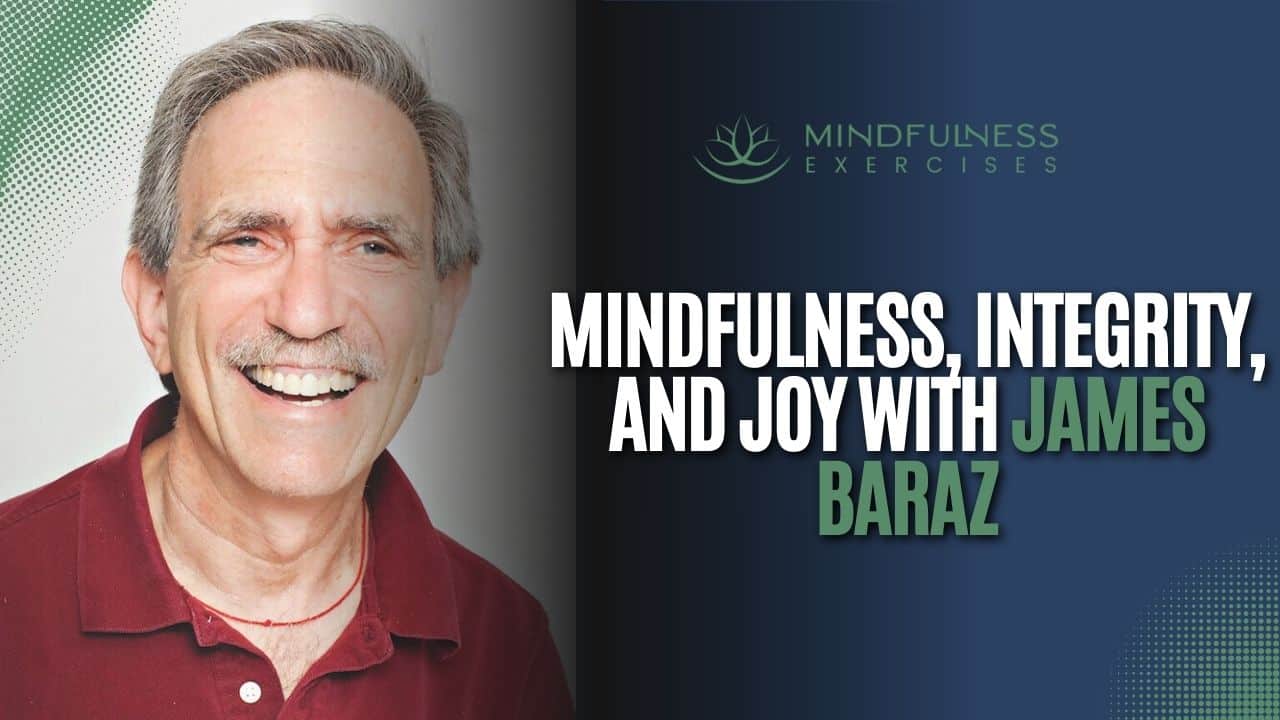
In this episode of Roots and Breath Outdoors, James Baraz invites us into that subtle but powerful pivot. The instant of noticing, the quality of the return, and the tone we bring back to the breath—these are the moments that quietly shape patience, forgiveness, and integrity both on and off the cushion.
This conversation is not about striving for a flawless meditation practice. It’s about learning how to come back—to presence, to values, and to what truly matters—with warmth and humility.
James Baraz, a beloved meditation teacher and co-founder of Spirit Rock Meditation Center, brings decades of practice, teaching, and lived wisdom into this dialogue. With clarity and gentleness, he reminds us that mindfulness is not an escape from life, but a way of meeting it more honestly and joyfully.
Sponsored by our Mindfulness Meditation Teacher Certification Program
certify.mindfulnessexercises.com
Episode Overview:
- Why the kind return is the heart of meditation
- How patience and forgiveness are trained on the cushion
- The role of silence in deepening insight
- James Baraz’s early training with Joseph Goldstein and Ram Dass
- Two guiding rules that dissolve imposter syndrome
- Teaching mindfulness with humility and integrity
- How to teach secular mindfulness without losing ethical depth
- Mindfulness as a gateway to social and personal transformation
- An intention practice to fuel joy and purpose
- Why turning toward the light matters—especially now
Show Notes:
The Power of the Kind Return
In meditation, the mind will wander. That’s not a flaw—it’s a feature of being human. James emphasizes that the real training happens not in sustained concentration, but in the moment we recognize distraction and choose to return without judgment.
That choice—again and again—rewires how we meet mistakes, discomfort, and uncertainty in daily life. Each kind return strengthens patience. Each gentle acknowledgment dissolves self-criticism. Over time, this simple act builds steadiness and trust in ourselves.
Mindfulness, in this sense, becomes relational. It teaches us how to be with ourselves as we are, rather than as we think we should be.
Why Silence Matters in Practice
Another thread woven throughout the conversation is the value of real silence. James speaks to the importance of allowing space—especially in guided meditation—for insight to arise naturally.
Too much instruction can crowd out the practitioner’s own wisdom. Too little can leave them adrift. The art of teaching mindfulness, James suggests, is learning how to “read the room”—to sense when guidance is supportive and when silence is more nourishing.
Silence isn’t empty. It’s where understanding deepens, where the nervous system settles, and where we learn to trust our own direct experience.
A Path Shaped by Humility
James reflects on his early years of practice, including retreats with Joseph Goldstein and time spent with Ram Dass. Rather than presenting these experiences as credentials, he frames them as moments of learning—often marked by uncertainty and not knowing.
Two deceptively simple rules shaped his teaching path:
- Say “I don’t know” when you don’t know.
- Don’t be afraid to look foolish.
These principles dissolve both imposter syndrome and inflated self-image. They create space for authenticity—for teachers and students alike—to meet each other as fellow human beings walking the path.
Integrity, James reminds us, is not about perfection. It’s about honesty, alignment, and humility.
Teaching Mindfulness in a Secular World
As mindfulness enters schools, workplaces, healthcare, and public spaces, James speaks candidly about the responsibility that comes with secular teaching.
Effective instruction means speaking in people’s own idiom. It may require avoiding spiritual “trigger words” without diluting the heart of the practice. Mindfulness can be taught in accessible language while still being rooted in ethics, compassion, and care.
Ethics, James emphasizes, are not optional. They are the foundation that calms the mind and builds trust—within ourselves and in the communities we serve. Without integrity, mindfulness becomes hollow. With it, practice becomes transformative.
Mindfulness as a Gateway, Not a Finish Line
The conversation naturally widens to include the world we live in—climate crisis, social inequity, and collective fear. James offers a grounded perspective: mindfulness alone won’t fix everything, but it is a powerful gateway.
When people embody calm and care, classrooms quiet. Teams soften. Communities begin to shift.
Mindfulness trains us to respond rather than react, to meet fear with consciousness, and to act from values rather than overwhelm. It reconnects us to our shared humanity at a time when disconnection is easy.
An Intention Practice for Joy and Purpose
James offers a simple intention practice to anchor daily life:
Before practice—or before entering a difficult moment—pause and ask:What intention will guide my next step?
Not as a demand, but as a gentle orientation toward kindness, clarity, or courage.
Over time, intentions shape behavior. Behavior shapes character. And character shapes the world we help create.
Transformation is real, James reminds us. The brain is malleable. We can rewire toward generosity, compassion, and steadiness. There will be sorrow. There will be beauty. Both belong.
The invitation is to keep turning toward the light—and to let your light help others see.
A Closing Invitation
If this conversation stirred something in you, consider sharing it with a friend—especially one who teaches, leads, or cares deeply about mindful living. Subscribe for more grounded practice tools, and leave a review to help others find the show.
And as you move into your next moment—on the cushion or in daily life—pause and ask yourself:
What intention will guide your next step?
Sometimes, that gentle question is enough to bring us home.