
TuneIn
Shame is the uncomfortable feeling we face having done something we don’t feel good about. Unlike regret, the mindful acknowledgment of a mistake, shame has a quality of self-judgment to it. And whereas guilt is focused on the action, shame is directed to our self as a whole. This can make it challenging to address and compassionately let go of our shame.
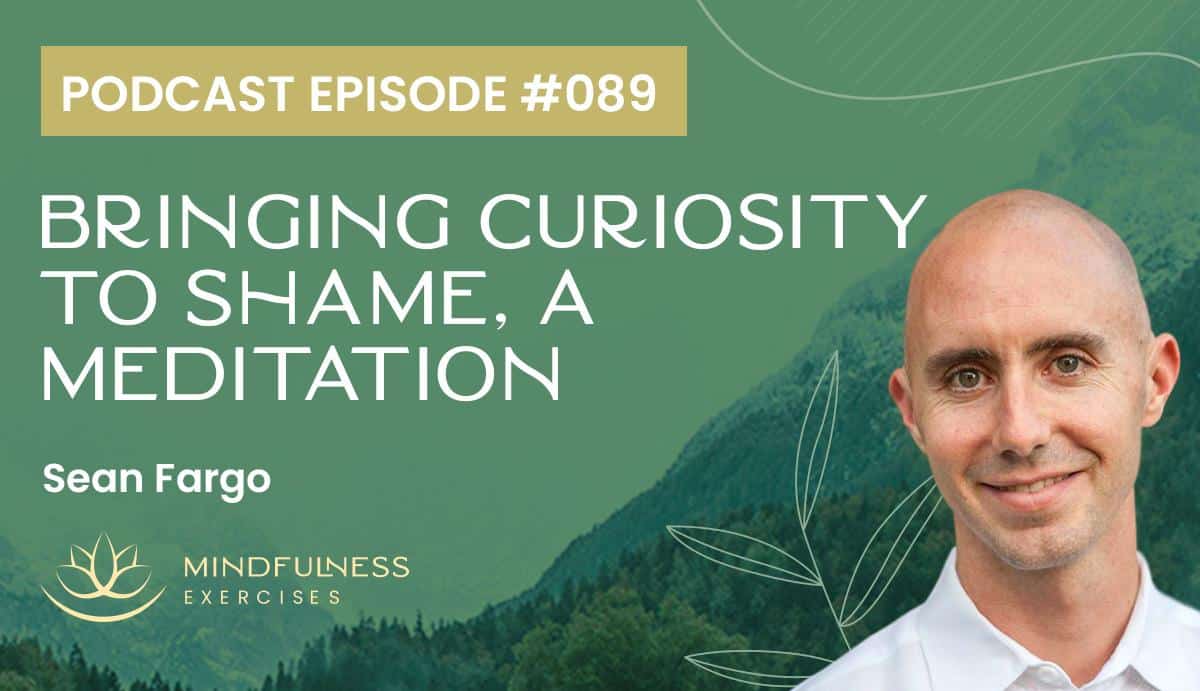
In this meditation, Sean Fargo guides listeners to recall a mild source of shame, notice any self-judgment, and bring kind, caring curiosity to how the shame feels in the body. He suggests pausing the judgment for a moment so the experience itself can be explored.
Listen in a safe, quiet place where you can be relatively free from distraction. Practice with eyes opened or closed, in a posture that balances comfort with alertness. May this meditation be of benefit to you in your mindfulness practice.
Sponsored by the Mindfulness Meditation Teacher Certification MindfulnessExercises.com/Certification
Shame is an uncomfortable emotion that carries within it self-criticism and self-judgment. The negative valuation of not just our actions, but our complete self, can make it challenging to move past shame, as simply acknowledging its presence may feel painful. However, mindfully, compassionately, and courageously facing our shame can be a first step toward letting it go.
When we avoid or resist facing our shame, it can linger. Long-held shame is associated with stress and a low sense of self-worth, and for some people it may contribute to depression and other mental health difficulties.
Despite the consequences of attaching to shame, each brief moment of shame carries within it a seed of self-awareness: the recognition that we’ve done something we don’t feel good about. Shame is not all bad, as long as we can develop a healthy relationship to it.
Mindfulness researcher and meditation teacher Chris Germer describes working with shame as a 3-part process. The first step is to become aware that we are experiencing shame. In this meditation, Sean Fargo guides that awareness through kind and caring curiosity about shame. Exploring what shame feels like in the body may begin to create space around it and soften our identification with it.
Having established some space between ‘me’ and ‘my shame,’ we can then bring compassion to what we are feeling. Germer describes self-compassion as the opposite of shame. The components of shame include self-judgment, isolation and overidentification. Their opposites, self-kindness, recognition of our common humanity and mindfulness or non-identification, are the qualities of self-compassion.
As you bring kind curiosity to your shame, exploring shame with a warm, open mind, apply this same gentleness to any pain that may arise in the process. Germer describes this escaping, uncomfortable energy as backdraft. It is the pain that runs out as love runs in, a term borrowed from firefighters.
To feel safe in our meditation practice and avoid overwhelming backdraft, we might choose to work with a mild source of shame. During the meditation, as we are present for the practice, another part of our mind is tasked with monitoring our reaction. If at any point we feel as though we have left our window of tolerance, we can meet this too, with kindness and compassion. It’s perfectly ok to pause to get grounded again, or to even shelve the practice and come back to it later.
Learn more about shame and how to work with it with these additional free mindfulness resources:
- Blog: Dr. Gabor Maté on Healthy Ways to Cope With Difficult Emotions Through Mindfulness
- Podcast: Overcoming Porn Addiction with Mindfulness, with Jeremy Lipkowitz and Sean Fargo
- Video: What Is Shame?, with Chris Germer
- Video: Three parts to working with shame, with Chris Germer
- Video: Self-Compassion Break For Shame, with Chris Germer
- Video: Research on Shame, with Chris Germer
- Video: Self-Compassion is the Opposite of Shame, with Chris Germer
- Video: Exploring Mindfulness, Self-Compassion and Shame, with Sean Fargo
- Video: Processing Regret, with Sara-Mai Conway
- Meditation Script: Learn to Let Go With a Meditation for Worry

About Sean Fargo:
Sean Fargo is a former Buddhist monk who founded Mindfulness Exercises and leads the Mindfulness Meditation Teacher Certification.