
Listen now


We are not suffering from a lack of information.
We are drowning in it.
Podcasts, reels, AI-generated insights, productivity hacks, self-help books, meditation apps — there is more content available than at any other time in human history. And yet, something feels increasingly absent.
People don’t want more content.
They crave presence.
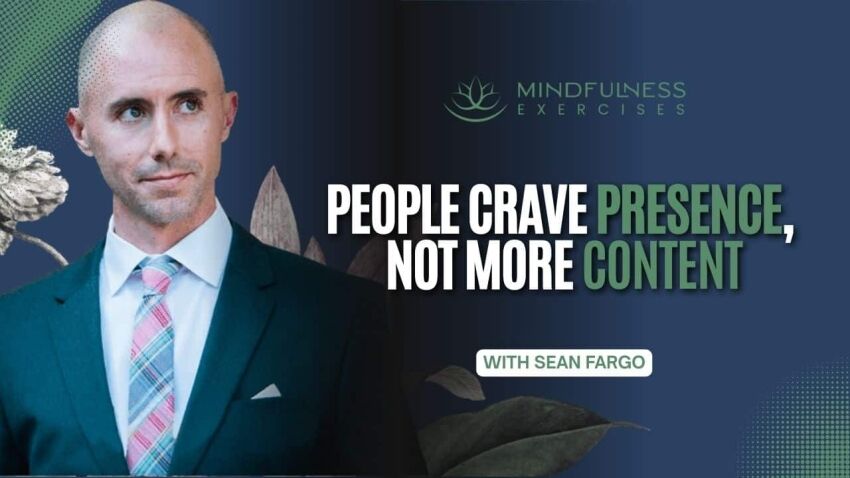
In this episode of the Mindfulness Exercises podcast, we explore why human-led mindfulness is not only still relevant — it may be more essential than ever. Through stories, research signals, and practical practices, we unpack what embodiment really means and why it transforms mindfulness from an abstract idea into a lived, relational experience.
Sponsored by our Mindfulness Meditation Teacher Certification Program
certify.mindfulnessexercises.com
Episode Overview:
In This Episode, We Explore:
- The rising demand for human-led mindfulness experiences
- Why embodiment transforms abstract concepts into lived practice
- Loneliness trends and global mental health signals
- The contrast between AI abundance and embodied connection
- Co-regulation in families and community spaces
- Integrating mindfulness with yoga and healing arts
- Practical breath tools for busy, overstimulated days
Key Takeaway:
In a world overflowing with information, the rarest and most valuable resource is regulated, embodied human presence.
Show Notes:
The Rising Demand for Human-Led Mindfulness
Despite the explosion of digital resources, there is a growing desire for in-person retreats, live Zoom sessions, embodied workshops, and teachers who can sit in the room — or at least on the screen — and feel real.
Why?
Because mindfulness is not just cognitive. It is relational.
You can read about breathing.
You can watch a video about nervous system regulation.
You can ask AI for a script.
But something shifts when a teacher breathes with you.
When someone’s voice slows naturally.
When their body language softens.
When they respond to your hesitation in real time.
That’s presence. And presence cannot be mass-produced.
From Head Knowledge to Embodied Awareness
Much of modern self-development lives in the head. We consume insights. We understand concepts. We nod along.
But embodiment asks something different.
It invites:
- Awareness of the breath in the belly
- A softening of the jaw
- The feeling of feet on the ground
- A hand placed gently on the heart
Embodied mindfulness moves from theory into sensation.
Instead of thinking about calm, you begin to feel calm. Instead of analyzing anxiety, you sense where it lives in your body. This is the difference between information and integration.
Human teachers naturally model this integration. Their tone, posture, pacing, and nervous system state become cues for your own regulation. This is co-regulation — a biological process where one nervous system helps steady another.
Apps can guide.
But humans transmit.
Loneliness, Paid Companionship, and Global Signals
Around the world, loneliness is rising. In several countries, people are even hiring companions — sometimes referred to as “human walkers” — simply to have someone to walk beside them.
That fact alone tells a powerful story.
In 2023, the World Health Organization identified loneliness and social isolation as growing public health concerns. The United Nations has also elevated mental health as a global priority.
These aren’t small signals.
They reflect a deeper truth: humans are wired for connection. Our nervous systems evolved in tribes, families, and shared physical spaces — not in isolation behind screens.
Content can inform us.
Only presence can nourish us.
AI Abundance vs. Embodied Connection
We are entering an age of AI abundance. Content is now infinite, immediate, and personalized. That is not inherently bad. Technology can support learning, access, and growth.
But abundance does not equal intimacy.
A guided meditation written by AI may be technically sound. But a teacher who pauses because they sense you are holding back tears? That’s different.
Embodied connection includes:
- Micro facial expressions
- Subtle tone shifts
- Responsive pacing
- Energetic attunement
These are not easily replicated.
As content multiplies, presence becomes rarer — and therefore more valuable.
The Power of Personal Story
Stories anchor mindfulness in real life.When a teacher shares how they navigated burnout…
Or how they used breathwork during grief…
Or how they learned patience through parenting…Practice becomes relatable.Stories communicate vulnerability.
Vulnerability builds trust. Trust allows the nervous system to soften.This is why live teaching still matters. It carries warmth, humanity, and imperfection — all qualities that help students feel safe enough to practice honestly.
Family Co-Regulation: The “Cuddle Couch” Image
Consider a simple image: a family gathered on a couch after a long day. One child leans against a parent. Another curls up nearby. No one is giving a lecture on nervous system theory.
Yet regulation is happening.
Breathing synchronizes. Shoulders soften. Energy settles.
This is co-regulation in action.
Mindfulness teachers — at their best — recreate this “cuddle couch” effect in group spaces. Not through physical touch, but through grounded presence. Through steadiness. Through embodied calm.
And in a loud, overstimulated world, this steadiness feels like relief.
Integrating Mindfulness with Yoga and Healing Arts
The growing popularity of yoga therapy, somatic healing, and integrative wellness practices reflects this same longing.
People want experiences that involve:
- Breath
- Movement
- Touch (where appropriate)
- Energy awareness
- Emotional processing
Mindfulness is increasingly merging with these embodied modalities because practice needs to be felt — not just understood.
When breath meets movement…
When awareness meets sensation…
When attention meets compassion…
Healing deepens.
Simple Breath Practices for Busy, Loud Days
Presence doesn’t require a retreat center or a silent monastery.
Here are two simple practices you can use anytime:
1. The 3-Part Arrival Breath
- Inhale slowly through the nose.
- Feel the breath expand the belly.
- Pause gently.
- Exhale longer than the inhale.
- Repeat three times.
As you breathe, notice:
- The temperature of the air.
- The movement of your ribs.
- The feeling of your feet on the ground.
2. Head, Heart, Body Check-In
Pause and ask:
- What am I thinking? (Head)
- What am I feeling emotionally? (Heart)
- What sensations are present in my body? (Whole body)
No fixing. Just noticing.
Even 60 seconds of embodied awareness can shift your nervous system from urgency to steadiness.
Why This Matters Now
The modern world rewards speed, output, and visibility. But healing requires slowness, receptivity, and depth.
As digital content expands, the human nervous system is quietly asking for something ancient:
- Eye contact
- Breath pacing
- Gentle pauses
- Real listening
People crave presence not more content.
And for mindfulness teachers, facilitators, and practitioners, this is not discouraging news. It is affirming. Your embodiment — your grounded, regulated, imperfect humanity — is the offering.
Not just your scripts.
Not just your knowledge.
Not just your content calendar.
Your presence.
