
Listen now


What does a monastery, a couch, a non-alcoholic hazy IPA, and the Environmental Protection Agency have in common?
At first glance, not much. But when you listen closely—when you slow down enough to hear the deeper story—they form a powerful arc about attention, compassion, and what it means to serve a world under pressure.
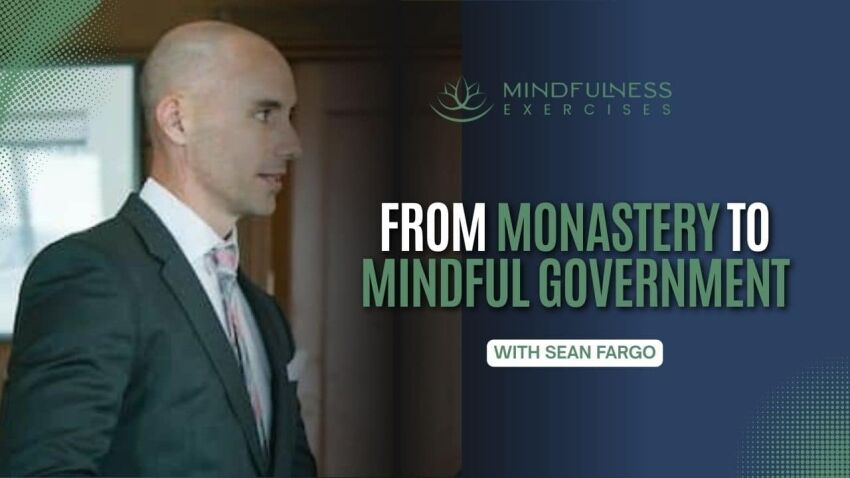
In this episode of the Mindfulness Exercises Podcast, From Monastery to Mindful Government, we explore a journey that begins with leaving monastic life and unfolds into something unexpectedly impactful: helping seed mindfulness inside some of the most complex institutions in modern society, including federal government agencies.
This is not a story about mindfulness as a wellness perk or productivity hack. It’s a grounded, honest look at mindfulness as a skills-based response to stress, climate anxiety, and high-stakes decision-making—and why it may be one of the most practical tools we have for creating more humane systems of leadership and public service.
Sponsored by our Mindfulness Meditation Teacher Certification Program
certify.mindfulnessexercises.com
Episode Overview:
- Leaving monastic life and returning to family and service
- Why mindfulness is a skills-based response—not a workplace perk
- Bringing mindfulness into healthcare and government institutions
- EPA leaders enrolling in mindfulness certification
- Mindfulness and climate anxiety in high-stakes decision-making
- Attention as a shared and trainable resource
- Training trainers to scale impact with integrity
- How workplace mindfulness shifts habits at home
- A more compassionate model for leadership and public service
Key Takeaway: Mindfulness belongs wherever people face complexity, pressure, and responsibility—especially inside institutions shaping our collective future.
Show Notes:
Leaving the Monastery: When Practice Meets Real Life
The decision to leave a monastery is rarely about a single reason. In this story, it wasn’t just about tacos or rules—though both made an appearance. It was about something far more human: the longing to hug family again, to sit on a couch, to re-enter the messy, beautiful complexity of everyday life.
Monastic practice offers depth, structure, and profound stillness. But there comes a moment for many practitioners when the call shifts—from stepping away from the world to stepping fully back into it.
That call, in this case, was to serve a world increasingly on edge.
What followed was not a rejection of contemplative life, but an evolution of it—bringing the clarity and discipline of mindfulness into spaces where it’s needed most: healthcare systems, leadership training, and eventually, government agencies navigating enormous responsibility under constant pressure.
Why Mindfulness Belongs Inside Complex Institutions
Mindfulness in the workplace is often misunderstood. It’s sometimes framed as a perk—something nice to offer employees alongside yoga mats and wellness newsletters.
But as this conversation makes clear, mindfulness works best when it’s treated not as a luxury, but as a trainable skill—especially inside high-stakes environments.
In institutions like the Environmental Protection Agency, decisions are not abstract. They affect ecosystems, communities, public health, and future generations. Stress levels are high. Climate anxiety is real. Communication breakdowns can have lasting consequences.
Mindfulness, in this context, becomes a form of operational resilience.
Leaders who participated in the mindfulness certification discussed in this episode didn’t come looking for stress relief alone. They came because they needed tools to:
- Stay present during complex policy discussions
- Regulate nervous systems under pressure
- Communicate more clearly across departments
- Make values-aligned decisions in uncertain conditions
The science supports this approach. Mindfulness training has been shown to reduce stress and anxiety, improve emotional regulation, and strengthen focus—benefits that translate directly into better leadership and collaboration.
From One Leader to Many: How Mindfulness Spreads Inside Agencies
One of the most compelling themes in this episode is how mindfulness naturally spreads when it’s practiced with integrity.
EPA leaders who enrolled in the certification didn’t keep it to themselves. They invited colleagues. They shared practices. They noticed subtle but meaningful shifts in meetings—short pauses before reacting, clearer listening, more grounded conversations.
This is how cultural change actually happens inside institutions: not through mandates, but through lived experience.
The conversation explores what a mindful federal initiative could look like across agencies such as:
- The Forest Service
- Housing and Urban Development
- Healthcare systems
- Even the military
Rather than imposing a single model, mindfulness becomes adaptable—meeting each context with respect for its mission and constraints.
Attention as a Shared Resource
One powerful idea that emerges in this discussion is the concept of attention as a shared resource.
In meetings, policies, and public service work, attention shapes outcomes. When attention is scattered or reactive, decisions suffer. When attention is steady and embodied, something else becomes possible: nuance, empathy, and wiser action.
Short mindfulness practices—sometimes just a few minutes—can change the tone of a meeting. They can shift a policy conversation from adversarial to collaborative. They can help someone transition from a difficult workday to a more present homecoming.
These small moments add up.
Training the Trainers: Scaling Without Losing Integrity
Scaling mindfulness often raises a critical concern: how do you expand reach without diluting depth?
The approach described in this episode centers on training trainers—equipping leaders not just to practice mindfulness themselves, but to teach it skillfully and ethically within their own organizations.
This multiplier effect allows mindfulness to grow organically while maintaining its core values: compassion, non-judgment, and grounded presence.
It’s not about branding mindfulness or forcing it into every space. It’s about offering tools that people can adapt, embody, and share in ways that feel authentic to their roles.
When Workplace Mindfulness Comes Home
One of the quieter, but most meaningful insights from this conversation is how mindfulness at work inevitably spills into life at home.
Participants noticed changes in:
- How they spoke to loved ones
- What they consumed—food, media, habits
- How they showed up after work, especially during stress
Mindfulness doesn’t stay contained within an office or agency. When practiced sincerely, it reshapes relationships, consumption patterns, and the way we engage with the world.
This is where mindfulness becomes more than a professional tool—it becomes a way of living with greater care and awareness.
A More Humane Vision of Public Service
At its heart, From Monastery to Mindful Government is a story of hope—grounded, realistic hope.
It doesn’t promise that mindfulness will solve every institutional challenge. But it does show what becomes possible when people inside systems are given the skills to pause, listen, and respond rather than react.
For anyone who cares about mental health, leadership, climate resilience, or the future of public service, this conversation offers both practical insight and reassurance: meaningful change doesn’t always start at the top. Sometimes, it starts with a breath before a meeting—or a moment of presence at the end of a long day.
