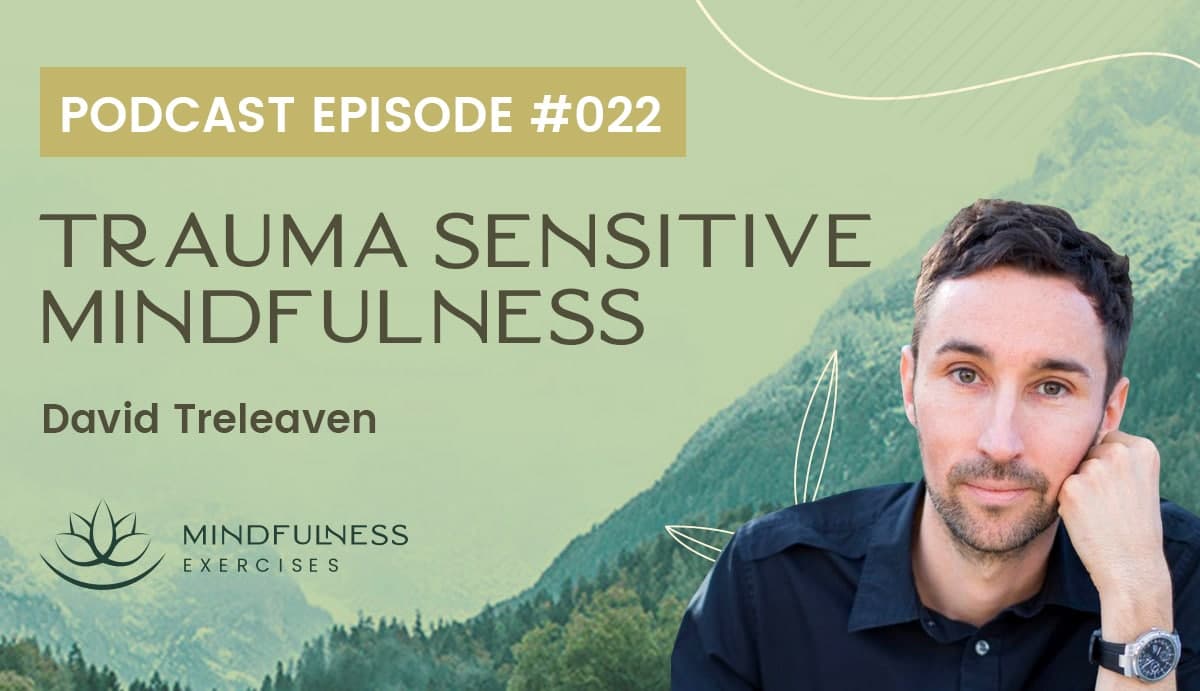
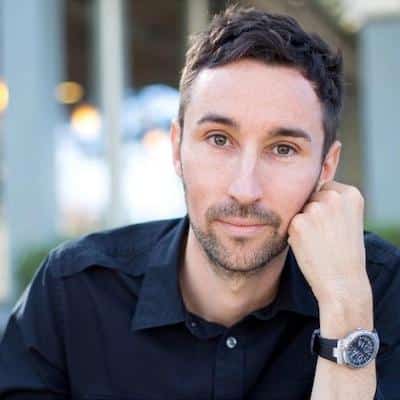
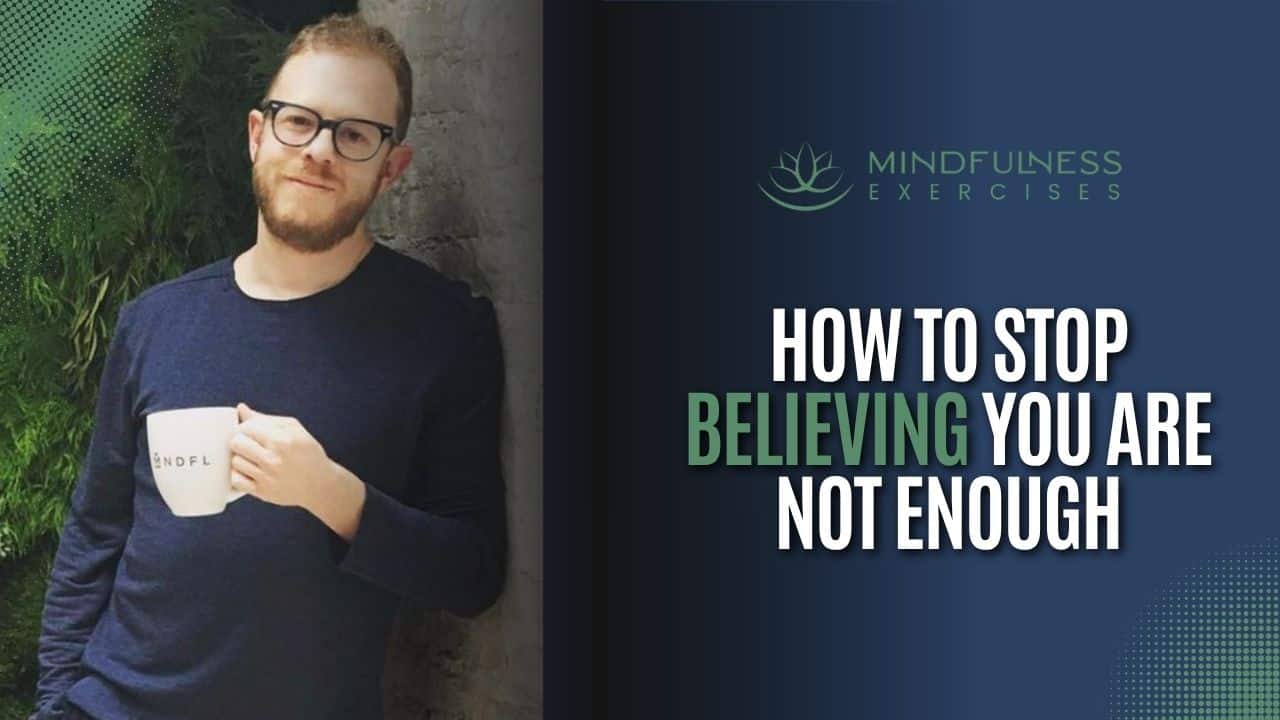
Speaker 1 · 0:03It's a pleasure to welcome everyone today. Today we have the pleasure of welcoming David Trelevin, who has made some big waves recently in the mindfulness world. He published a book that I recommend to everyone called Trauma Sensitive Mindfulness. He has made significant contributions to mindfulness teachers around the world, encouraging the sensitivity to trauma. For a long time, required reading around mindfulness and trauma used to be the book Waking the Tiger, which I recommend to a lot of people. And now we have another addition to this training from David Trilevin. And I think it's helpful to note that this isn't necessarily trauma-focused mindfulness, it's trauma-sensitive mindfulness. And so a lot of us as mindfulness teachers, you know, need to be sensitive to the possibility of trauma because trauma is prevalent. There's many kinds of trauma, but it's important that we know how to be sensitive to trauma as we help people in the various contexts of the work that we're in, whether we're in business, healthcare, education, coaching. David, thank you so much for being here. I really uh appreciate your time today.
Speaker 2 · 1:40I'll say a couple things to set some scaffolding here. This it can be somewhat evocative, I feel like, to be having a conversation about trauma. I will not be going into a lot of details about traumatic stories. But I think any conversation, even somewhat cognitive, about trauma can be evocative given the pressures that we're all facing and what you're all holding in your different work. So again, please be self-responsive. Any point you need a break, please take it. But as a way to begin here and acknowledging that each of us will be coming to this conversation from many different locations. Some of you might work daily with trauma as a clinician, or you might be experiencing trauma yourself. Wherever you're coming from, it's welcome. I invite you to think of or reflect on two different people and two different paths. These are hypothetical. And both of these people are experiencing symptoms of post-traumatic stress. And they both lived through an event that left them feeling profoundly unsafe in their bodies and dysregulated. And they came to meditation practice with some of the promise of maybe some healing of their pain and suffering. The first person experiences tremendous benefit from meditation practice. They feel empowered to be turning their attention towards their body. They end up feeling more able to regulate their emotions more skillfully. The traumatic reminders that were in, both the sensations and also intrusive thoughts, have subsided somewhat. It supports them in their process of trauma recovery over time. Then imagine this other person who's coming to practice and has really quite the opposite experience, where pretty close in their first meditation, they connect to what I'll call traumatic stimuli. That could be, again, dysregulating sensations, intrusive memories or thoughts. But you know, they turn their attention inward and they find themselves quite overwhelmed. They try their best to stick with practice. But what ends up happening is by kind of applying basic instructions, they end up feeling overwhelmed, associated, and a little bit worse for wear. They approach their teacher, and the teacher who's not trained in trauma basically says, if you stick with it, this will untangle for you. So I encourage you to just go back to the cushion. And the person does. And despite their best effort, it's not working. And so they end up feeling both dysregulated, but also somewhat ashamed. It's like they bought the best of intentions to practice. And even then they couldn't have a positive experience. And even meditation caused trouble. This is what I've been studying really for the last, I guess, 15 years now. And kind of the core inquiry I'm interested in is what happened to the second person? Like, why did they have trouble in meditation? I want to unpack that. And then how do we have it that as many people as possible have positive experiences inside of contemplative practice or more like the first person? And in saying positive experiences, I don't just mean that people are coming to practice and it's great. Like, wow, it's so comfortable and easy. I'm of the mind that the practices that many of us, I imagine, are training in is to actually empower people to be with more and more difficulty. And there are some people that might end up feeling overwhelmed inside of practice. So, what would they need to not go down kind of a pitfall or a sinkhole in practice? And then how can we leverage practice towards trauma recovery and transformation? That's really what I'm down for and interested in. And just to be, you know, transparent with all of you about how I define mindfulness, I'd say a pretty traditional definition of mindfulness is sustained present moment attention. I love this quote. This is Joseph Goldstein, the ability to know what's happening when it's happening. And I conceptualize mindfulness as separate from something like compassion. I mean, we can train in compassion. Mindfulness is useful for that, but compassion is not necessarily baked in into mindfulness. You may disagree with that, but I just want you to know how I'm orienting to it here inside of this session. And then to me, one of the easiest ways to talk about trauma is this idea of the spectrum of trauma. And those of you that are clinicians or trauma professionals here, this will be familiar to you. But on the one end of the spectrum is stress and concelia. This is a definition of stress as the non-specific response of the body to any demand for change. So, in this definition, stress is neither necessarily good nor bad. Today's a day, like a launch day for me, and there's exciting things happening, and it's stressful. It's like we can get good news and it can be stressful. So it's any demand for change on our nervous system. That is distinguished from traumatic stress, kind of the next level of the spectrum here. Here's a definition: traumatic stress is the response to shocking and emotionally overwhelming situations that may involve actual or threatened death, serious injury, or threat to physical integrity. Again, we could have a whole conversation here about ways that certain forms of violence and harm have not been included historically inside of the mainstream definition of trauma. Like, for example, sexual violence, often directed towards women, was not included in the Diagnostic Statistical Manual for a number of years until actually, I think it was the early 90s, until the third edition. So anyway, this is an important mirror for us, but that's a working definition that I'd have around trauma, distinguished from just everyday stress. Also want to mention, you know, I think it can get a little dangerous these days. Trauma is becoming more popular, being talked about in many ways. And I think there's a definition called concept creep or a term, where in the humanities a term will kind of creep across its boundaries. And trauma sometimes I think can be that can happen where someone says, Oh my gosh, that line at the grocery store was totally traumatic. And I want to be cautious with us here about, you know, keeping some integrity to the term based on that definition. Trauma can happen in a number of ways that I want to point out directly experiencing a traumatic event. Second is witnessing a traumatic event can also have a really big impact on us. Learning that an event occurred to a family member or a close friend, or also repeated exposure. So I have a cousin now who's a paramedic, and I've been talking to him about just what it means to be exposed often to trauma and the impact that can have. So the next place here on the spectrum is something known as post-traumatic stress. And this means any symptoms that carry on past the traumatic event. A couple of categories of post-traumatic stress, these are kind of like the main buckets, are intrusion, avoidance, and arousal. So intrusion are things like flashbacks, intrusive thoughts or memories. It could be also intrusive sensations, like at any point, you know, I live through trauma, and then all of a sudden I will have just this gripping in my stomach, or I'll become really hypervigilant and tight in my shoulders. So intrusion is one area of post-traumatic stress. Avoidance is another cluster of symptoms. Someone might avoid internal reminders of a trauma. That can be like my stomach clenching. I might just habitually dissociate and avoid that feeling. That can also be avoiding certain people, certain street corners, certain geographical areas. Again, all of these are ways that we try to take care of our safety, but just want to acknowledge that around avoidance. I just want to put a pin in this too. Avoiding our inner world is a very common strategy, and meditation can run counter to that. And then finally, arousal and reactive symptoms. This is really the havoc that trauma can play on our nervous system. The metaphor that I use is this idea of our accelerator and break of our sympathetic and parasympathetic nervous system. Post-traumatic stress often involves slamming one of these pedals to the floor in an ongoing way, or at worst, both pedals are slammed to the ground at the same time. So you can just imagine here for yourself moments where it was like, whoa, I was just flooded with energy. It was too much, or a break was slammed and I was numb or shut down or dissociated. Finally, we have post-traumatic stress disorder or PTSD. Again, so we take all of these different symptom clusters, and what PTSD draws is a line in the sand and says, okay, well, if people meet this criteria for a period of at least one month, then they could have a diagnosis of post-traumatic stress disorder. So that is the spectrum of trauma, or at least one view on it. And the reason that I wanted to start here is there is a wide spectrum here. And international research says that minimum 90% of us will live through a traumatic event in our lifetimes. I think if it is closer to 100%, you'd think that at some point we're experiencing some degree of whether it's traumatic loss, whether it's life or death, experience ourselves or with others. So it's, you know, to live through a trauma is very prevalent. However, not everyone that lives through trauma will necessarily develop symptoms of post-traumatic stress. So then if you go to the other end of the spectrum, research tells us that about 3.5% of the population will experience PCSD at any given time. And what I wanted to highlight here is that in any room where you are offering meditation practice, to me, it's a safe bet that there will be someone there on the spectrum who may be struggling with trauma. And trauma-sensitive practice, which I'll define in a moment, it really has you entering into any teaching or any clinical work with the assumption that trauma is there, especially given COVID-19 and the impacts and the adversity that people are facing in different communities. It's a safe bet. But what would it mean for you to just assume that trauma is there and to not be surprised if someone came to you and they said, I'm experiencing flashbacks, et cetera, et cetera. And I'm saying that in no way to promote fear or to fear monger. It's actually to say if you're aware of trauma and you've done some work around it to become trained in trauma-informed practice, then you just have more tools and you'll be prepared. And it's nothing to be afraid of. And it's useful to expect that it will arise. I'm a Canadian and I don't like to make people uncomfortable. You know, I like to mostly like keep people happy. And so the first couple of times that I was giving instruction that I thought was trauma-informed, I was saying things like, in the next few breaths, you can open your eyes, or you can keep them closed, or you can have them downcast, or you can do whatever you want. It's that doesn't really, you know, I just tail off into these multiple caveats and there's no container there. Where's that spot of creating safety? But still, there is something profound about actually working with difficult material. So I have a lot to say about this, but the main thing I want to say is about exposure therapy. Some of you will know um Edna Foa and this very empirically grounded work of exposure therapy, which means that you are purposefully exposing people to traumatic stimuli, whether it's recounting their story or showing a particular image. And there is grounded research. It's actually one of the better studied PTSD treatment approaches, and it finds that people do quite well, but there's a very high dropout rate inside of this as well. And mindfulness and meditation has a degree of exposure. I think that's true because we are purposely turning our attention to our inner world. So you're to me getting right at that unique, dynamic place of both safety, but it's also unsafe. These practices are challenging. And where's the balance? And then how do we listen as teachers so carefully to know okay, a little left, a little right, and when we back off, when we move in? So, all to say, I'm not proposing avoidance. It's not about trying to just get away from what's hard. This is a definition that I like of trauma-sensitive practice. I'll apply it here to trauma-sensitive mindfulness. This comes from the National Center for Trauma Informed Care here in the US. It's a four R definition. And basically what it says here is any person or organization who is trauma sensitive is following these four R's. I think of it less like steps as more like four notes and a chord. You could play these all at the same time. So the first is realize. You're trauma sensitive if you've done work to realize how widespread trauma is, or to realize the widespread impacts of trauma. By virtue of you taking the time to be here today, you know, that to me is check that box. You're doing work. Great job. And this is ongoing. Trauma has intense biological, psychological, and social characteristics, and it's a lifelong path of learning. So that's the first R. And then the second is recognize. So, question for you is do you feel confident that you could recognize symptoms of trauma in a student or client that you're working with? That's really the question. Then the third point that builds on that is would you know how to respond? What's in your toolkit? And I imagine all of you, of course, you have tools. Maybe you do a grounding exercise, maybe you're trained in trauma. But the third one is how can you respond skillfully? The fourth is re-traumatization. So the informing principle of trauma-sensitive practice is first do no harm. Yeah, that we're making sure that people aren't spinning out and finding themselves a worse-for-ware inside of practice. So those are the four combined arts of trauma-sensitive practice. So if you apply this to mindfulness and meditation, if you're a meditation teacher, you've realized how widespread trauma is. You can recognize symptoms of trauma inside of mindfulness practice, which is not easy. You can respond effectively, and then you're always looking to avoid re-traumatization. That's basically what you're up to. Most of the people that I'm working with, their job is not to diagnose trauma or PTSD. Their job is just to be assessing is what I'm offering helping or not at a basic level. And so my encouragement is not to do a trauma assessment with someone and say, okay, is this traumatic or not? What I'd be most interested in is what's happening for that person or people during the practice, and then in the aftermath. So that evening or in the days following, what's the report back that you're getting? And then what modifications might you need in order to best support people? There's an important study called The Varieties of Contemplative Experience. This came from a group at Brown University, East Coast and Providence, who are studying the adverse effects of mindfulness meditation. The primary author of the study is Willoughby Britton and her partner Jared Lindall. This is a qualitative study that focused exclusively on people who had painful adverse experiences with trauma. So I want to be clear this was going out in search of people that had had dark night experiences. So Willoughby and I have been colleagues for a bunch of years now. We've taught together. And that study is available online. It's free at plus one. If you look it up and you want to check it out more. So a number of people who had had really intensive experiences ended up going to this place known as Cheetah House, which is a play on Bodhicitta. And Willoughby has a house there and actually became a center that people who are having more like spiritual emergencies were going to this center. And if you Google Cheetah House, that is actually a really amazing resource. This is where Willoughby put together all of their research from Brown and said, here's what we're learning and here's best practices. And it has practitioners from all over the world. These are people who are trained clinicians who can work with people around meditation-related difficulties. So there's a whole list of resources. It's a great, great site. But I just want to stress Willoughby talks a lot about the bell-shaped curve or the inverse U-shaped curve, where you know we have an upside-down U. And so we have all the mean and the people who mostly have pretty positive experiences of meditation. And then we have the people at the far ends of the U, the outliers who might have terrible experiences of meditation, might have a psychotic break, for example, or they might have an amazing opening experience. We don't know. In terms of how much it relates to trauma, it's an element of it, but I wouldn't say it's the primary focus. And there's a lot of people who are experiencing symptoms of schizophrenia. There's some really powerful stories inside of Willoughby's work around VC, the variety's containable experience. It's not all trauma, but trauma is a part of it. And Willoughby had a meeting through Mind and Life with the Dalai Lama, and it's online. If you Google Dalai Lama and Willoughby Britain, where she's bringing the research to him about the difficulties, and they have a fascinating dialogue. It's a very, very interesting 30-minute dialogue in case you want to geek out on it. It's pretty cool. And mindfulness, it sounds like the breath work can reveal trauma. I think it can show us places that we thought we might have had kind of under wraps or more healed. And then it's like, oh no, can I still serve people and how can I work? I got to do training with Bibette Rothschild. It was big room, almost all trauma therapists. And Babette said, I got a question. How many of you have like resolved your trauma in here? And like no one, you know, everyone was just like, oh yeah, we're still working our stuff. So for what it's worth, my opinion is any of us can be really effective practitioners and still be working through our trauma work. I actually think that makes you a more powerful practitioner. And the fact that it forces us to stay in our practice, because then I've had the experience where there's been a month or two where I'm out of my window of tolerance and I'm just like, I'm blown out and I'm having trouble holding people. And what it means to be live like us, that we're doing our healing work. I think that increases your authenticity. The question about whether to keep practicing is one that would be a longer conversation, but I just want to normalize the experience of people saying, I'm a person who works with trauma, I have my own trauma, and I need to work it as best as I can. And there might be times where I'm actually out of pocket. Like I actually just need some space from it. I would want to normalize that. And so if you're my practitioner and you're like, I know this, like I really know this place, then it just has me feel even safer. But yeah, I think it's so normal that we're all just working it. And that thing with Babette was a game changer for me, though. I was like, oh, we're all working it. We're all working it.
Speaker 1 · 22:25David, thank you so much for sharing all of this. I really appreciate you sending the slides. I'll make those available in the members area in the post on this session today. Obviously, this is a really important topic that I think all mindfulness teachers need some exposure to and some learning and practice with. And so I feel very fortunate that you've shared a lot of your wisdom today. I do encourage everyone here to go to David's website, sign up for some of his offerings, listen to his podcast. He has one of the coolest podcasts ever with some of the top mindfulness teachers. He has some wonderful courses. I can't recommend his work highly enough. He offers webinars for people. So, David, thank you so much for being here. I really uh appreciate your time. I appreciate your contributions to our understanding of mindfulness and how we can help heal ourselves and others with mindfulness in very safe, respectful ways. So I just truly can't thank you enough for your work and for your time today. Thank you for coming.