
Listen now


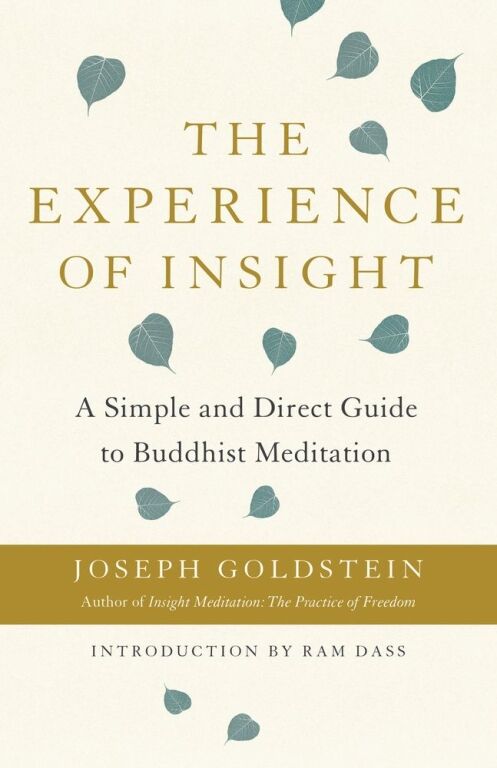
There’s a moment in deep practice when stillness begins to reveal something surprising—not a mystical revelation, but a practical truth: the mind can be trained. In the podcast From Silence to Seeing: Joseph Goldstein’s Training for the Mind, we open the pages of Joseph Goldstein’s classic book The Experience of Insight and translate retreat-tempered wisdom into everyday guidance.
This is mindfulness stripped of theatrics. No shortcuts, no glow, no spiritual costumes—just a clean, steady method for meeting each moment without the constant tug of wanting and resisting.
Below, you’ll find a warm and grounded walkthrough of the episode’s biggest insights, woven with show notes, reflections, and steps you can use in your own life today.
Sponsored by our Mindfulness Meditation Teacher Certification Program
certify.mindfulnessexercises.com
Episode Overview:
- Introduces Joseph Goldstein’s grounded, practical approach to training the mind, inspired by The Experience of Insight.
- Explores how mindfulness becomes clearer through simple, repeatable skills rather than mystical techniques.
- Breaks down the mental frameworks that stabilize practice, including the Three Refuges and basic ethical precepts.
- Explains bare attention as the core method of mindfulness—observing without judging, comparing, or predicting.
- Describes two breath anchors (abdomen and nostrils) and how they support clarity without controlling the breath.
- Extends mindfulness into movement, with step-by-step guidance on walking meditation and mindful eating.
- Highlights the importance of noticing intention—the small but powerful gap before action—where freedom arises.
- Covers the Noble Eightfold Path and how “right effort” mirrors the balance of a guitar string—not too tight, not too loose.
- Outlines the Five Hindrances and how to meet each one with immediate awareness rather than resistance.
- Touches on ultimate realities, the nature of mind and matter, and the limitations of conceptual thinking.
- Offers practical integration tips: a daily sit that actually happens, a silent meal to restore sensitivity, and the breath as a refuge in stress.
- Reflects on the contemplation of death as a clarifying practice that sharpens meaning and softens attachment.
- Ends with the monkey trap metaphor, illustrating how letting go opens the path to freedom.
Show Notes:
The Mental Frame That Steadies the Mind
Before attention sharpens, it needs a frame—a steady psychological footing that helps the mind quiet down.
1. The Three Refuges as Psychological Anchors
Goldstein reframes the Three Refuges not as religious vows but as mental commitments:
- Buddha: Trust in your capacity for awakening.
- Dharma: Trust in the laws of reality—cause and effect, change, awareness.
- Sangha: Trust in the human community walking the same path of growth.
These become quiet anchors that steady intention before the work begins.
2. Ethical Precepts Clear the Noise
Ethics, in this view, are not moral mandates—they’re noise-reduction tools.
When we act from kindness and clarity, the mind’s background static softens.
And when the static softens, concentration becomes possible.
Bare Attention: The Engine of Practice
Goldstein describes bare attention as the ability to observe without judging, comparing, predicting, or interfering. A pure noticing.
It’s deceptively simple—and profoundly transformative.
Two Breath Anchors
The episode explores two precise ways to anchor attention:
- The abdomen: feeling breath as movement
- The nostrils: feeling breath as sensation
Both build concentration through friendliness, not force. The breath isn’t controlled—only witnessed.
This distinction matters. When you stop trying to shape the breath, awareness becomes cleaner, sharper, and more honest.
Mindfulness in Motion: Walking and Eating
Mindfulness isn’t only a pillow practice. Goldstein’s approach pulls awareness into movement and daily life.
Walking Meditation
Instead of “taking a walk,” the practice becomes:
- Feel the shifting of weight
- Notice the lifting and placing of each foot
- See the intention before each step
Mindful Eating
In eating meditation, the emphasis is on sensitivity.
Taste, texture, intention, and subtle craving all become teachers.
This is where practice leaves the retreat hall and enters life.
The Power of Intention: The Quiet Gap Before Action
One of the most striking ideas from the episode is the liberation found in noticing intention.
There’s always a tiny gap—a split-second spark—before the hand reaches for the phone, before the tongue forms a word, before the foot moves.
That gap is freedom.
That gap is where the “story of me” loosens.
Noticing intention helps dissolve automatic patterns and reveals the space where choice lives.
The Noble Eightfold Path: Effort Like a Guitar String
To walk the path, effort must be finely tuned.
Press too hard and the string snaps.
Too loosely and no sound appears.
Goldstein’s reminder:
Right effort is balanced effort.
Not forced, not lazy—simply steady.
Impermanence: The Shift from “I Am” to “This Is”
Here, insight deepens.
Impermanence is often taught as a philosophical idea, but in practice, it becomes felt reality:
- sensations change,
- thoughts flicker,
- moods transform,
- identity becomes a process, not a possession.
This shift—from “I am this” to “this is happening”—softens the grip of self and allows clarity to bloom.
The Five Hindrances: The Visitors Who Arrive for Everyone
Every practitioner meets the same inner obstacles:
- Sense desire
- Aversion
- Sloth & torpor
- Restlessness & worry
- Doubt
The antidote is immediate mindfulness:
See the visitor.
Feel the texture.
Don’t feed it.
Let it pass.
No war is needed—only awareness.
Ultimate Realities and the Limits of Concept
The episode touches on the Buddhist distinction between:
- Material qualities
- Consciousness
- Mental factors
- The unconditioned
Concepts like time, identity, and ownership can help us function—but they can also obscure reality.
Seeing through these filters reveals a world that is dynamic, spacious, and less personal than we imagine.
Integration: Where Practice Becomes Life
This is where the episode lands with tenderness and practicality.
A Daily Sit That Actually Happens
Not long, not perfect—just consistent.
A Silent Meal Once a Day or Week
To rebuild sensitivity and presence.
Breath as a Returning Point in Stress
Even one mindful breath interrupts spirals.
Remembering Death as an Advisor
Not morbid—clarifying.
It sharpens meaning and softens pettiness.
The Monkey Trap Metaphor
We stay stuck when we won’t let go.
The open hand walks free.
Why This Teaching Still Matters
Joseph Goldstein’s training continues to resonate because it’s honest, simple, and deeply practical.
It returns us to what’s always been available:
The breath.
The body.
The step.
The choice.
The moment.
You don’t need a retreat to begin.
Just a willingness to look—and a willingness to let go.
If this teaching lands for you, share it with someone craving clear practice, and notice where intention first appears for you today:
In the breath?
In the step?
Or perhaps in the quiet lift of a spoon?
