
Listen now


ome days feel like a full catastrophe—notifications firing, responsibilities stacking, emotions running hot, and your attention pulled in every possible direction. You may find yourself halfway through the day without ever truly arriving in your own experience.
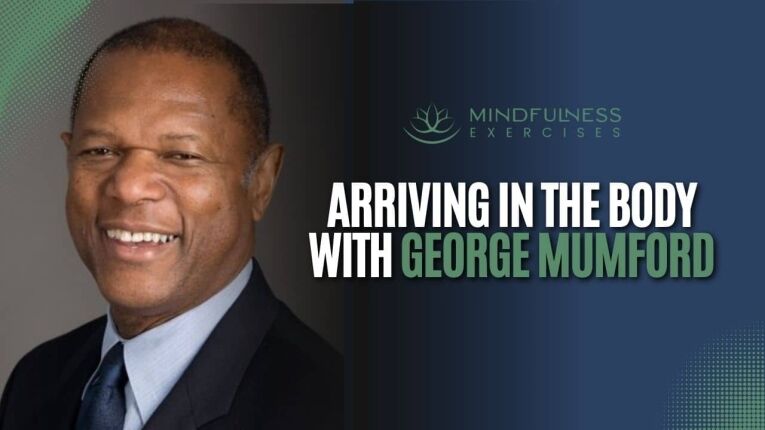
This week’s episode of the Mindfulness Exercises Podcast, featuring the legendary mindfulness teacher George Mumford, offers a grounded antidote: a no-frills practice of arriving in the body. No mystical goal. No performance. No pressure.
Just a clear way to reconnect with yourself—through contact, breath, and awareness—so you can navigate life with steadier presence and more choice.
Below, we expand on the themes of the episode and share how this deceptively simple practice resets the nervous system and builds real-time mindfulness that fits into everyday life.
Sponsored by our Mindfulness Meditation Teacher Certification Program
certify.mindfulnessexercises.com
Episode Overview:
This episode explores the essential practice of embodiment—arriving in your physical experience as a way to reset attention, soften reactivity, and ground yourself in the present moment. With guidance from mindfulness teacher George Mumford, we unpack how posture, contact, sensation, and gentle labeling reconnect the mind with the body in any situation.
Key Themes:
- Arriving in the body as a practical, zero-fluff mindfulness tool
- Using posture, contact points, and breath as anchors
- Applying the Satipatthana principle: “Be aware of the body to the extent that there is a body”
- Turning wandering attention into a training loop rather than a mistake
- Resting in “alert relaxation”—stable, kind, and steady
- Practical cues for daily life (sternum open, shoulders soft, body upright)
- Reclaiming presence during commutes, meetings, and caregiving
- Building continuity of mindfulness throughout the day
Anchors Covered:
- Physical contact (feet on floor, seat on chair)
- Postural awareness (sternum open, spine relaxed but alert)
- Natural breathing
- Gentle mental labels for thoughts, sensations, and sounds
- A steady return to sensation
Show Notes:
A Mindfulness Practice for Real, Messy Life
One of the first teachings of this episode is refreshingly simple:Teach and practice whether one person shows up or a hundred.
This practicality sets the tone for everything that follows. Mindfulness here isn’t lofty or abstract. It’s grounded. It’s human. It’s meant for people navigating commutes, conversations, deadlines, parenting, caregiving, and everyday stress.
Arriving in the body is a practice that belongs to real life—not just meditation cushions.
Starting with Contact: Feeling the Body That’s Already Here
George Mumford invites us to begin by feeling what supports us—the floor beneath our feet, the chair holding our weight, the hands resting gently. These simple contact points bring awareness from the swirl of thoughts back into something stable and trustworthy.
When attention lands in the body, the nervous system receives an immediate message:
“You’re here. You’re safe enough to soften.”
This is the first layer of embodied presence.
Posture as a Mindfulness Tool (Not a Performance)
Instead of idealizing the “perfect posture,” this episode encourages a posture that is:
- Upright but not rigid
- Relaxed but not collapsed
- Steady but not strained
A key cue is opening the sternum—broadening the chest slightly so the breath can flow more easily. This subtle shift creates openness, softens reactivity, and supports calm alertness.
Posture becomes a friend, not a demand.
Breathing and Knowing It: The Heart of Arrival
Rather than manipulating the breath, the practice centers on letting the breath be natural and knowing it moment by moment:
- The rise
- The fall
- The sensations in the nostrils, chest, or belly
- The pauses between breaths
This simple awareness interrupts overthinking and anchors the mind in the present.
The breath becomes a home base—something steady beneath the noise of daily life
When the Mind Wanders: Gentle Labels and a Soft Return
Distractions aren’t the enemy—they’re part of the training.
When an image, thought, sound, or memory pulls focus, the practice is to:
- Notice it
- Gently label it (“thinking,” “hearing,” “planning,” “remembering”)
- Return to sensation
This turns wandering into wisdom instead of frustration.
As George Mumford often says, mindfulness is about coming back, again and again, without judgment.
Alert Relaxation: The Sweet Spot of Mindfulness
The episode describes a balanced quality of attention:
Not limp. Not rigid. Not checked out. Not striving. Just alert relaxation.
This is the state where:
- Presence stabilizes
- Reactions soften
- Decisions become clearer
- Stress loses its grip
- The body feels trustworthy
Alert relaxation gives you space between stimulus and response—the space where choice lives.
Practical Cues for Daily Life
One of the most helpful parts of the episode is how applicable the practice is in real moments:
Try arriving in the body when:
- You open your laptop
- Someone asks for your attention
- You walk into a meeting
- Your phone buzzes
- You’re waiting in line
- Your patience starts thinning
- You’re shifting from task to task
These small, embodied pauses create a calmer baseline without adding tasks to your day.
You’re simply returning to what’s already here: body, breath, sensation.
Building Continuity of Mindfulness, One Moment at a Time
Arriving in the body isn’t a one-time technique. It’s a training—gentle, consistent, realistic.
Over time, this practice supports:
- A steadier nervous system
- More emotional choice
- Clearer attention
- Softer reactions
- A deeper sense of presence
- Less overwhelm, even during chaos
You begin to feel like you’re living from the inside out, rather than being pulled from the outside in.
Try It Today
If this episode resonated, listen to the full guided practice and try arriving in your body today—even for just one breath or one moment of contact.
Share the episode with someone who could use a grounded reset, and consider leaving a short review telling us:
Which sensation anchored you best?
Your feedback helps more people discover a simple way to return to presence.
