Listen now


In a world that constantly asks us to plan, optimize, and push forward, the body quietly offers something far more reliable: truth in the present moment. The body does not strategize or pretend. It does not worry about what should be happening. It simply communicates what is.
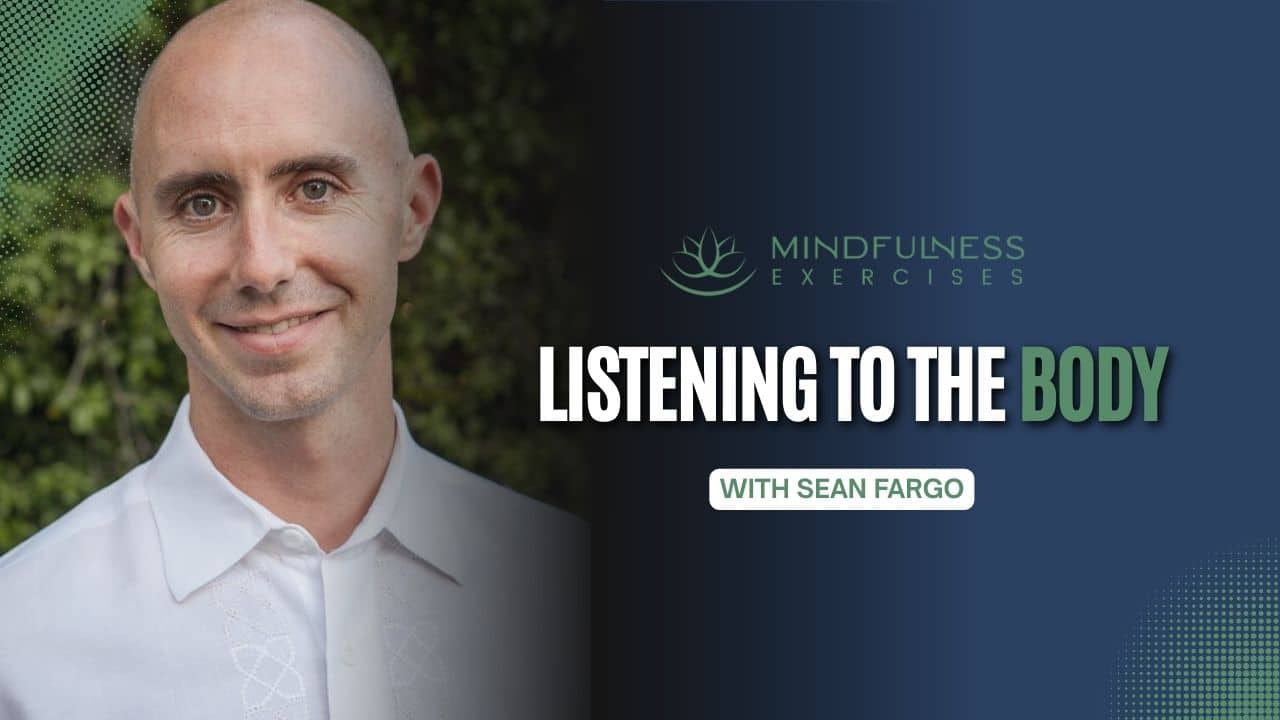
In this episode of Listening to the Body, we’re invited back to the most honest starting place for mindfulness practice—the felt sense of being here, now. Rather than forcing ourselves into a rigid routine or chasing an ideal inner state, this approach encourages curiosity, responsiveness, and integrity. It asks a simple but powerful question:
What does this moment actually need?
Sponsored by our Mindfulness Meditation Teacher Certification Program
certify.mindfulnessexercises.com
Episode Overview:
Key Themes:
- Starting practice with grounding and physical contact
- Letting felt sense guide the next step
- Working with planning mind and emotional heaviness through sensation
- Using the body as the stable foundation of mindfulness
- Opening to joy without denying discomfort
- Balancing structure and flexibility in practice
Practices Explored:
- Body scan through head, chest, and belly
- Breath awareness
- Loving-kindness when the heart feels tight
- Gratitude grounded in real, present experience
Takeaway:
Mindfulness becomes sustainable when it’s responsive, embodied, and honest—guided by what’s actually happening, not what we think should be happening.
Show Notes:
Beginning Where You Are: Grounding in Direct Sensation
The practice opens gently, not with effort or expectation, but with grounding. Attention is brought to the seat, the feet, and the contact with the earth—simple points of connection that stabilize awareness.
This kind of grounding is deceptively powerful. When attention settles into physical contact, the nervous system often receives a subtle signal of safety. We’re no longer lost in abstraction or anticipation; we’re here, supported.
From this grounded base, awareness begins to travel through the body—head, chest, belly—following a thread of curiosity rather than control. The invitation is not to fix or improve what’s found, but simply to listen.
Letting the Felt Sense Choose the Next Step
Instead of deciding in advance what a “good” meditation should look like, this practice allows the felt sense to guide what comes next.
- If the mind feels scattered, attention may naturally gather around the breath.
- If the heart feels tight or heavy, loving-kindness may be the most skillful response.
- If the moment feels steady and open, resting quietly with awareness may be enough.
This responsiveness is a radical shift from performance-based mindfulness. There’s no checklist to complete, no state to achieve. The body leads, and practice follows.
Working with Planning Mind and Emotional Weight
Many people struggle with what’s often called the planning mind—the part of us that organizes, anticipates, and rehearses. Others feel weighed down by emotional heaviness that resists logical solutions.
Rather than wrestling with thoughts or trying to think our way into calm, this approach works with energy instead of against content. By sensing into the body—notice where energy is contracted, dull, restless, or alive—we create space without suppression.
This shift often brings relief, not because problems disappear, but because we stop fighting the moment we’re in.
Mindfulness of the Body as the Spine of Practice
Throughout the conversation, mindfulness of the body is revealed as the stable spine that supports all other practices. This includes:
- Listening to sounds without labeling
- Noticing subtle temperature changes
- Tracking movement and stillness
- Sensing pleasant, unpleasant, and neutral tones
These experiences anchor awareness in reality as it unfolds. The body becomes a living reference point, keeping practice grounded even when emotions or thoughts feel intense.
Opening to Joy—Without Denying Pain
A quiet but powerful intention emerges in this episode: opening to more joy.
Importantly, this is not about bypassing discomfort or pretending everything is fine. Joy here is honest and modest. It shows up in small ways—when we stop bracing, when we notice warmth, when we allow ease to exist alongside difficulty.
By listening instead of forcing, joy becomes something we notice, not something we manufacture.
Organic Practice vs. Rigid Routines
The episode thoughtfully contrasts structured routines with organic practice. Some people thrive with consistency and schedules; others need flexibility to stay engaged. Neither is wrong.
The deeper principle is integrity—meeting each moment directly, without judgment, and responding skillfully.
- If the mind is busy, we gently gather attention.
- If the heart is tender, we offer warmth.
- If the moment is simple, we rest with the breath.
Over time, this builds a sustainable, personal practice—one that adapts as life changes.
Mindfulness as a Skill for Real Life
When we train ourselves to listen to the body, mindfulness stops being something we do and becomes a way we relate. It supports us not just on the cushion, but in conversations, decisions, and moments of uncertainty.
By beginning with direct sensation, we learn to meet change in real time—with steadiness, compassion, and clarity.